
2025
DECEMBER
Angela Arnold, Zhu Xiao Di, Margaret Galvin, Usha Kishore, Alexandra Monlaur, Kenneth Pobo, Tony Press, Debbie Robson, David Mark Williams, Greg Wood.
ANGELA ARNOLD
Dancing Through the Book
Knowing the end of the sentence
before the eye quite catches
the little platoon of black forms
marching across the snow of the page.
The eye of the mind
not really keeping in step, advancing,
orderly – more darting and dancing.
Nothing captured of these mere fleeting
snow flakes of sense, seesawing
and swaying, savoured twice
while noting the warm round
redness of every a
as it leaps up for the eye's attention.
Memory leading and lifting
to the music of comprehension.
Each page a landscape
full of the chatter of i and o
and the hum of m.
All busy Breugheling
in their allotted space
till you wonder whether they
would if you weren't there – if
this visitor closed the book,
having twirled and tangoed and
jived through it for a bit,
synaesthesia and all.
Angela Arnold is a writer, poet and artist. Her poems have appeared widely in print magazines, anthologies and online, both in the UK and elsewhere. Debut collection: In Between (Stairwell Books, 2023), and another forthcoming from Poetry Lighthouse. She lives in Wales.
Back to POETRY ARCHIVE
ZHU XIAO DI,
How Could I Tell Rose the Beauty of Snow
What color is it,
asked the rose in my backyard.
It’s white, pure white,
I responded.
Only white, no other colors at all?
she asked.
Isn’t that too plain and boring,
my rose shook her head in the east wind.
Well, I said, snow white creates its own beauty.
Nothing else is needed, otherwise that would destroy its purity.
My rose thought for a while and then asked,
Can you wear it, carry it, or decorate anything with it?
Well, I thought for a moment and acknowledged:
No, I can’t, but I can make a snowman next to my house, as tall as myself.
Does snow grow from the earth like me and blossom in spring?
No, it comes down from the sky in the coldest winter hours.
Like rain in spring? asked my rose.
More or less. White flakes swirl and fall silently on the ground
over the top of everything, no matter how tall it is.
Can I meet him someday when I’m still here or on my next visit?
“I’m afraid you may not, my dear rose,” I replied sadly.
Somehow, as I was saying that to her, I dared not look her in the eye.
Zhu Xiao Di, author of Thirty Years in a Red House: A Memoir of Childhood and Youth in Communist China (memoir), Tales of Judge Dee (novel), Leisure Thoughts on Idle Books (essays in Chinese), and poems published in journals based in the U.S., Singapore, U.K., and Canada.
Back to POETRY ARCHIVE
MARGARET GALVIN
Cuan Aingeal, Wexford
Angel Harbour, Wexford
Vigil keeper at Wexford Harbour,
Our Guardian Angel keeps watch
from the Memorial Garden at Ferrybank.
She presides over the cold surge of the estuary,
recognizes the signs of distress,
shoes removed on the bridge,
someone climbing the parapet. She listens
for the splash, the sluice of water
as the Slaney closes over the turmoil and carries
off our dead: the elderly men, the young lads,
sometimes a woman.
She’s familiar with the river rescue people,
and the bereaved who tie
wreaths and photographs to the railings.
Every funeral cortege passes her sentry post.
She’s in everyone’s rear view mirror.
Are there days, Angel of Wexford when you have to look away?
Turn your eyes to the Riverbank Hotel across the road
where the brides sip champagne bubbles,
smile for the camera with young husbands, well-groomed
chaps with the world at their feet.
Days when all you want to see
are debutantes in dresses,
new graduates in gowns and mortar boards.
Days when you’d surrender the wings, apply for a desk job?
Margaret Galvin writes poetry and memoir essays. Her most recent collection is Our House, Delirious from Revival Press, Limerick. Her work is often broadcast on 'Sunday Miscellany' on National radio in Ireland. She facilitates writing workshops in cancer care and mental illness.
Back to POETRY ARCHIVE
USHA KISHORE
The Sarus Crane
The Sarus Crane refuses to believe
he is on the verge of extinction.
He measures life in a dance of amour,
he wraps his sweeping wings
around monsoon skies, their midnight
tips sketching cinereal silhouettes.
His grace is pre-destined; his windhover,
a lightning requiem; his slow drift, a
twilight symphony. I talk to him
in Sanskrit, but he insists on Prakrit,
which translates his name, lake bird.
He does not care for Latin, Grus antigone,
which chronicles his bare neck.
The Sarus Crane refuses to believe
he is on the red list. I tell him,
his wetlands are long buried
under swathes of paddy fields.
He tilts his crimson head
in arabesque lift. He flutes in
disdain; he is sanctified
by the Divine Bird, poetry
birthed in his lovelorn chassé.
I tell him he revels in myth.
He trills in scorn; he is worshipped
by five-god votaries, who invoke him
in gliding light. I tell him, the ghost
moon has eclipsed his silvered down.
The Sarus Crane shrouds his precious clutch
with sheaves of myrtle grass. He trumpets
in treble to his mate, who flew away in
a mistral of feathers. He would starve
to death than pair again. When rain kindles
fire on air, he dreams of winging his soul
in a waltz of seduction, of whistling a storm
in immortal fens, where time stands still;
where water is earth and earth, water.
Usha Kishore is an Indian born British writer and translator, resident on the Isle of Man. Usha is internationally published with three collections of poetry, the latest being Immigrant (Eyewear, 2018) and a book of translations from the Sanskrit. Usha completed her PhD in Postcolonial Poetry with Edinburgh Napier University, this year. www.ushakishore.co.uk
Back to POETRY ARCHIVE
ALEXANDRA MONLAUR
Journey Man
Wake.
Wet warmness, nice.
Warm wetness, blad black blad-her bubble burst.
Close eyes, sleep. Wake. Wet are arse.
Arsehole.
Sore, cold wetrub rubbing balls.
Close eyes, tier, tier drip off nose-end.
Their mouth shapes say Journey.
Recovery Journey, Therapy Journey, Treatment Journey, Home Care Journey.
They bring word salads to my bed;
like they’ve opened a jar of moths and out they flutter.
“Prognosis”
“Diagnosis”
“Ataxia”
“Physiotherapy”
“SLT”
“Pee”
“Poo”
“Accidents”
“Push down”
“Purse lips”
“Take weight”
“Try”
I don’t want it, don’t want don’t want don’t want journey.
Fuck the Journey.
FUCK
THE
JOURNEY
The Long and Winding Road
Amira watched as the blowfly circled the child’s eye socket under the brow, down past the side of his nose, finally coming to rest on the philtrum. The overhead sun made sheer its wings and silhouetted the orange bristles on its head as it settled into position.
She had gradually discarded all her other burdens on the walk towards the border. The once valued objects cast aside to conserve energy. She stepped backwards away from the tiny corpse; flaccid limbs and waxy completion unrecognisable now; once her only son.
Turning away, she felt nothing; no hope or despair, she had moved beyond feeling, beyond thought. There was only the walking, the endless stony earth and the tug of her daughter’s hand dragging at her skirt.
Alexandra Monlaur is a Scottish-based poet of mongrel Celtic heritage, whose work has been published in a number of anthologies. Her first pamphlet, inspired by the life of Mary, Queen of Scots is due to be published in 2026.
Back to POETRY ARCHIVE
KENNETH POBO
After Lunch
Soup again, cream of chicken,
and a couple of buttered rolls.
Stan is visiting his mom. I’m alone
with November, a good but
difficult friend. A sunny
morning, but by one o’clock
a tepid gray sky returns.
Barren trees can’t stop it
from enfolding me.
I could go out and clean up
the garden—death on leaf
and stem. Spring, another
friend who died. I try
to believe in resurrections,
hard to do with brown leaves
swirling around my legs. Some
bulbs need freezing days
to bloom in spring. So,
come freezing days, for the sake
of our hyacinths and tulips,
put your frozen hands
around them. Let them rest
in your creeping touch.
A Show-And-Tell Dahlia
The tuber has eyes
to see its way
into spring.
Only months ago,
reddish blossoms,
yellow tips,
like someone had
set the ends
on fire. The sun,
a struck match.
July: a strong stalk
more than waist high
to hoist heavy blossoms.
The phone camera
makes each flower
look small, decorative.
Not the lion pacing
out of a bud
with a silent roar.
Kenneth Pobo (he/him) has two new books out: At The Window, Silence (Fernwood Press) and It Gets Dark So Soon Now (Broken Tribe Press). “A Show-And-Tell Dahlia” was first published in Brittle Star.
Back to POETRY ARCHIVE
TONY PRESS
Fairfax Life
We were so young,
Thought we were old.
Lived in that little house behind the lumber yard,
Mt. Tamalpais both behind and above us.
We were so young
Played with and changed our names weekly
You were Hope, then Grace, then Jessie-Belle
I nailed the sign to the door, Abandon Hope All Ye Who Enter
I worked at the yard
Helping where I could, mostly with my weight
As I could carry more than most, but didn’t know
A hinge from a socket unless I’d unpacked them myself
I worked at the yard
Toted and lugged and dragged and
Sometimes actually sold something
Sometimes even worked the register
We were so young
I worked at the yard
Until the day you came in to say
“They’ve raised the rent and they want it now,”
“They’ve raised the rent and they want it now,”
You said, and I smiled, and went behind the counter,
Rang up a pretend sale and we walked home together
Twenty twenties in my pocket.
Twenty twenties in my pocket
We lived in that house only another week
Then it was the county jail for me and …
Where you went, I never knew
Where you went, I never knew.
Tony Press tries to pay attention and sometimes he does. His story collection, Crossing the Lines, was published by Big Table, and his poetry chapbook Equinox and Solstice by Right Hand Pointing. He cherishes walking the streets of his tiny town, and sipping hot chocolate, too.
Back to POETRY ARCHIVE
DEBBIE ROBSON
Two Deaths
Ariel was born at Court Green, three acres
wych elm and blackberries. Her mother moon
silvery in the sky, her father yew tree black
against the stars and a bonfire blazing as Sylvia
burns paper after paper on the red flames.
Curling up in the smoke her divided self.
She will fight and claw her way to be a poet
and everyone her subject and everything
dripping blood, red filaments and white hospital
rooms and the soul amputated and the moon,
shining down on her. She keeps looking, not out
at the world, but within. And seizes the chance
to live where Yeats had worked at Fitzroy Road,
inside white and cold, her final home.
While more than forty years before Virginia
finds her celebrated pen lost in the dust of
Talland House, St Ives near whitewashed houses
with thick walls, a windy fishing town. Haunted
by ghosts she sets sail on a voyage of discovery
to find the fin in the waters far out to sea.
To stop and feel the waves pounding on
the shore beating the measure of her days
to the end and always the lighthouse beam,
turning, illuminating moments of being.
Owling, prowling in the city she finds the
England of Chaucer, Shakespeare, Dickens
bombed out. All the completeness ravished
and her life streaming away down unlighted
avenues to speak with the dead again.
She passed like a cloud on the waters sinking
into the Ouse weighted with stones, slipping away
down the river to others. No longer will Leonard
need to turn the key to keep the world out and
her writing in. Let the river subside and deliver her.
All is well now as the gas dissipates when others
fling open the door and find how carefully
Sylvia organised her suicide - cracks taped, doors
and windows stuffed with towels, her head
resting on a small, folded cloth, on the oven floor
bowed, kneeling at altar. Leaving a world she had
left many poems ago. Out of the ash will she rise
with red hair? Both gone. Two deaths for us to mourn.
Debbie Robson has published a chapbook with Boats Against the Current, a novella with Alien Buddha Press and previously Crossing Paths: the BookCrossing Novel and Tomaree a WWII love story. Her poems, micro, flash and short stories have been published internationally and online. She is on X and Instagram @lakelady2282.
Back to POETRY ARCHIVE
DAVID MARK WILLIAMS
The Fight for Light
Let the dead wood lie. Let it feed the living.
Be advised, we are ready for everything
high flying, low flying, whatever it is
whatever the threat, we’re ready.
Make no mistake, we have our conning towers,
our native trees, sharing data
beneath the ground.
I’m talking root networks
I’m talking mycorrhizae, the number of species
under one bluebell you wouldn’t believe,
a network spanning continents, and listen
just because you can’t see it doesn’t mean it’s not there.
Exercise caution at all times.
This is a radio transmitter area.
Please obey all further signage.
In the fight for light, there are always winners and losers.
That’s the way of it, understand.
Access is restricted, non-ionising radiation
and the blue water of bluebells
sphagnum moss and someone
creeping up behind you, the snap
of a stepped on twig, sensing movement
from the corner of your eye.
Access denied, restricted to authorised personnel
with appropriate RF monitoring equipment only.
Safety harness and correct personal
protective equipment must be used.
Do not proceed beyond this point.
In these times, the way things are right now,
proliferation of signs getting out of hand,
translucent fresh leaves everywhere,
it’s hard to know exactly where you are.
If in doubt, halt, keep still unless that is
you’re where you’re not supposed to be.
David Mark Williams writes poetry and short fiction. He has been shortlisted for the Montreal Poetry Prize and won Second Prize in the New Zealand Poetry Society International Competition. Two collections of his poetry have been published: The Odd Sock Exchange, Cinnamon, 2015 and Papaya Fantasia, Hedgehog, 2018.
Back to POETRY ARCHIVE
GREG WOOD
watching
birds cannot fly
through the
pebbles of the sky
when it rains
but they can watch
droplets fall
through the windows
of the trees
whistle
and await
return of blue
sweet blue,
soon air-dried
by the sun.
they can watch us
watch them
through
our own
screen windows
while
we perch in
soft of
stillness.
Greg Wood is a southern cosmopolitan poet with roots in Virginia and connections to Alabama and Amman, Jordan. He publishes regularly in Dissident Voice and was recently featured in Ireland's Dodging the Rain. Greg is the founder of Skylight, a creative arts outreach group that has touched the lives of many individuals across the United States.
Back to POETRY ARCHIVE
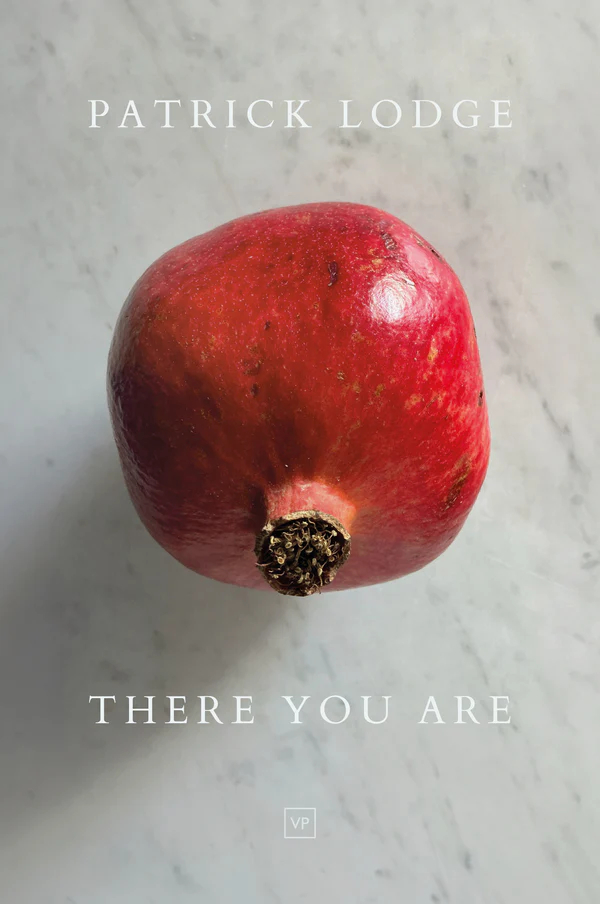
It's not easy getting a book or pamphlet accepted for review these days. So in addition to the regular review section, the One Poem Review feature will allow more poets' to reach a wider audience - one poem featured from a new book/pamphlet along with a cover JPG and a link to the publisher's website. Contact the editor if you have released a book/pamphlet in the last twelve months or expect to have one published. Details here
Reviewed in this issue

 Share
Share Print
Print