
2017
FEBRUARY CONTRIBUTORS
Ruth Aylett, Joe Balaz, Stephen Cramer, Jenne kaivo, Debarshi Mitra, Kenneth Pobo, Tom Sastry, Fiona Sinclair, Sue Spiers, Judith Taylor,
Larry D. Thacker, Louise Warren.
RUTH AYLETT
Essex Ancestors
Often dissed these days with sneers: chavs,
white mini-skirts, gold-hoop earrings,
that simply dreadful estuary accent.
Back then they were dismissed as rural idiots.
But distances sat behind their eyes, inevitable
as the easterlies off the North Sea:
the straightline of brown-grey salt marshes
meeting the enormity of blue-grey sky.
Squelching and patched with marsh grass
those boneless fields, without stone.
They marked graves with wrought iron crosses,
built white-boarded houses with Norwegian pine.
Their god as definite as the bite of the two-handed saw:
Methodists were Primitive; the Peculiar People
demanded Sundays of sermon and prayer. Injury
and disease made the next world a gaping door.
Further over the horizon from them than Shangri-la
with my clean water on tap, mains sewerage,
centrally heated hall, I think of their capability;
feel critical eyes when I cut crooked with my saw.
True Story
‘I have a body in a bag,’ she said,
‘a skeleton from when I was a nurse.
It’s wrapped in plastic sheeting in the shed’.
The friend she told was not impressed at first.
Then cancer got her and they found the thing,
cut into it, released a dreadful smell,
revealed a hand all mummified, with ring;
an arm, pyjamas, then a face as well.
She’d told the friend her husband was a brute
who had affairs, was violent, never cared,
and though they knew she rarely told the truth:
an eighteen-year old murder? Had she dared?
They found the fracture marks across his head
exactly matched the stone frog by her bed.
Ruth Aylett lives in Edinburgh where she teaches and researches
university-level computing, thinks another world is possible and that the one we have is due some changes. She has been published by Interpreter’s House, New Writing Scotland, South Bank Poetry,
Envoi, Bloodaxe Books, Poetry Scotland, Red Squirrel Press, Doire Press and others. For more on her writing see www.macs.hw.ac.uk/~ruth/writing.html.
Back to POETRY ARCHIVE
JOE BALAZ
Anadah Trip Around Da Sun
I nevah paid wun ticket
to get on dis ride.
It’s like being on wun roundabout—
Da only trouble is
you don’t know wheah or wen
you going leave da big circle.
Each orbit is wun digit
added to your portfolio
laying out wun timeline
to your momentary existence.
Taking stock
of all da yellowing pages
I can see da narrative
dat wuz added to each sheet.
It’s wun strange story of flight
like wun owl flying in da night.
Maybe it’s just
da yearly retrospective
cause I’m emptying da confines
and folding da contents
into wun offering of paper cranes.
I tie da creations
to hovering talons
and imagine da alterations
hanging dere in space.
I’m taking
anadah trip around da sun
on silent wings
dat no no one can hear flapping
as I simply glide
to watevah going come to be.
Joe Balaz writes in Hawaiian Islands Pidgin (Hawai'i Creole English) and in American-English.
He edited Ho'omanoa: An Anthology of Contemporary Hawaiian Literature. Some of his
recent Pidgin writing has appeared in Rattle, Juked, Otoliths, and Hawai'i Review, among others.
Balaz is an avid supporter of Hawaiian Islands Pidgin writing in the expanding context of
World Literature. He presently lives in Cleveland, Ohio.
Back to POETRY ARCHIVE
STEPHEN CRAMER
Sweetheart, You Make Me Feel Like a Spider
Sweetheart, you make me
feel like a spider. Not just
any old spider, but the one I saw
earlier this summer, the one
who manufactured a coliseum
of a web—do you hear me?:
a coliseum from her own body!—
between the rear view
mirror & the window
of my car. I didn’t have the heart
to swipe the web away
with a stick, not enough heart
to say, hey spider, I love
your work, but you’ve chosen
the wrong canvas.
So I took a mid-summer
road trip, & with all
the packing & hullabaloo,
I forgot about the spider.
& there we were 600 miles
& 5 states later, at 75 miles
an hour, & I checked the mirror
to my left & found not the flaming
red Camaro I expected but
the jeweled parachute of a web
warped by velocity, the spider
still clenched to its back side.
Sweetheart, I’m trying to get this
back to you. Well, for the next 100
miles I couldn’t help but see myself
not as a simple driver with a home
somewhere behind me & a vague
destination out in front but as some
eight-legged, more tenacious
version of myself, &—oh, that’s it!—
I remembered that that’s how I feel
when you step into the room:
one minute I’m just sitting there
watching a fly
bang its head against a pane
the next I’m flying a supersonic
jet without a windshield.
Key
I don’t know what makes
your breath more song
than song. I don’t know how
to teach my hands
to still or how dragonflies
find the frail link
which binds two bodies
to heaven & the underneath.
I don’t know why
as soon as you’re born
you’re old enough
to get dead or
how long the dog can bark
at his own echo.
I don’t know why
the sign behind the bar
says: If you ain’t got nothing
to do don’t do it
here, because nothing is what
I’m trying to learn
how to do. I know my body
awaits me, cold,
at the end of a leash,
but I don’t know how
many years long
that leash is, studded
with its misshapen pearls.
I don’t know why
the world dropped a skeleton
key at my feet,
but you better believe
my hand is at the door.
Stephen Cramer’s first book of poems, Shiva’s Drum, was selected for the National Poetry Series and published by University of Illinois Press. His second, Tongue & Groove, was also published by University of Illinois. From the Hip, which follows the history of hip hop in a series of 56 sonnets, and A Little Thyme & A Pinch of Rhyme, a cookbook in haiku and sonnets, came out from Wind Ridge Press in 2014 and 2015. Bone Music, his most recent collection, was selected by Kimiko Hahn for the 2015 Louise Bogan Award and published in 2016 by Trio House Press. His work has appeared in journals such as The American Poetry Review, African American Review, The Yale Review, Harvard Review, and Hayden’s Ferry Review. An Assistant Poetry Editor at Green Mountains Review, he teaches writing and literature at the University of Vermont and lives with his wife and daughter in Burlington.
Back to POETRY ARCHIVE
JENNE KAIVO
The Ending of the Advent
“I am eating the days of the month,
all the days at one time”, says Rebecca.
Her patience has ended:
she flung wide the doors of the weeks still to come.
The suns go down hot.
She washes them down with the liquor of evening.
If I had known she was an eater of days
I’d have begged her to take all the rest of the year.
Eat all the seasons, the cicada spring,
the summer and fall when the world could not sleep
for the scratching of chicken-foot houses.
In the woods with the corpse-flowers blooming,
their talons dug deep in the dirt.
When they clawed up a snail,
they cackled, flapped open their windows with pride
and made sure that people came running.
They let the worms stay undisturbed.
In the spring is the hatching of insects.
(This year, I bit down on a chocolate
but my tongue touched the flesh
of a fat and white maggot instead, and I swear
I could taste its small hairs.)
One day in the spring there were bees
and they covered the city in coats of their black and gold fur.
The sounds of the traffic were drowned
by mellifluous drones of their wings.
In the hot days of summer,
the bees made Rebecca their queen of the dead.
To the yard, in her garden, they swarmed
just to spend their last hours.
The concrete was covered in the light crunching carpet
of their dead and dry bodies,
their black and gold fur.
As the sun beat my flesh, I could hear a great crack
echoing over the seas.
Like a chunk breaking off of an iceberg,
England left Europe to melt in the waves, and where
will the hungry bears live?
They swim and their fur clings down wetly to underfed bones
like moss growing on brittle twigs.
The fourth of July was the one day that we could tell
gunshots from fireworks for sure.
The bombs bursting in air were a solace.
The rockets’ red glare was less than the keen black-eyed gaze
of the chickenfoot houses.
The fall came.
Although it’s December,
I fear that the Fall’s here to stay.
If the doors of the summer had opened in spring
could Rebecca have eaten them all?
I now have a purpose. I’ll plan out the days
And the months and mornings and nights of a year,
and the next time a year’s going bad
we’ll open them all up together.
When she is not full of December we’ll sit by the dawn
and feast on the seasons and minutes so they do not come.
Jenne Kaivo sells hoodoo and hoodoo accessories in California, where she is a perpetual student and suspected adult. Her work can be found on The Lovecraft Ezine, SubtleTea, Bogleech, and her blog, jennekaivo.blogspot.com
Back to POETRY ARCHIVE
DEBARSHI MITRA
How to reclaim a Verandah
Sweep
Remove all dust that has gradually accumulated,
let the wind in.
Remove Ma's saris , starch crisp,
and stiff towels and unused clothing from clotheslines.
Do not eavesdrop on uncoordinated
Sunday 'Tanpura' lessons from
when you were eight.
Your childhood stories do not live here.
Stop eulogizing the past.
No curtains part here
for illicit glimpses of a lover.
Make peace with the fact that,
on the overlooking street
They are building yet another residence.
Hammers will fall on yesterday's nail.
When the last remnants of the evening
fall obliquely
at your window sill,
do not wait for the pigeons.
They have already flown away.
Debarshi Mitra is a 21 year old poet from New Delhi , India. His debut book of poems Eternal Migrant was published in May 2016 by Writers Workshop. His works have previously appeared or are forthcoming in anthologies like Kaafiyana and literary magazines like Tpewrite, Thumbprint, The PoetCommunity and Leaves of Ink. He is currently enrolled in an Integrated PhD program in Physics.
Back to POETRY ARCHIVE
KENNETH POBO
Cowardly Lion Now
I quit Oz after eight months,
hated paperwork, wanted to be
back in the forest
where I ate too much.
No one called me King.
I guarded secrets of ferns,
rescued flies from spider webs,
sired kittens that left me
as I had left my mother.
I shake my mane, fully gray,
lap starlight from
a marshy pond.
When I see my face in the water,
I know this world
isn’t black and white.
Color keeps sneaking in.
Passenger Pigeons
We largely did them in--
toss a bird,
wait for the bang.
The last two,
George and Martha Washington.
Martha outlived George
just like human Martha did.
Alone,
a caged social bird,
all her ancestors
roosted in her brain.
Martha, a collective memory,
her wings,
history.
Kenneth Pobo has a new book forthcoming in May from Circling Rivers called Loplop in a Red City. In addition to The Lake, his work has appeared in: Orbis, Mudfish, The Fiddlehead, Cordite, and elsewhere.
Back to POETRY ARCHIVE
TOM SASTRY
Misenchantment (noun)
1. The exact amount of fear required
to beautify a lonely place at night;
2. a voluntary
absence from the body;
3. the desire not to return;
4. the desire to live underwater;
5. the flavour of longing
associated with that desire;
6. the letterbox and its hanging tongue of bills;
7. the music of inkwater
at the lip of the moony pool;
8. the view of
lilypads from below;
9. an obsession with the undersides of things.
How to assay love
If you
are sure your love is pure, simply weigh it.
Otherwise, it is proved
most
simply, by fire:
wrap a sample in lead and silver, cupellate
and
watch base emotions separate.
This will unmix duplicitous alloys. To extract
feeling from its ore, dissolve in iodine,
then use nitric acid to separate the elements.
These
are the traditional
techniques. Increasingly, x-rays
command confidence. The attraction
of non-destructive methods
is obvious. Whatever process is employed
its end is not the purification
of the sample but, by engendering trust
in the quality of the material
to ensure the untested remnant
commands the market price. Always,
therefore, engage a professional
to verify and hallmark.
Tom Sastry was selected by Carol Ann Duffy as one of the 2016 Laureate's Choice poets. His debut pamphlet Complicity was published in 2016 by smith/doorstop.
Back to POETRY ARCHIVE
FIONA SINCLAIR
Trouncing Turner.
At first an exile’s tone when you recall
Whitstable’s Turner painted sunsets
admired each evening from sash windows
in your old flat with ‘best view in town’ of sea.
Decades working and playing continents away
from home town, but it is the ten-mile move
to my village house that makes you home sick.
Late afternoons I sometimes find you
standing staring out of front windows.
Initially I Interpret your stance as
entrapment, regret, boredom,
and my happiness stumbles.
In reality, you are comparing sunsets,
expecting to find the village efforts inferior.
But my home’s serendipitous geometry
creates unrestricted views of horizon.
And you have grudgingly begun to concede that
most evenings we have show-stoppers here.
I brush down my happiness at this unexpected
finding in the village’s favour,
its virtuoso sunsets some compensation for
my semi’s dubious décor, small bed, no shower…
Yet in truth, twenty years teaching had me
head down over marking until 6pm
then tucked up in the back bedroom.
so I took such spectacles to be rarities
caught by me on weight loss walks
or when drawing the front curtains.
Now each dusk you turn away from TV
to enjoy the more compelling show,
call me from kitchen to share;
sun suspended like a giant J Arthur rank gong,
clouds massing in ark builder’s validation,
water colour, washed in Taj Mahal pinks, peaches, gold.
So whilst you refer affectionately to Whitstable twilights
like an old lover you still have a soft spot for,
superlatives are switched to Our sunsets in the village.
Fiona Sinclair's first full collection of poetry, Ladies Who Lunch was published by Lapwing Press in September, 2014. She is the editor of the on-line poetry magazine Message in a Bottle.
Back to POETRY ARCHIVE
SUE SPIERS
Wiping the Slate Blank
So can you tell me what went through your mind
about the crash that crushed your cranium
at eighty miles per hour into a wall?
What made you risk your life and loss of limb?
A surgeon drilled the holes to make some space
for swollen tissue, limbic gland damage
that makes remembering the time too hard
and leads to rage or disruptive changes.
Medulla responses keep heart and lungs
in rhythm. Motor skills; finger to thumb,
some words to name your wife and basic needs.
The slow recovery of smile and frown
at appropriate times as you discern
correct responses. Wonder how you look
to other patients, do the scars stand out?
The ones you hold inside and can’t recall.
In dreams you grasp what consciousness restrains.
The man who hovers in the corridor;
that want-of-death was stronger than her love,
than frontal lobe perception of her faith.
Sue Spiers has a BA in Literature with the Open University and is SIG sec for British Mensa’s Poetry Workshop. Her work appears in the Bloodaxe anthology Hallelujah for 50ft Women and in Paper Swan’s The Best of British (2017). She shared 3rd prize in Brittle Star’s 2016 competition judged by George Szirtes. “Wiping the Slate Blank” won the Hampshire Writers’ Society April 2014 competition and was included in its 2015 Anthology of the Best of 2011-2014.
Back to POETRY ARCHIVE
JUDITH TAYLOR
Zen and the art
Sparsity in a garden
that gravel walk,
those carefully-tumbled river pebbles
spaces between the sleek greenery
for the thinking eye to rest upon
to fill with philosophy:
all this depends (if too pure
for a poison drench) on feudalism
or however you call it.
On someone there
whose lot in life it is
to go invisible
every day
on hands and knees
weeding among the stones.
Ballet
He hasn’t much to say for himself in the play
but the way they dance it
the County Paris loves the girl
as much as the man she loves.
The almighty nerve him!
- it carries him
right down
into to the grave, and there he finds
Romeo, who asserts exclusive rights
in all the harm he’s done.
Paris’s heart, already breaking,
will stop on Romeo’s blade
and the way they dance it
Romeo gives himself
to the same weapon, his Juliet
left to scavenge the darkness
and find her genuine death
on a dagger Paris threw away.
Poor sap, he would hardly notice
how we pity him -
he would be glad to have been
of use to that ungrateful child
– if he only knew it
there where he lies
alone, down
stage, outside the circle
of pale, beautiful moonshine
around their bed.
Judith Taylor lives in Aberdeen, where she works in IT. Her poetry has been published widely in magazines, and in two pamphlet collections - Earthlight (Koo Press, 2006) and Local Colour (Calder Wood Press, 2010). Her first full-length collection will be published in 2017 by Red Squirrel Press. www.http://sometimesjudy.co.uk/
Back to POETRY ARCHIVE
LARRY D. THACKER
A Rune Gone Fallow
Blush purple and white morning glories yawn up,
stretching thin green that feels a self-innocent
and natural, but chokes
down the stunted laziness
of the late September crow shuffled corn stalks,
slow, slow, but inevitable,
like the failing confidence
of summer Kudzu’s reach along the back fence,
tiring finally in last year’s forgotten dead netting,
now long-vined too far to breathe,
short-gasping,
a broad leafiness waning to light brown,
the season’s ebbing on, inch-by-inch or even less,
the giant sunflowers’ week-long story of wilting
under their own
impressive memory of yellow glare and memory.
The secretive bulge of sweet potatoes,
still buried
in huddled dirt prayer mounds, await
the cool winds of first night frosts
to reckon in some mutual relief.
All is ripe in a trick of stillness.
Honeysuckle
A chain link fence runner,
sweet yellow strangle fingers
slow balling into a fist
of invasive wandering,
white trimmed to
wild grape and kudzu vine tangle,
veining juice tempting
the honey bee’s Haiku buzz,
machine of fertile elongation,
tender tendril testing
false gravity’s pull,
longing for anything’s next touch,
the twisted reach, aura scent
puffed into the windless day’s thought.
Come a bit closer. Spread
our little dream to the next field, lover.
Larry D. Thacker’s poetry can be found in over seventy publications including The Still Journal, Poetry South, Mad River Review, The Southern Poetry Anthology, Mojave River Review, Mannequin Haus, Ghost City Press, and Jazz Cigarette. His books include Mountain Mysteries: The Mystic Traditions of Appalachia and the poetry books, Voice Hunting and Memory Train, as well as the forthcoming, Drifting in Awe. Visit: www.larrydthacker.com
Back to POETRY ARCHIVE
LOUISE WARREN
Owl Strike
That night the owl printed a ghost of an owl
as it slammed into the window
the moon held its breath
a frozen
oh
but my Mother did not cry out
as she burrowed deeper into the leaves
she was not caught by the owl’s metal hooks
that night she was safe from harm,
from his sudden yellow glare.
He spied her small bones wrapped up in the bedroom dark
but the window stopped him-
he spilt his white heat onto the glass
the night rushed in, all the stars
blazed and froze inside that tiny skull
then flung him back off kilter,
sped him somewhere other
I searched for the smallest feather
found nothing.
Louise Warren’s first collection A Child’s Last Picture Book of the Zoo won the Cinnamon Press first collection prize and was published in 2012. A pamphlet In the Scullery with John Keats also by Cinnamon came out in 2016. She has been widely published in magazines and lives in London.
Back to POETRY ARCHIVE
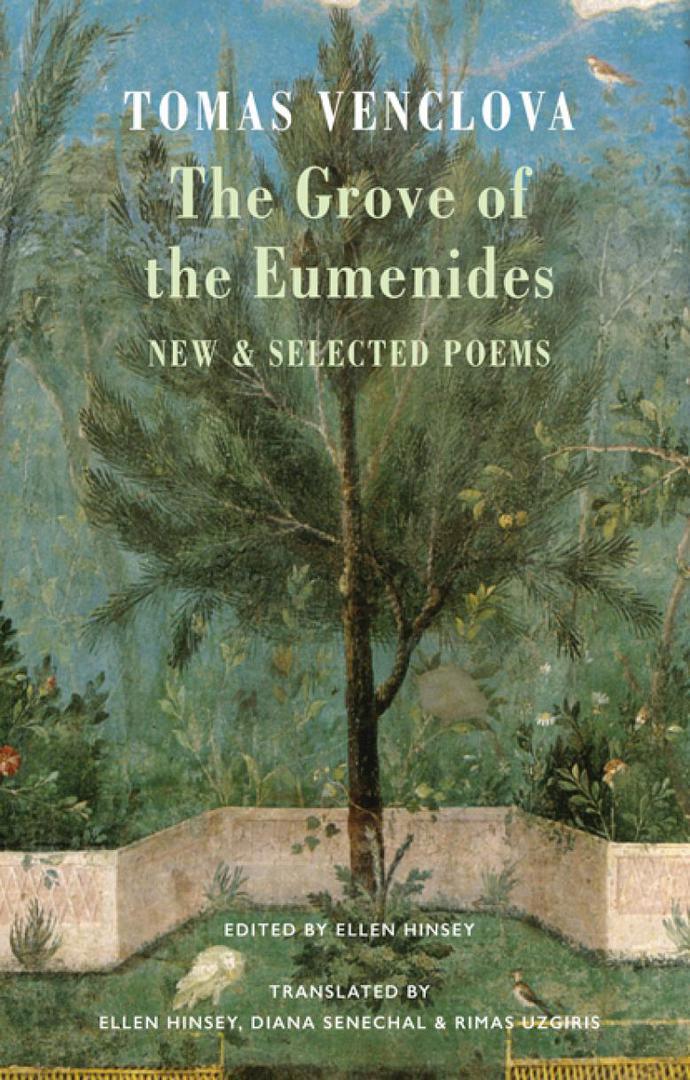
It's not easy getting a book or pamphlet accepted for review these days. So in addition to the regular review section, the One Poem Review feature will allow more poets' to reach a wider audience - one poem featured from a new book/pamphlet along with a cover JPG and a link to the publisher's website. Contact the editor if you have released a book/pamphlet in the last twelve months or expect to have one published. Details here
Reviewed in this issue
 Share
Share Print
Print