
2026
FEBRUARY
Clive Donovan, Tom Kelly, Andy Humphrey, Fish Lu, Dana Holley Maloney, Bruach Mhor, Kate Noakes, Fred Pollack, Fiona Sincliar, Rachel Wild.
CLIVE DONOVAN
Chains
Those early precious flexi-links drove buckets back and forth
to irrigate the terraces above the plains:
Egypt...China...Roma...with peaceful metal ropes got rich...
Who first in bondage groaned and rattled chains, we cannot know,
but slighter ones of gold were forged to decorate the chests
of top gentlemen and wives
—reminder of the force by which they ruled.
Then, that great time hopper, Da Vinci, sketches pictures
of a classic leaf chain with pins and plates,
centuries before bicycles.
Meanwhile, as we danced the brutal jig of Time,
cog chains turned machinery like looms and elevators,
thus kick-starting the industrial revolution,
which in turn exploited thousands of female chainmakers,
whose craft, at penny a yard, helped transport whole fleets of slaves.
Soundly welded in the Shires of the Black Country;
impossible to break with feeble hands, those iron bonds.
Far, far from rich and delicate gold and silver were they
—yet so linked, so black and bleakly linked,
so supple in their solid linkage.
Archaeologists in Crete
I have re-entered a world of very real stone:
A city of rocks jointed
As if by sweating giants
And as I walk, admiring logical streets,
I see how copper and gold is brought by ships to be shaped,
Hammered and granulated;
Factories spin clay, cut gems,
The writers carve their ideograms.
A quiet ghetto of mansions hoards light,
Courtyards hide where bare-breasted girls play
And mirror-pools invite small votive acts
– A nod to the Goddess – a libation.
It has all tumbled down now, grass has grown
To smother the slab-paved streets.
Frescoes of ecstatic dance and feast have crumbled.
Olive trees, with strangling roots, distort.
We scrape it all off, our delicate trowels
Burrow into ancient grit
Where lodge compressed the drifted flakes of evidence.
We collate numerous bucket-loads
To see how they lived;
Those short, brown, energetic Minoans,
Determined to rebuild after each tragical earthquake;
Not giants at all, it seems, but dauntless
And, for a brilliant age, stubbornly enduring,
With their daring, triumphant bull-leapers
And conical cups that had to be held unspilled
Even as the buildings shook.
Clive Donovan has three poetry collections, The Taste of Glass [Cinnamon Press 2021], Wound Up With Love [Lapwing 2022] and Movement of People [Dempsey&Windle 2024] and is published in many magazines including Acumen, Crannog, Popshot, Prole, Stand and The Lake. He was a Pushcart and Forward Prize nominee for 2022’s best individual poems.
Back to POETRY ARCHIVE
ANDY HUMPHREY
Conchology for Beginners
The book was very clear
this wasn’t the way to do it.
Each specimen needs
its label, its where and when.
There was no scientific value
in boyish dredging
across acres of wet Welsh shingle,
cramming the pockets
of a sodden blue cagoule.
Limpets, topshells, tellins. Winkles
the colour of holiday breakfasts:
ketchup, egg yolk, bacon.
Nearly forty years later
those shoe-box treasures
wash up again: the flotsam
of a forgotten cupboard, an empty loft.
Mussels, dog whelks,
razor-shells
higgledy-piggledy,
out of context
and miles from where they belong.
They smell of chalk and Germolene.
I picture myself
walking those shores
shoe-box in hand,
briny indents in my wake.
With each step I’ll choose a shell
putting each one back
in the place that seems most natural.
I’ll follow that wrack-strewn tideline –
Ty Goch, Cow Cove, Abersoch sands –
to the peninsula’s end.
Offer my empty box
to the grateful sea.
Watch it soak.
Sink. Slide under.
Litanies, October 1982
The angel of the Lord
declared unto Mary
Those days were bounded
in ritual:
League division one:
Arsenal 2, West Bromwich Albion nil
and she conceived
by the Holy Ghost.
the final whistle,
the twelve o’clock bell,
Aston Villa 3, Watford nil
Behold the handmaid
of the Lord.
standing to recite the prayer
while a man in black presided,
Coventry City 1, Notts County nil
Be it done unto me
according to Thy Word.
altar-marble austere. Later,
homework, bed. Saturdays
Liverpool nil, Manchester United nil
And the Word was made flesh
and dwelt among us.
the lights of the Mersey Tunnel,
the dock road smells, my Nan’s.
Luton Town versus Ipswich Town
is a late kick-off
Pray for us,
o Holy Mother of God,
Dad, tired from I didn’t
know what, and half asleep
Norwich City nil, Tottenham Hotspur nil
that we may be made worthy
of the promises of Christ.
in Nan’s armchair
until the pools news
Nottingham Forest 1, Birmingham City 1
Pour forth, we beseech thee,
o Lord, thy grace into our hearts
and never enough
score draws.
Stoke City 3, Brighton & Hove Albion nil
that we, to whom the incarnation
of Christ thy Son was made known
by the message of an angel
Sundays were Mass,
and roasts, and baths,
Swansea City nil, Everton 3
may by His passion and cross
uneasy sleep until
the Monday-morning rush:
League Division 4
Chester City 1, Mansfield Town 3
be brought to the glory
of His resurrection
cereal, toast and tea, brush teeth,
cheese butties for later,
Tranmere Rovers 1, Peterborough United nil
through the same Christ
our Lord. Amen.
and the Angelus-bell
ringing again.
York City 1, Wimbledon 4
Andy Humphrey has published two collections of original poetry, A Long Way to Fall (Lapwing Press, ISBN 978-1-909252-40-0, 2013) and Satires (Stairwell Books, ISBN 978-1-939269-16-4, 2015). He lives in York and works as a solicitor. https://www.writeoutloud.net/profiles/andyhumphrey.
Back to POETRY ARCHIVE
TOM KELLY
I am that boy
at 17, inadequate, uncertain, dragging cheap shoes to a job,
demanding nothing but my time. For too many years I ordered nuts, bolts,
cement, not necessarily on the same order:
feint lines filled with names and numbers.
I see myself sitting among strangers,
even though close family they are miles away.
There’s too much sock showing in short trousers,
revealing everything and still no glasses
to make anything clearer.
Hear them talking: it is so utterly lost on me.
Looking at this photo a lifetime later,
knowing the years before I see anything.
I blotted mini-ink bubbles, spreading blue-black blood.
The door beside me shivered draughts,
lasting until the harsh ceiling lights came painfully back on.
These were my days in a shirt, tired turned-up collar, battered jacket
at the Mercantile Dry Dock, Jarrow.
I knew this was work after a month or so.
At first it was like school,
I thought it would soon pass. I was wrong.
Twenty-odd years of jobs along the river,
breaking the frost,
hands deep inside me pockets.
Don’t be sorry for him. I am not certain how he really feels.
How is he on this day in 1964? All I do know is I am that boy.
Tom Kelly is a Jarrow-born writer now living happily further up the Tyne at Blaydon. He has written many plays and musicals. His fourteenth collection of poems and prose These Are My Bounds will be published in March 2026 once again by Red Squirrel Press.
Back to POETRY ARCHIVE
FISH LU (鲁鱼)
Translated by Xi Nan (西楠)
Fire Hydrant
47.
A red fire hydrant
in a rainy day—
the red looks showier
I know this wording
is very vulgar but
before finding a better and
more accurate wording
I can only say
a red fire hydrant
in a rainy day—
the red looks showier
92.
To move a snail that is in the middle
of a road
onto the concrete floor beside the grass
or on top of a red fire hydrant
in the grass
It just rained
the black asphalt road
and the fire hydrant are both very wet
I didn't do it out of compassion
This is just a performance art of
changing a snail's destiny
Fish Lu (鲁鱼) is a Chinese poet born in Henan. He practiced medicine for twenty years while simultaneously dedicating himself to experimental poetry. His work is known for skillfully uncovering and restoring poetic resonance from the mundane and trivial aspects of daily life. The author of numerous collections, he currently lives in the United Kingdom.
Xi Nan (西楠) is a writer, journalist, and translator. Her work focuses on cross-linguistic literary creation in English, Spanish, and Chinese. Her style blends tradition and modernity, exploring the intersections of memory, the body, and displacement.
Back to POETRY ARCHIVE
DANA HOLLEY MALONEY
Sign Painter
Near the Métro stop Gare Saint-Lazare, some American girls I knew,
students like me, lived beside their madame in an adjoining apartment
and kept boxed milk outside the window in winter, as Parisians had done
for decades. The three of them cuddled like sisters on single beds
to fend off the cold and crossed the hall at dinner for some casual French
conversation and laughter with the mother and her daughter.
On this same block, the sign painter kept his shop. We watched him
in the window or on the sidewalk when it was warm. Whenever
we went by, he was at work, making words. Meditative and meticulous
in his lines, his articulation of the alphabet, each shape enunciated
with his brushes. While we tried to form more perfect French vowels
with our mouths, our accents fell forever short of his exactitude.
We studied beauty inside the museums and the monuments but learned
the most about a life well lived from him, a man whose métier was his art.
Easter Sunday
Too much the hypocrite for Mass today,
I thought all morning about death and resurrection,
how we stand at the intersection of the two.
In the garden yesterday, I raked away the old growth
to make way for daffodils just starting to rise,
found green around the roots of old annuals
that had survived the winter. I only needed
to cut what had withered. What’s so hard to imagine
then? The old plants, once on the compost heap,
will feed the new year’s growth, will be alive inside
what will return. Oddly, my faith’s intact, even
without walking through the oaken doors of our old
church, where it was dark inside and we passed
as through a garden into another fragrant state.
Dana Holley Maloney is a native New Jerseyan who lives and writes in midcoast Maine. Her poems have appeared or are forthcoming in Tar River Poetry, Pine Hills Review, Paterson Literary Review, Chiron Review, and elsewhere. She teaches English at Montclair State University. More at danamaloney.com.
Back to POETRY ARCHIVE
BRUACH MHOR
After Song
The last to remember us
might be a puzzled bluetit,
pausing on an empty feeder,
briefly moored by the thought:
something happened here.
Eventually, somewhere on Coll,
a gang of starlings may,
after a few generations,
stop their imitation of the sound
of a two-stroke engine,
losing the sense of purpose,
no longer landing on its rusting frame
for the congregation song,
like villagers no longer turning up
to dance around the standing stones.
Bruach Mhor is a fan of sea slugs. His poems have appeared in such places as Gutter, Causeway, Dream Catcher, The Journal, Black Box Manifold, The Interpreter's House, The Lake.
Back to POETRY ARCHIVE
KATE NOAKES
Outrunning jackals
I fancy the punk quill plumage
of the all-legs Secretary bird,
but obviously this won’t do
in the office or at clients.
No-one would take me remotely
seriously, and its strut is not
the firm’s image. Hence
the lunchtime seminar on how
to dress for professional life –
women only need attend.
No dangly earrings or jangly
bracelets, and, of course,
you must wear a grey suit,
no matter your shape.
You’re meant to be tailored
as much like a man as possible.
Don’t apply too much make up.
Reconsider those painted nails.
If on Reception, do the opposite,
and you must have heels.
Under my Jaeger disguise I have
a vest of fluffed feathers. My skill
to strike a snake with one stomp
and clasp of my talons, one swift
blow from my stab-bill, has not
evaded me. I am raptor still.
The title comes from a Xhosa folk tale on the great intelligence of the Secretary bird.
Kate Noakes has published ten books of poetry and one of non-fiction. Sublime Lungs will be published by Two Rivers Press in April 2026, and a pamphlet, Bog Queens is due from Green Bottle Press in June 2026. Kate moved from London to Bristol in 2024 where she is one third of the poetry performance group, Braid.
Back to POETRY ARCHIVE
FRED POLLACK
Romance and Mystery
Mother, somewhat under
a century ago, is reading
an article in the Saturday Review
or perhaps the New Masses clarifying
Einstein. Yet why should she
be doing this? The kids she’ll
soon face are young and she
must teach them cursive and arithmetic,
not that stuff. Well, she thought
she should know. It’s hot
in the park. The breadline
on the next block slowly approaches
the Polish church. Either magazine
assures her that Hitler’s
brutalities as yet are greater
towards Communists than Jews.
At the speed of light, mass becomes infinite.
But what can that possibly mean?
She imagines herself skimpily,
futuristically dressed in some
Flash Gordon vehicle, and she and
the vehicle, moving impossibly fast,
swelling. At the edges
of the fantasy, before, aghast,
she shuts it down, it
squeezes aside her father, mother,
sisters, brothers, grandmother and
the three men who are interested
in her. Two are poets.
One is in love with himself:
he keeps half-written poems in
his typewriter, you see them when you enter
his flat. The second is in love with her,
but the Party wants him to move back
to St. Paul. She wonders what, in Freudian terms,
the drowsy vision meant.
Walks over to a stone
drinking fountain, moistens a hankie,
wipes her brow. The breadline progresses.
Kids from that block used to beat her up
when she was a kid because she
killed Christ. She remembers how
afraid she was of them. They were fear itself.
Fred Pollack, author of The Adventure, Happiness (Story Line Press; the former reissued 2022 by Red Hen Press), A Poverty of Words (Prolific Press, 2015), Landscape with Mutant (Smokestack Books, UK, 2018), The Beautiful Losses (Better Than Starbucks Books, 2023), and The Liberator (Survision Books, Ireland, 2024). Many other poems in print and online journals. Website: www.frederickpollack.com
Back to POETRY ARCHIVE
FIONA SINCLAIR
A sign of the times
Eschewing shop doors fragrant with piss,
on monopoly board street names,
potential has been spotted
in concrete scrub, size of a double grave.
Two small domed tents have,
tidied themselves into the plot
exactly filled its contours, as if by design.
Only neighbours’ hospitals and office blocks
so footfall blind to everything except
email and cancer’s imperative .
As to the structure’s residents,
single or double occupancy,
they are tight lipped,
nocturnal perhaps, evading detection
like coy animals, their comings and goings caught
possibly on CCTV cameras.
Significantly no makeshift appeal for pocket or purse dregs,
preferring instead to grow roots that drill down
through the concrete fast as Pampas.
Evinced by a small handmade sign,
reminiscent of those fashioned for the fallen.
‘This is my world’ accosts the observer
like an art installation
with its multiple meanings-
Fiona Sinclair has had several collections published by small presses in the UK. The most recent is Dining with the dead published by Erbacce Press Liverpool,
Back to POETRY ARCHIVE
RACHEL WILD
Paper
catches me
I’ve swum in paper
used it as a bandage
a shrink.
My computer screen blinks
nothing to say
but paper wraps me in its
gold,
reminds me of
salty food.
Paper travels hard,
I don’t leave paper
behind
I have multitudes
of pages,
Stacks, bricks,
colour coded (once)
books filled
with handwriting
some chaotic,
the occasional paragraph
a gift.
Lists of days,
what I did, what we did,
how I felt at home
with my girls
a kind of ecstasy
mushrooming
from the floorboards.
I could cut the spines
of my books
use them to paper
the walls.
Imagine,
a time might come
when we burn books
for warmth,
when the web
has crashed
and kindness has
been vanquished
Rachel Wild is based in London. Her writing is published in The Honest Ulsterman, Ellipsis Zine, Ink, Sweat and Tears, Virtual Zine, Versification and elsewhere. She is an editor at The Forge Literary Magazine and is addicted to reading.
Back to POETRY ARCHIVE
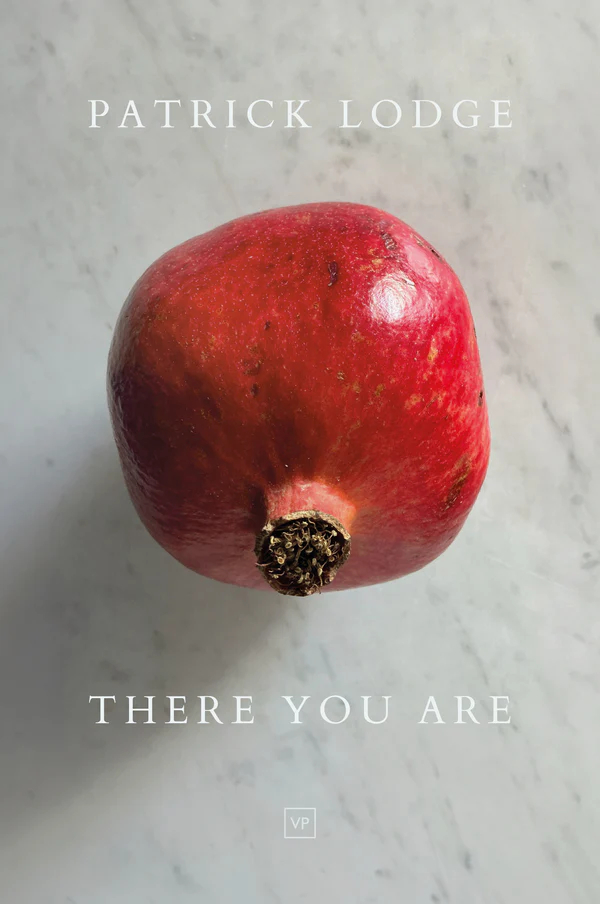
It's not easy getting a book or pamphlet accepted for review these days. So in addition to the regular review section, the One Poem Review feature will allow more poets' to reach a wider audience - one poem featured from a new book/pamphlet along with a cover JPG and a link to the publisher's website. Contact the editor if you have released a book/pamphlet in the last twelve months or expect to have one published. Details here
Reviewed in this issue

 Share
Share Print
Print