
2019
JANUARY CONTRIBUTORS
Stefano Bortolussi, Clare Crossman, Greg Dotoli, Oz Hardwick, Beth McDonogh,
Elizabeth McMunn-Tetangco, Todd Mercer, Joan Michelson, Kenneth Pobo,
Alec Solomita, Pamela Sumners.
STEFANO BORTOLUSSI
Among the Curves
And I feel like I've been here before
David Crosby
Guido, I' vorrei che tu e Lapo ed io
fossimo presi per incantamento
Dante Alighieri
The canyon of laurels is not
what it seemed to be back then,
when Joni & David & Neil were
carried by enchantment and transported
by wooden ships very free on the water
to the sound of the sparse notes
rising from a tamed corner of forest;
now living together are just the spiders,
weavers of sails among eucalypti,
and the wind fills only their creations
glowing geometrically in the good enchanter’s rays:
and yet if you listen — if you smell — if you stop
among the curves, if you don’t lift your gaze
but lose it into the thickets and the crags,
where the houses cling absurdly like bridges
that dive into the void only to hesitate and withdraw
in fear, you can still hear some scattered chord
from the times when the singing was not in the past,
when the present was the unrivalled languor
of the slowly unraveling summer.
Reverse Icarus
I am puzzled as the newborn child
I am troubled at the tide
Tim Buckley
Stay with me under these waves tonight
Jeff Buckley
The ocean is so cold that it wakes you up to yourself,
so clear that it shows the shadow of your blue-palmed
hands as a relic of a different creature,
more complex in body yet easier in soul,
or possibly as the simple whim of a willful goddess
hidden among the rocks and determined to wreak
her archaic vendetta: this is a land where
she would have chosen to return, moving
from the violated islands of her birth.
Sometimes, however, two strokes are enough,
two kicks behind you as if to free yourself
from a clutch and resurface elsewhere,
at the outskirts of a Memphis that now belongs
to more than one myth, in the unconceivable currents
of the Father of the Waters where Jeff son of Tim
dove toward his fate of a reverse Icarus
and stopped singing his Halleluiah.
Sometimes it is enough to let yourself be seized
for an instant by this icy and inchoate force,
to feel the call the violence the obsession
of the waters that scythe and nourish this vast country.
Stefano Bortolussi is a poet, novelist and literary translator. In his native Italy he has published three poetry collections (Ipotesi di caldo, 2001; Califia, 2014; I labili confini, 2016) and four novels (Fuor d'acqua, 2004; Fuoritempo, 2007; Verso dove si va per questa strada, 2013; Billy & Coyote, 2017). His poetry has been also published in magazines and webzines, both Italian and international, such as Interno Poesia, Atelier, Words for the Wild and Ink, Sweat and Tears.
Back to POETRY ARCHIVE
CLARE CROSSMAN
The Mulberry Tree
Nothing was ever wasted: elastic bands,
old envelopes, paper bags put neatly
away. It was because of the war,
that might come back; and so we had to
eat our greens, not leave the crusts on bread
pretend to like rice pudding.
Jam was made from berries of the mulberry tree.
Kept high on shelves in the cool basement,
rusty red, almost amber, sweeter than raspberries.
‘The lovers tree’ she called it:
soft wood, gnarled and leaning,
standing in the garden for years.
We were allowed to climb it,
imagined we’d find rolls of silk.
Slept beneath it in a tepee; unafraid.
We had seen the rubble.
The shells of houses with no floors,
the strange murals of fireplaces
imprinted on high walls.
But could not imagine what it was like
when bombs fell from the sky.
We were the future, held in photographs,
bright against the day.
The lucky ones, swinging on the branches
of a golden age; come out of a terrible
knowledge, into a lengthening shade.
Clare Crossman lives outside Cambridge, UK. She has published three collections of poetry with Shoestring Press, Nottingham, the most recent of which is The Blue Hour. In 2017 she published Winter Flowers, a short biography of her friend the Cumbrian artist Lorna Graves. Her poems have appeared in many anthologies, currently Poems for the NHS, Onslaughtt Press.
Back to POETRY ARCHIVE
GREG DOTOLI
Haiku
busy grey squirrel hears
fall acorns pit pat bounce
dashes out of nest
sun sets on pine run
shadows sprint for tilting sun
branch and bark flashes
bored black calico
studies scuttling beetles
planning an attack
quiet sunrise mirror
orange purple clouds and moon
off wet bullfrog eye
bright red cutthroat trout
sense dancing beetles
splash wakes desert fox
hissing fall raindrops
tapping rich soil and roses
night scents meander
red grey woodpecker
scuttles and hopscotches
listening for ants
Gregg Dotoli lives in Nutley, NJ, USA and has poetry published in many Anthologies, magazines and journals in the United States, Europe and Asia.
Back to POETRY ARCHIVE
OZ HARDWICK
Cut-up
I still find the occasional word,
slipped down the side of the chair,
or under kitchen units, where the cat
has chased them, mistaking them for spiders.
Like the cat, I sometimes don’t
recognise them for what they are,
taking them for leaves or feathers,
desiccated residue from seasons and symbols,
so I’m jolted by small surprise to discover
the worn prints of tongues, the faint
smear of lips. I slip them into
an envelope I keep under my pillow;
shuffle them in lamplight, looking for meaning.
Oz Hardwick’s work has been published and performed internationally in and on diverse media. He has published seven poetry collections, most recently Learning to have Lost (IPSI, 2018), and has edited and co-edited several more. Oz is Professor of English at Leeds Trinity University, where he leads the Creative Writing programmes. www.ozhardwick.co.uk
Back to POETRY ARCHIVE
BETH MCDONOUGH
Fife Coastal
Path
For Amanda
On this next lost odd,
wonderful day
we traipse a coast,
link up patterns from firth to firth.
Shapes of left-over snow,
then ironed-down grass
have passed on to places
to be stewarded by ramsons
or bridal commitments to sloe.
Soon, curated by bluebells, wood sorrel
and then our first Welsh poppy
will yellow under trees keen
to canopy. Cleared skies. But now,
with the comforting sustenance, soup
we are just eyes, and foot, after foot
walking in winter, through spring, to summer.
Transition
Pretend-trace new silk in old clouds,
as you might manage sometime, elsewhere.
Let this season leave silent as grace.
Try now to toe between colour wonders,
or punk spiky in wanna-burst bulbs.
Imagine-rub garlic's green scent.
Not here, where the last swallow’s nest
falls into glaur. Here, where rain, and more rain,
still sediments promise from leaves.
This mild won't stay. Stall in time’s recognised grit.
Keep space for spring, as we peer into mud
for angry rhubarb’s too-tiny fist. Raised.
Swimming.
10th November, Air 5.5°, Water 9°
Our garden’s morning
yellows,
boughed-down with Golden Hornet crabs.
All arc against those bluest skies
too confident at frost’s start.
Beached, I trace colours flickering
water.
But submerged, I fail to fickle any words
for hues, struggle to filter shades, or tell
how sands fold, tack ambers to this iced world.
Xanthos to the Ancient Greeks. Perhaps.
I duck up to Homer’s Oinpos – wine-like.
Not dark. This surface spreads,
bowls limitless in light land won't define.
Home, with each sore foot planted
in hot water bottled soft, I note
how that crab apple glitters,
unconfined by what we know.
Beth McDonough’s poetry appears in Causeway, Antiphon, Interprete’s House and elsewhere; she reviews in DURA. Handfast (2016, with Ruth Aylett) explores family experiences – Aylett’s of dementia. and McDonough’s of autism. She was recently Writer in Residence at Dundee Contemporary Arts.
Back to POETRY ARCHIVE
ELIZABETH MCMUNN-TETANGCO
The Last Autograph
We eat lunch
close to the place
where James Dean died.
The whole
restaurant wall
is full
of him:
his films, his face, his
smashed-in
newsprint car.
On a poster
there’s a picture
of a ticket,
and the sign beneath says
the last autograph.
White clouds are fraying
out the window, aging
hands.
On our way home we pass
the marker: where
he hit.
Do the dead like silver
streamers, or old roses? He
was only twenty-four.
Some of here
was once the bottom
of an ocean,
with each tide heaving
like care,
holding itself.
Rubbings
her friend died
so we drove
out to his grave
out by the highway
and she sat
and talked
and later
i would go to that same graveyard
with a friend
who made grave-rubbings
and i’d sit
and talk to him
in the cold dark
and he would work
he said
it was a way
to love, at least
for him
the night it changed
between the two of us
he made me feel
like gravestones
and
i don’t
know what a gravestone even
is
i think
a marker
or a way to say
you’re sorry
or a tooth
that sticks out
wrong
that you keep
touching —
out of love?
i heard that he put all
the rubbings
up on facebook
and that strangers said what
beauty
and i at first thought of her
her curly hair
dark in the rain
and her cold
fingers
on the edges of the stone
and i thought how
i never knew someone
who died
Elizabeth McMunn-Tetangco lives in California's Central Valley and co-edits One Sentence Poems. Her chapbooks, Various LIes, Lion Hunt, and Water Weight (which is free online!) are available from Finishing Line Press, Plan B Press, and Right Hand Pointing, respectively.
Back to POETRY ARCHIVE
TODD MERCER
Water Under the Bridge of Sighs
By the time of reconciliation
trees grow through the railroad track
behind a house that lacks a roof.
The neighbors can’t remember
where the family relocated.
Bygones are bygones
rather than felonious sins
but the forest devoured
half the homeplace yard.
Seedlings spread over meadow
once mowed twice weekly,
fertilized to emerald green.
By the time I’m finally sorry too,
ready to shoulder a share of blame,
I’m an orphan who’s reduced to
one-way graveyard conversation.
Busses don’t stop there, planes flyover.
I rented a car to drive in,
to cross the divide judged impassable.
I bought extra insurance,
guarding against accidents before arriving
with grace foremost in mind.
Facing a door that flaps on a rusty hinge
in any wind. By the time I let it go,
young is old and old is memory.
Todd Mercer was nominated for Best of the Net in 2018. Mercer won 1st, 2nd & 3rd place of the Kent County Dyer-Ives Poetry Prizes and the won Grand Rapids Festival Flash Fiction Prize. His digital chapbook Life-wish Maintenance is posted at Right Hand Pointing. Recent work appears in: Leaves of Ink, The Pangolin Review. Postcard Poems and Prose, Praxis and Soft Cartel.
Back to POETRY ARCHIVE
JOAN MICHELSON
Artist and Mother, Poland, 1950s
He paints the two together, close-up stills.
They’re in a space that’s white and has no form,
a join of earth to sky, or air that’s blind,
or light alive without a tint. The woman
is in her prime. The child, who grows to be
a man, lives on in time. Although they had
fourteen years together, on his canvas,
always one of them is dead. For death,
greys with blue, for life, fire-reds.
Here’s the mother, blue blue flesh
in silky thin-strap, shroud-like dress.
The boy in tiger stripes, is red, flame-red.
And fierce with want. She’s on her back.
Holding to her hips, he’s pressing his face
deep into her body that cannot exist.
Although the dead cannot, she spreads her hand
against his back as if to pull him close.
Elsewhere, the reverse.
He’s a toddler and his skin is pale blue
while she, a woman ripe with fullness,
is bright red. Alive, she holds her child
by his hands, raises him to stand
and stretches out his pudgy blue arms.
Fixed on him, she gazes with the fierceness
of the boy who, living, hugged her hips.
This death-in-life coupling keeps repeating
until, about to end his live, the artist
paints his portrait. A lean young man
in dark-rimmed specs all but disappears
into the emptiness. In his hand, his palette.
Joan Michelson’s poetry books: The Family Kitchen, 2018, The Finishing Line Press, KY, Landing Stage, 2017, publication prize, SPM Publishers, UK, Bloomvale Home, 2016, Original Plus Chapbooks, Wales, 2016. Toward The Heliopause, 2011, and Into the Light, 2008, Poetic Matrix Press, CA. Joan grew up in the States and settled in London.
Back to POETRY ARCHIVE
KENNETH POBO
Misunderstanding
The guy in “The Raven” who heard
a bird saying “never more!”
got it wrong. Yes, the bird did
come to his chamber door,
it did speak, but it said
“You’re a bore!” He misheard,
thought the bird was mocking him.
The raven realized this man
was a yawn, so, after a few more
“You’re a bores” she flew away,
past Poe’s beautiful dead
Ulalume and Lenore, past
colleges where profs
seduce undergrads
or write essays nobody would
ever read, and finally, up,
up to clouds, her dark feathers
a roof moving in mid-air.
Kenneth Pobo has a book of prose poems forthcoming from Clare Songbirds Publishing House called The Antlantis Hit Parade. Recent poems have appeared in: Brittle Star, Caesura, and First Literary Review—East. “Misunderstanding” first published in The Plum Ruby Review.
Back to POETRY ARCHIVE
ALEC SOLOMITA
Fatherhood
The trees in the sloped yard cringe
as Vince starts to barbecue again.
I always wanted a dad with a neat
workroom in the basement, tools
hanging in coherent rows. He pours
out the charcoal into the black circle.
The rumble is pleasing; I light a cigarette
way up on the porch, out of harm’s way.
“That’s enough!” cries my mother
as flight patterns of lighter fluid send
streaks of fire ’round the bare legs of my
little sister who knocks over the table
covered with raw hamburger and hot dogs.
The only thing worse is watching him
try to set up the Christmas tree.
Alec Solomita has published fiction in The Mississippi Review, Peacock, and The Adirondack Review, among other journals. His poetry has appeared in Literary Orphans, Driftwood Press, 3Elements Literary Review, and elsewhere. His chapbook, “Do Not Forsake Me,” was published by Finishing Line Press in 2017. He lives in Massachusetts, USA.
Back to POETRY ARCHIVE
PAMELA SUMNERS
Long Division
A house divided by silence, they tell you, cannot stand,
but it has bricks and mortar enough, rattling sounds and
distorted hisses of boilers under those rotting eaves.
It’s landlocked, hemmed in by light-blocking neighbors
crammed so tight one whole side abjures windows.
You can plant caladiums by your dreary basement,
about all that thrives in the weary Chicago sediment.
It stands up well enough, is a tough old broad hauled
all the way to Oak Park on the backs of draft horses after
it outbreathed the tumult of limestone facades burping cinders
kicked up by Mrs. O’Leary’s maligned old heifer.
It must have been cabled to a dray on Austin or Division.
It doesn’t belong here, its egg-and-dart and bullseye,
makeshift Eastlake with a faint whiff of smoke I smell
when it likes a new paint, a fresh burnt offering to
the god of fire who spit it out in 1873. I
make these improvements to sell it, and this house
rewards me because it likes that I am leaving it:
rewards me with smoke for the choices I made.
Its roof is the most steeply pitched in the whole town,
and it knows it, knows it doesn’t want its lot, sneers
at the bungalows all up and down the avenues.
It doesn’t know its place, or recalls its place too well.
The roof quarrels with the basement’s worst fears:
new baseboard heat of which the smoke does not approve,
dragging the sound reproof of unvapored silence.
I remember another steeply pitched roof, another house,
lavish in its aloneness, greedy in its sashweight windows.
A careless party guest, not knowing cats seek heights,
let her out. You barely knew me then, hardly knew yourself,
but cat-coaxing, you clung to the chimney. Years later I
asked you why you clambered up on that roof, made a
Tennessee Williams joke in that Indian Summer heat.
“I thought you could use some help.” Roof, cat, you,
a puff of smoke from the grill—clinging to a chimney
that sometimes flung bricks from a great height—
unexpected help. This is standing well enough.
Pamela Sumners is a constitutional and civil rights lawyer from America's Deep South. Her work has appeared or been recognized by 20 journals or publishing houses in the U.S., UK, and Scotland. She now lives in St. Louis with her family, which includes three rescue hounds.
Back to POETRY ARCHIVE
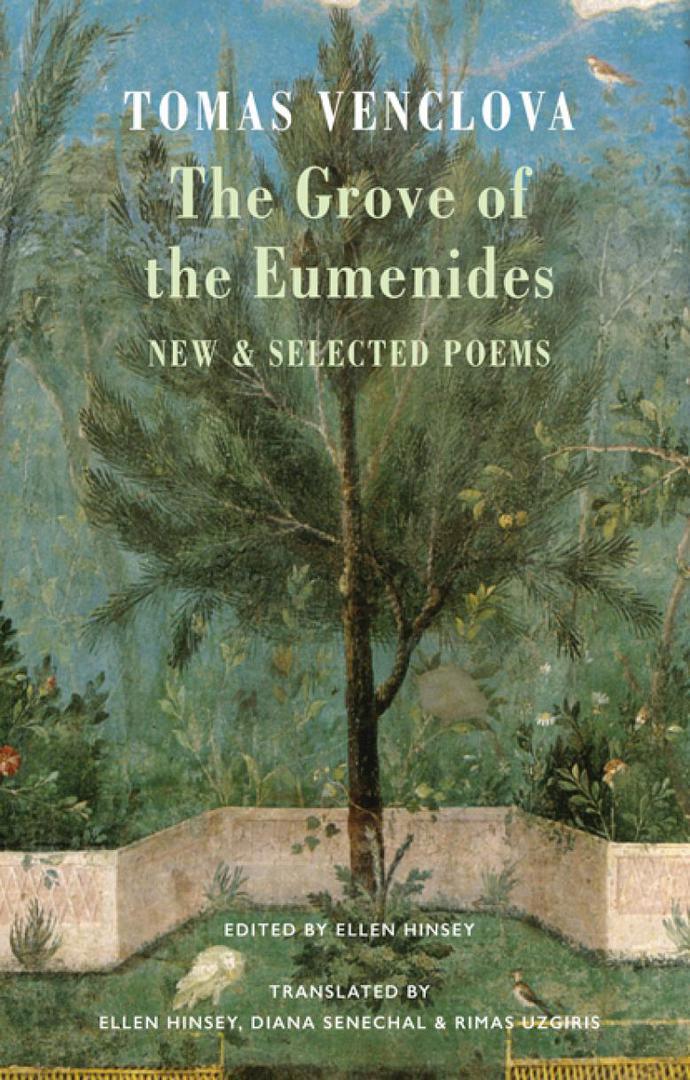
It's not easy getting a book or pamphlet accepted for review these days. So in addition to the regular review section, the One Poem Review feature will allow more poets' to reach a wider audience - one poem featured from a new book/pamphlet along with a cover JPG and a link to the publisher's website. Contact the editor if you have released a book/pamphlet in the last twelve months or expect to have one published. Details here
Reviewed in this issue
 Share
Share Print
Print