
2026
JANUARY
J. Ajula, Rick Christiansen, Patrick Deeley, Carrie Farrar, Fin Fearn, William Ogden Haynes, Gabrielle Munslow, J. R. Solonche, Hannah Stone, Kamil Zaszkowski.
J. AUJLA
Small Talk
All around the table, there were empty glasses,
cats and other forms of life moved within the room.
Most were imperceptible.
Very slight, gradual or subtle.
Something not capable of being perceived.
The board game made the dictionary
some measure of exchange.
Outside taking air, the painter had explained:
I do not believe in plain speaking. There I see
coffee and silverfish.
The man with her looked to the sky:
Where I’m from we call it night.
Peacocks lined the dinner plates. Candles lit the way
and words were simple objects in that orderly display.
Someone broke the silence:
Perhaps it’s hearsay
but Sam Beckett drove a young André
(the wrestling giant)
to school each day.
I wonder what they spoke about?
The guests went on breathing
the same air as their hosts
passing through their open throats.
K–Aujla is a writer with no fixed address, bad teeth and a song for anyone who can sing.
Back to POETRY ARCHIVE
RICK CHRISTIANSEN
The Last Routine
“Two orcas—mother and son—remain in the shuttered tanks of Marineland Antibes, performing
for whoever still comes to watch.” — TideBreakers Report, 2025
Green water clots with rust and fallen light.
The mother circles once—her son in her wake—
beneath a film of algae, drift, and silence.
Four months enclosed, they still return to their marks.
When strangers lean above the corroded platform,
they rise together, he moving close beside her.
Her shadow lengthens; he swims tight beneath her,
both bodies glinting briefly in the light.
Once crowds leaned in from the raised platform,
hands clapping her rhythm, drawing him in her wake.
Now only lenses wait to catch their marks—
the whole tank breathing its slow, green silence.
Filters groan; the pumps exhale their silence.
Still they ascend—her first, then him below her—
offering the faint memory of old marks
that shimmered once beneath rehearsal light.
He rises slower now, pausing in her wake—
both turning toward the shadowed platform.
Rust powders the gates; moss climbs the platform.
Each echo lingers longer in the silence.
She flicks her tail once—he folds into her wake—
a reflex honed by years of drifting near her
toward cue and crest, the trainer’s vanished light,
their bodies taut in the choreography of marks.
Observers note the scars—thin, crescent marks—
and lift their phones above the viewing platform.
Outside, protest banners ripple in the light,
and nothing cracks the walls or breaks that silence.
He circles tighter now, shadowing her,
his fin dipping lower as he enters her wake.
Once wild, they crossed the open blue in her wake,
where the dark held them gently, a world without marks.
Here, habit binds him closer still, keeping to her,
their motions flattening beneath the empty platform
and the weight of water thick with silence.
Yet still they gleam for anyone holding up a light.
Toward the platform’s edge, the last light thins in their silence.
She drifts beside him—her wake folding into his, soft as memory’s marks.
And in that dim, he follows her through the dark that gathers her.
Rick Christiansen is a former corporate executive, stand-up comedian, actor, and director. He is the author of two full-length poetry collections from Spartan Press: Bone Fragments (2024) and Not a Hero (2025). His work appears widely, including Sheila-Na-Gig and MacQueen’s Quinterly. He was recently nominated for a Pushcart Prize Award.
Back to POETRY ARCHIVE
PATRICK DEELY
Childhood
Old men solemnly shook their heads
and said be careful or you’ll fall off the edge
of the world. I tried to get close
to the edge, wanted to leap
as I would from a tree, to spin and orbit
as the millions of dead people’s souls did –
shining in the dark, winking,
humming the song of eternity
even if nobody but me could hear them
or take from their trembling
that there was good reason to tamp down
the importance of things, for all
would pass and neither would your sadness
stay solid – but fade, shrink
softly away beyond the dawning curtains.
Go, droned the big wind in the chimney;
flow, whispered the wild grass
and spilling rivulets, but I mistook directions,
laughed in the wrong places,
fought and cut myself and tried to cry.
Pictures bloomed in my head.
The straight thinkers seated at kitchen tables
or leaning on farmyard gates
certified a boy so bird-brained
he was bound to fly in foolish circles.
Slowly, it brought me to gentleness,
I grew surefooted around whirlpool and quag,
drew from the shy ghosts
of the wet meadow my own story.
And there was the world – there, the sky.
My Father’s Salsa
He would jiggle the riddle’s circular frame
between his hands, sand dancing
within, fine grains streaming
through the wire grid until only shingle
and jags of stone remained. Then stop
those salsa rhythms I found
myself dancing to; chuck loose pebbles aside,
gouge from the quarry a refill,
shake and shuffle as before,
sifting so the damp, silken sand overspilled
the sides of its conical hill.
Walls were called for where clay ditches
had always done, the quickening –
though neither of us knew it yet –
to modernity begun, cement mixer and silo
soon shunted into position.
We saw it as improvement, tunnels drilled
through hills, tar lorries,
steamrollers smarming a nexus of routes.
And bridges, so many new bridges
to cross. Decades later, in this underpass,
a muffled whoosh, plastic
scrunched underfoot, long mittens of ivy
darned on rock. I scamper up
and around, stand above everything.
Smell fuel-burn, feel the wind against my face
no matter which way I turn.
Traffic bugles, trombones, an out-of-tune
brass band, the world of strangers
here and gone, all my townlands swept past
in about the time it takes
to mime my father’s salsa, dream the man.
Patrick Deeley is a poet, memoirist and children’s writer from Loughrea, in the west of Ireland. His latest collection of poems is Keepsake, published by Dedalus Press in 2024. www.patrickdeeley.net
Back to POETRY ARCHIVE
CARRIE FARRAR
Instructions for Being Alone
You consult an almanac
for sovereign and deeply rooted beliefs.
Autarky and Nirvana.
Solipsism.
You contemplate
the architecture of your silence,
savoring the fortunate stillness,
the good space
that makes your existence
breathe deeper.
Blue heron glide
over the reservoir near your window,
still as slate,
and spiderwebs stitch
silver lace
across the high porch eaves.
You are enclosed
by a narrative of your own making,
an architect
of private thought,
a quiet scholar
whose company
is purely chosen.
You steep black tea
and note the stars
sharpening into diamonds.
Zen parables drift
through the newsfeeds you skim.
If you meet the Buddha
on the road,
kill him.
The true master
is an eternal student.
The mind is its own place,
and in itself
can make a heaven of hell,
a hell of heaven.
Serendipity.
You sip your tea,
settling into a flavor
you once learned
to call home.
Carrie Farrar is an emerging poet whose work explores interiority, solitude, and the quiet architectures of thought. Her poems often draw on philosophy, contemplative practice, and close observation of the natural world. She lives and writes in California.
Back to POETRY ARCHIVE
FIN FEARN
Grow Your Own
From the top shelf, the bonsai
spoke to him. He imagined the day
the leaves would glimmer their green
hue in the light. Take the soil, plant the seed
and wait; that’s all he’d have to do.
The bonsai would fill what was missing;
it’d smooth his coarse facial hair; iron out
the wrinkles that had been placed
centrally on his forehead. His green
envy of others would change to acceptance.
Driving back from the shop, he gazed at the green
label covering the box beside him. It
would balance him, as it itself is balanced, sitting idly on
the passenger seat.
Fin Fearn is a third year Creative Writing student at York St John University, currently working towards further studies in the form of a Masters degree. He has held an intense passion for the written word since he can remember and has featured in places such as Scribbled and Pulsar.
Back to POETRY ARCHIVE
WILLIAM OGDEN HAYNES
Slow Changes Under the Sun
The sun, with all those planets revolving around it and
dependent on it, can still ripen a bunch of grapes as if it
had nothing else in the universe to do. Galileo Galilei
That day, the cumulus clouds wandered slowly across
the sky like sheep herded by an invisible wind. In the heart
of the forest, the pulsation of life was seen in everything
from tiny insects to the tallest tree. And somewhere
underground, roots threaded deep into the soil, and seeds
slowly cracked open in darkness waiting for water and
sunlight. Wildflower petals yawned open, stretching to
greet the sunrise. The air smelled clean, perfumed subtly
by pine, cedar and wild mint. A beetle waddled along on
a decaying log and a spider’s web trembled in the gentle
breeze. Morning dew clung to green leaves like a necklace
of diamonds and early mist lifted like a veil from the face
of a new day. Ancient oaks stood tall with storm-scarred
bark, their lives spanning slow seasons counted in rings
that won’t be seen until they’re felled by the logger’s axe.
Here, time creeps along, almost imperceptibly, as leaves
slowly turn toward light, roots reach out for water and
shadows at sunrise crawl across the forest floor. And
Galileo’s grapes, these wild muscadines, change color so
gradually, that not even the deer who eat them will notice.
The Fragility of Poetry
Some things are delicate, like antique stemware. If
even a gentle hand holds the stem too tightly it’s likely
to snap. The same is true for eggshells, bubbles, dishes
and spiderwebs. Other objects are fragile because
they’re short-lived, like autumn leaves, sandcastles,
snowflakes and cut flowers. We enjoy them while we
can because they’ll soon disappear. There are intangibles
we can’t touch that are also easily broken. Promises,
hearts, winning streaks, relationships, spirits, trust
and democracy are all fragile. Our lives become more
delicate as we face aging and mortality. That’s why
we’re careful and take precautions. And that brings me
to the fragility of poetry. A poet sits in a room, draft
after draft written on paper, words crossed out, arrows
rearranging stanzas, crumpled papers, like large hailstones,
clutter the floor. Suddenly, inspiration strikes, notions
emerge as dim filaments in the distance. The poet sees
the scattered threads and weaves them into a string, then
a rope, clipping off extraneous fibers, creating a tight braid
of words and metaphors. We think of a rope as having
strength, but a poem is not necessarily strong. When you let
someone read it, you’re putting the poem and yourself on
the line. You’re at the mercy of the reader’s biases. There’s
a vulnerability in the work and in the poet’s self-esteem.
And in the end, no matter how tightly wound, a poem is at
best just a lottery ticket, and at worst, a house of cards, an
umbrella made of rice paper, easily blown away with a sigh.
William Ogden Haynes is a poet and author of short fiction from Alabama who was born in Michigan. He has published several collections of poetry and many of his poems and short stories have appeared in literary journals and anthologies. http://www.williamogdenhaynes.com
BacK to POETRY ARCHIVE
GABRIELLE MUNSLOW
Before I Become Alice
To be a poet with metrophobia—
where words wound and scrape the tongue—
is like a footballer scared of the ball,
who tackles everyone but his fear.
Or a clown with coulrophobia,
painting his face with his eyes half-closed.
A stargazer with siderophobia,
wanting to look at the dazzling stars, but unable to.
A dancer afraid of movement.
A bee afraid of honey.
That’s how we all live, in some way—
scared the things we love will undo us.
Love is a cracked secret.
Neophobia—fear of new things—
baptises me.
So I cling to what’s old and familiar,
like threading a needle with no thread,
rereading the same chapter
of a tired book.
There’s something else beneath it all.
A word in Russian: toska.
It has no true translation—
a quiet ache that settles in,
like a guest who never leaves,
heavy as fog,
nameless, but everywhere.
I’m looking in a mirror,
but it’s distorted.
Eisoptrophobia—fear of mirrors.
Toska looks back at me
through the glass.
I smash the looking glass
before I become Alice
and enter Wonderland.
Gabrielle Munslow is a poet and nurse practitioner based in West Sussex, UK. Her work has appeared or is forthcoming in Strange Horizons, Half and One, The Lake, Sky Island Journal, and Bristol Noir. She writes at the intersection of myth, memory, and emotional restraint.
Back to POETRY ARCHIVE
J. R. SOLONCHE
Zero
Zero is my favorite number. It is
a simple number. It is a quiet
number. It is not a number at all.
It is the number of things that can
go wrong if you do nothing. It is
the number of times I have won
the lottery. It is the number of times
my cat has washed the dishes. It is
the number of complaints I have
on a quiet Tuesday afternoon. But
zero is also powerful. It means
a beginning. It means a blank page.
It means infinite potential. It means
promise, aspiration, inspiration.
You start from zero. You build up
from zero. It is where everything can
happen because nothing has happened
yet. Zero does not hope. Zero just is,
an absence that means everything is
fine. No problems. No worries. No
nothing. So I thank you, Brahmagupta,
O father of the zero, O father of nothing,
O grandfather of infinity.
Bohemian Rhapsody
The first time I heard "Bohemian
Rhapsody," my daughter was playing
it in her room. The door was closed,
but it was loud. I usually never paid
any attention to the stuff she listened to,
but this thing hit me in the solar plexus.
I stood in the hallway and listened to
the whole song, all six minutes of it.
It was complicated. It had slow parts,
fast parts, parts that sounded like an
opera, parts that were just shouting.
It was not boring. So I stood transfixed,
half in the dark, half in the light from
the kitchen, listening. I prefer simple
songs. A man walks into a bar, a man
buys a drink, a man goes home. That is
a simple song. This song was not simple,
except the very ending, a simple guitar.
Then the silence, which was not a simple
silence. The silence after was different
from the silence before. A silence like
the silence one hears only after Bach.
A silence full of the same forever as that.
Nominated for the National Book Award and twice-nominated for the Pulitzer Prize, J.R. Solonche is the author of over forty books of poetry and co-author of another. He lives in the Hudson Valley.
Back to POETRY ARCHIVE
HANNAH STONE
If winter comes…
Shelley, ‘Ode to the West Wind’, and Jo Bell’s prompt from 52 of ‘an invitation’
Enough prevarication; you’re needed here.
Of course, travel plans can change, due to factors
beyond our control, but please show willing;
at least book a flight. Sometimes Day
doesn’t bother getting up at all;
just slumps under the cloud duvet,
pissing drizzle into his pjs,
too damned lazy to stir.
He needs you to sound the alarms –
the blackbird at 6am; robin at 6.15;
remind him there are targets to meet –
a minimum of seven and a half hours
of eyes open, before passing out to the Night Shift.
Spring, stop playing for time; please send your ETA.
First snowfall
Last night’s snow deploys its double cunning –
unfurling time to re-find childish glee,
whilst simultaneously releasing light
as if a lid were lifted off a box
containing not Pandora’s evil gifts
but possible encounters with new joys.
With drink in hand, the visitor reclines
on lonely sofa (or is it soap box),
dispensing wisdom to his boomer mum
to whom he has entrusted recipes
for shakshuka, orange and almond cake,
along with other nuggets of advice;
it’s obvious what we should do today:
eat cake, drink coffee, and build a snowman.
Hannah Stone is the author of Lodestone (Stairwell Books, 2016), Missing Miles (Indigo Dreams Publishing, 2017), Swn y Morloi (Maytree Press, 2019) and several collaborations, including Fit to Bust with Pamela Scobie (Runcible Spoon, 2020). She convenes the poets/composer’s forum for Leeds Leider, curates Nowt but Verse for Leeds Library, is poet theologian in Virtual Residence for Leeds Church Institute and editor of the literary journal Dream Catcher. Contact her on hannahstone14@hotmail.com for readings, workshops or book purchases.
Back to POETRY ARCHIVE
KAMIL ZASZKOWSKI
Splinters of sunlight
The city slowly frees itself from the grip
of the rustling discipline of tightly
fastened raincoats.
Pavements frosted by rain
slither like snakes—rough serpents
covered in silver mould
seem t seethe in the wind
fermented by the cold and glitter in the sun.
Again we can walk, carrying at the zenith
of scents: a damp greyness and green
through the sticky silence of the sun
with the wet lament of folding umbrellas.
A step from breathlessness so long as we go
forward.
A hair's breadth from a new hairstyle
unless you prefer to split hairs.
One more word and a decent poem
will be born.
Kamil Zaszkowski, born in 1978 in Poland, currently living in the UK. He has published in his native language in Polish Literary Magazines and Newspapers and in the English-language magazine Chainmail Poetry. He is the author of three volumes of poetry and a book of prose.
Back to POETRY ARCHIVE
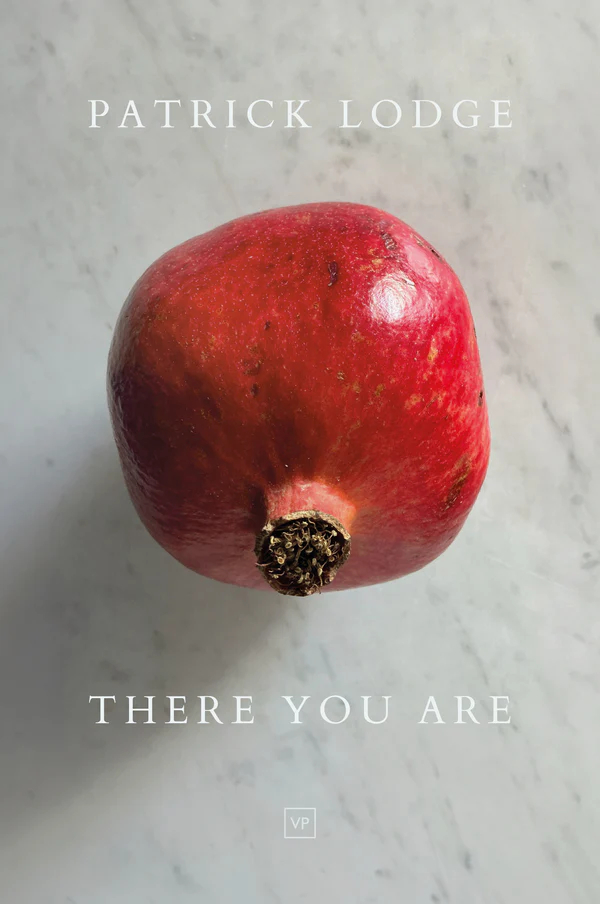
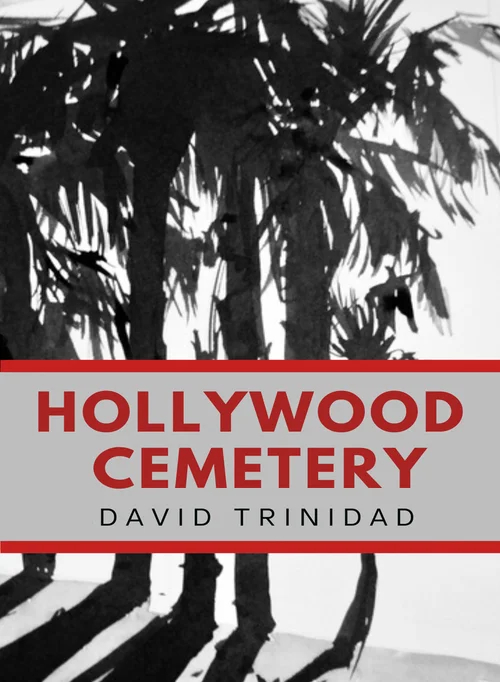
It's not easy getting a book or pamphlet accepted for review these days. So in addition to the regular review section, the One Poem Review feature will allow more poets' to reach a wider audience - one poem featured from a new book/pamphlet along with a cover JPG and a link to the publisher's website. Contact the editor if you have released a book/pamphlet in the last twelve months or expect to have one published. Details here
Reviewed in this issue
 Share
Share Print
Print