
2017
JULY CONTRIBUTORS
Siegfried Baber, Nels Hanson, William Ogden Haynes, Alison Jones, Julia Knobloch,
Gary Leising, Beth McDonough, Maren O. Mitchell, Ronald Moran, John L. Stanizzi,
Grant Tarbard, Judith Taylor, Laynie Tzena.
SIEGFRIED BABER
Einstein's Second Letter to Freud From America
After Springsteen's No Nukes gig at Madison Square Garden
I went down to the reservoir with a nasty little redhead
from the Institute for Advanced Study and drank
moonshine under the stars. She said she'd always had a thing
for smart guys like you and me, then smiled,
slipped some ice into her mouth. Time and relativity in space,
Mozart's Sonata in B Flat and the starting five
from the LA Lakers' 1982 Championship-winning season
spilled out of me like silverfish into that dark, glittering water.
A week later, we met in the Rainbow Bar on Sunset Strip
and split half a gram of Hollywood's smoothest.
Later, only when she was shooting pool with a gang
of theoretical physicists did I notice those three handkerchiefs
dangling from her back pocket, red and white and blue.
The Fire-Spotter on Desolation Peak
You stayed up all night, every night,
through that slow summer
of fifty-six, chewing on strips of benzedrine
above the dense green tree-line
of Washington's North Cascade Range,
reading The Daring Young Man
on The Flying Trapeze and War and Peace
seventy miles from interstate fifteen
and the Canadian border.
Ginsberg was still in San Francisco; Burroughs
back on the junk in Morocco;
Corso in Cambridge; and in Greystone Park
Carl Solomon had four hundred volts
crashing between his ears.
For the first time in years, you were alone.
No mother, money or holy typewriter
to keep you company. No Lakewood or Denver.
Only the silent ranger's radio
and distant grizzlies scooping salmon,
fresh and pink and wriggling, from the water
of Lightning Creek. A broken Buddha,
you waited days to glimpse those great bears
upright amongst the mountains.
And when you eventually agreed to sleep
sometime in early Autumn,
you dreamed of that small wooden hut
on Desolation Peak, when your scattered friends
wore the long shadows of beatified men.
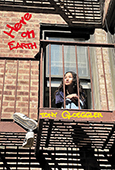
Siegfried Baber was born in Barnstaple, Devon in 1989 and his poetry has featured in a variety of publications including Under The Radar, The Interpreter’s House, Butcher’s Dog Magazine, online with The Compass Magazine, Ink, Sweat and Tears, and as part of the Bath Festival. Siegfried's debut pamphlet When Love Came To The Cartoon Kid is published by Telltale Press, with its title poem nominated for the 2015 Forward Prize for Best Single Poem. Follow Siegfried on Twitter: @SiegfriedBaber
Back to POETRY ARCHIVE
NELS HANSON
Requiem
Batman just died, Superman
many years before. Black cape,
red, black boots, crimson, one
with mask, other wearing thick
bifocals, both incognito, secret
until now . . . The Bat Cave is
sealed, the Fortress of Solitude
locked in ice. Robin, Lois Lane,
the X-Men mourn, Spidey, Hulk,
Captain America too. I imagined
heroes like angels lived forever,
would never leave us to ourselves
unguarded. Their roles are open
and auditions imminent for two
true hearts without great powers
who don the costume with scarlet
“S”, bat wings heavy as a cross,
as lead immune to X-ray vision.
Contrast and Compare
I’ve slept with more women than
you have. I imagine so. I’m taller
by a full two inches. Yes, at least.
I have more money than you know.
That’s true, much more. I’ve been
all around the world, each country.
I never left home. I’m much smarter
than you are. Probably. I’m famous.
That’s right, very. There’s something
wrong with you. It’s possible. Why
do I talk to you? You’d have to ask
yourself. You’re not a mind reader,
huh? No, just now and then I have
a hunch when things feel different.
What’s that mean? Once I saw doves
fly from a limb until a big oak fell.
Nels Hanson’s fiction received the San Francisco Foundation’s James D. Phelan Award and Pushcart nominations in 2010, 2012, 2014 and 2016. His poems received a 2014 Pushcart nomination, Sharkpack Review’s 2014 Prospero Prize, and 2015 and 2016 Best of the Net nominations.
Back to POETRY ARCHIVE
WILLIAM OGDEN HAYNES
How the Revelation Comes
My days are in the yellow leaf;
the flowers and fruits of love are gone. Lord Byron
It’s not the axe, but the paring knife that whittles away at your life,
one small shaving at a time until thought is unreliable and memory erased.
It’s not an explosion, but a slow leak in a bicycle tire that creates
shortness of breath and increases your number of prescriptions.
It’s not a bucket of water on this campfire that puts it out, but a slow dying
of flames as the wood turns to ash and extra logs are nowhere to be found.
It’s not falling out of love, but a creeping complacency where a passionate kiss becomes
a peck on the cheek and the need for sleep becomes stronger than the drive for sex.
It’s not that you wake up one morning with a hearing loss and clouded vision,
but a failure to notice a barely perceptible dimming of the senses over decades.
It’s not a single accident that impairs your movement, but the insidious loss of muscle
tone and increasing stiffness in your joints that becomes more noticeable each year.
And then after all the decades of denial, one day you look in the mirror and suddenly
realize you’re old and invisible and there’s nothing more you can do about it.
You’ve moved beyond the hair dyes, vitamins and facial creams. You don’t care
anymore if your hearing aid is visible or if you have a line in the lens of your bifocals.
It’s a day when your house abruptly disappears into a massive sinkhole, in a
neighborhood where everyone has always known, that fracking was going on nearby.
William Ogden Haynes is a poet and author of short fiction from Alabama who was born in Michigan. He has published six collections of poetry (Points of Interest; Uncommon Pursuits, Remnants, Stories in Stained Glass, Carvings and Going South) and one book of short stories (Youthful Indiscretions) all available on Amazon.com. Over a hundred and fifty of his poems and short stories have appeared in literary journals and his work is frequently anthologized. http://www.williamogdenhaynes.com
Back to POETRY ARCHIVE
ALISON JONES
Cardboard and String
One day you will venture out further than you’ve ever been,
wearing cardboard and string, past the end of the line,
where you thought there would be dragons.
It will start with a walk to school, then crocodile into the bus,
holding hands with Ada, so proud of the little tag,
your own personal luggage label. The little box too.
You’ll feel glad that Mrs Entwhistle pinned it through the seam,
because appearing with holes in your Sunday best
is probably not good for first impressions. Out then
to the train, all fire and wonder, alchemy in action,
you know that trains are really magical beasts in disguise.
Watch it unfold, branches, nests, beautiful things, animals,
harvests growing, it may be a shock when you realise
that carrots don’t really come from tins, but are born
out here in mud and sunlight. It will be a long way,
excitement will fade as the quilted fields unfold
and you think of the arms of your mother, hands
empty, curling close, holding air and silence.
The thread embroiders far from the knot.
Later, the touching of strangers; choosing lines
in a damp village hall, all things pass beneath
judgemental eyes that admire, but cannot love
Ali Jones is a teacher and writer. She is a mother of three. Her work has appeared in Fire, Poetry Rivals, Strange Poetry, Ink Sweat and Tears, Snakeskin Poetry, Atrium, Mother’s Milk Books., Breastfeeding Matters, Breastfeeding Today and Green Parent magazine. She writes a regular column for Breastfeeding Matters Magazine. She was the winner of the Green Parent Writing Prize in 2016 and has also written for The Guardian.
Back to POETRY ARCHIVE
JULIA KNOBLOCH
The Emigrant
When I think of Portugal across the sea,
I feel sunburnt terrace tiles under naked feet
and cool Atlantic air,
I hear distant voices call my name,
tender, loving laughter
hovering in the breeze of time,
dog paws clicking on inlaid hardwood floors;
I think of a darkened house with
precious rugs and squeaky stairs,
with art on the walls, and a
rotary dial phone in one corner.
When her son called from the land of peaches,
the painter sat on a green velour chair by the window
and conjured up the day that he would win an Oscar.
Fondling the panting dog, she’d call me when
she was ready to pass on the receiver.
The light from the monastery filled the sky,
heat and river fog paralyzed the city.
The painter’s daughter took cold baths at night;
they freshened up her creamy olive summer skin.
How pretty she was in purple dresses,
with long, dark curls and self-made jewelry,
and a warm, sad smile that runs in the family.
The dog yawned.
Out at the open coast, near the cape,
the reed grass waves and the waves break
as always, until they swallow the beach.
What remains?
Maybe salt crystals on sundrenched faces—and longing,
so much longing, unfulfilled and self-sustained.
The preposition ‘lá’ defines a place that is undefined.
The sky over the monastery is still the same.
Shadows waft across bare walls in empty rooms,
silhouettes of lovers, long departed.
A green light fights its way through orange darkness.
A train whistles like so many years ago.
Stop. Listen. Watch.
Talk to me.
Julia Knobloch is a journalist turned translator, project manager, and emerging poet. She was awarded the 2016 Poem of the Year prize from Brooklyn Poets for her poem “Daylight Saving Time”. Her poems are published or forthcoming in Green Mountains Review, Yes, Poetry Magazine, Luna Luna Magazine, ReformJudaism.org, in between hangovers, and Your One Phone Call. She is a Brooklyn Poets fellow for the 2017 summer semester. “The Emigrant” featured on Brooklyn Poets social media in June 2016.
Back to POETRY ARCHIVE
GARY LEISING
Meditation on a Line from Rilke
So the poet, renting a flat in Paris, writing
letters to his wife between labors on a line
of poetry, then another, another, until the poem
seemed finished, listened to his own steps
clack the wide boards. Through one busted
knothole, he could tell when the downstairs man
put out his light to sleep. How often he thought
of putting his lips to that hole and crying out—
he knew not what to say; he only wanted
to be heard by someone near. Rodin still
seemed strange, his wife still far off, still
pulled his affection toward her the way
a puppeteer jerked strings to make the marionette
dance, a wooden clown twirling and tripping
to please a city square crowd. “Whoever has
no house now, will never have one,” he wrote,
then walked to the other table, a letter upon it.
How difficult, yet necessary, to tell Clara
she could not live with him in Paris.
Yet next month she must be in Paris.
He wrote one draft then another, each time
hating to write the word “Paris.” That hard city,
alien, hostile, its gallery of people all saying
its name in different languages, it seemed.
“Listen,” he wrote her, “I have not enough money
for regular meals. When I walk, I find
everywhere little doors in alleys and sidestreets.
You cannot tell but you know they go secretly
into hospitals. It starts to rain but you will
not go in those doors, knowing where they lead.
You go home instead and share a bed
with someone you detest. This city
awaits you.” He will not send this letter,
will not even save it. Back to the poem:
“Whoever is alone now.” He will burn
that letter in a candle’s flame. Its edges
darken to ash that dances in the drafts.
Soon he will find the words to tell her,
Come to this despicable city; do not come to me.
Gary Leising is the author of the book, The Alp at the End of My Street, from Brick Road Poetry Press (2014). He has also published three poetry chapbooks: The Girl with the JAKE Tattoo (Two of Cups Press, 2015), Temple of Bones (Finishing Line Press, 2013), and Fastened to a Dying Animal (Pudding House, 2010). He lives in Clinton, New York, with his wife and two sons, where he teaches creative writing and poetry as a professor of English.
Back to POETRY ARCHIVE
BETH MCDONOUGH
A plum sapling
arms out, crackles in
new hot
April. Leaf-naked limbs twig thin
festooned in white tiny blooms.
Van Gogh glorious on blue.
This year fruit should form
even fill and ripen. Not for
fat pigeons or wasp drills.
For compote. For comfort. For stretched
sticky hands. For chins which will itch.
But today, you can only nose
very close, right where frost-brilliant skies
disappear.
Reclaiming
In this day’s grim
glottal stop, nothing
patterns to remember rainbows. Here’s
a wave crimp wind on the Tay.
Conspiring with this firth’s ebb, I’m
washing downstream, swimming
through clear with that blind sun’s
surprise warming my back. After
turns playtimes of
acrobat dolphins
past a red mizzen. Hands
mumble shared mugs, then
a laughter drive on, by the fiddling
optician’s where a myopic mouse
ceilidhed right up his left trouser leg.
Summer will come.
Parrot fashion
Out there! A green
parrot
Christmas fairys our apple tree
branches off where autumn fat pigeons
debated, berated, pecked
top-notch fruit. Now
exotica squat, spring bright
unlikely as sexed-up leprechauns
gardening all Advent’s frost.
Perhaps he’ll never return. They’ll muse
how I dreamed him, slipped
something impossible into this rime.
I mimic his image. Sing.
Beth McDonough’s poetry appears in Agenda, Gyroscope Review, Poetry Salzburg Review and elsewhere; she reviews in DURA. Handfast (2016, with Ruth Aylett) explores family experiences – Aylett’s of dementia and McDonough’s of autism. She swims in the Tay and forages obsessively nearby.
Back to POETRY ARCHIVE
MAREN O. MITCHELL
Outside In
to Claude Monet and his Giverny dining room
Over and over, from love of light and sky and water,
you stroked colors to canvas; needing yet more,
you flooded and lit your dining room, slathered walls
and cupboards with yellow, windowed crockery
and napkins with blue, where, I’m sure, every morning
you partook of sacrament, warm buttery croissants,
juicy purple plums; these two colors I reflect
in my steadfast breakfast of bananas, hansa yellow
before peeling, full-fat cream when naked, mixed with
indigo blueberries against a background of ivory yogurt;
they also ricochet in our house with yolk linens,
walk-on-water carpet and see-through walls, but all
the while—from before you, past me, beyond the lifespan
of your work—our sun, earth’s waters and sky, back
and forth, carouse with each other, bask in themselves,
in yellowness, in blueness, over and over.
Maren O. Mitchell’s poems appear in Poetry East, Tar River Poetry, Slant: A Journal of Poetry, POEM, The Lake (UK), The Pedestal Magazine, Still: The Journal, Hotel Amerika, Chiron Review, Iodine Poetry Journal, Appalachian Heritage, Town Creek Poetry, The South Carolina Review, Skive (AU) and Southern Humanities Review. Poems have been nominated for the Pushcart Prize. Her nonfiction is Beat Chronic Pain, An Insider’s Guide (Line of Sight Press, 2012). She lives with her husband in the mountains of north Georgia, US.
Back to POETRY ARCHIVE
RONALD MORAN
The Poetry of Chardonnay
After one glass of Chardonnay, I am
pretty good, so, during the next glass,
I begin a draft, rough, of course, but
at times not too bad, as if the wisdom
of the grapes fueled the antioxidants
of my aging lapses, like the heroine
in a French novelette comes out as an
early bud, ends up ruling her province.
Then I write, without pausing, just as
a NASCAR racer leading in points with
only eight laps to go, and the one threat
to his victory is either him or his car;
and, while I try to stay the course, I slip,
go to the fridge and add ice to my glass.
Twilight and My Mother
I
A short time after my father died abruptly,
my mother
moved into an apartment in our new house,
where
she told me of the Sisters at the Catholic
schools
rapping her knuckles hard and often in class
when she
misbehaved––she being far too open, quick,
and
free in her behavior for the old Sisters ever
to accept.
She ascribed her gnarled fingers and her
later
diagnosis of rheumatoid arthritis to their
rulers.
II
Although my parents argued habitually from
the time
I was eight, one accusing the other, the other
denying,
always denying what happened––if, indeed,
it did––
after my father was dead for over a year, she
locked her door,
lay in bed, still, arms folded across her chest,
missing him.
Ronald Moran has poems in current or forthcoming issues of Asheville Poetry Review, Southern Poetry Review, and Tar River Poetry. His most recent poetry collection is Eye of the World (Clemson University Press, 2016).
Back to POETRY ARCIVE
JOHN L. STANIZZI
Box
for James Walter Sincere (November 15, 1949 – November 22, 1968)
Quang Nam, Viet Nam
East Hartford, Connecticut
I found a box that seemed just the right size
to fit both of your blue button down shirts,
and your battered old copy of Thomas’
Portrait of the Artist as a Young Dog,
stolen inexplicably from the school
library at East Hartford High. I think
it had to do with your presumption that
Bob Dylan and Dylan Thomas had some
cosmic connection that included you.
I also sent you Blond on Blond that day.
I mailed the box at 10 a.m. and by
3 Suzanne had told me that you were dead.
And for years and years I’ve wondered who got
your box and did they love the stuff inside?
Awakened
November 22, 1963
East Hartford High School
2.02 p.m.
Ninth grade English, and just out of Catholic,
school, I was not yet adjusted to the
outrageous idea of a public school –
no uniforms, and teachers who were men,
men in street clothes, not dressed in black with stiff
white collars and faces of gravity,
and women teachers with hair on their heads
that we could see, and dresses like our moms,
and liberty to fall asleep in class.
I was sleeping when I heard the static
of the PA thirteen minutes before
the end of school. The speaker squawked a cough,
and then Mrs. Wilson tried to say through
tears that President Kennedy was dead.
John L. Stanizzi is author of Ecstasy Among Ghosts, Sleepwalking, Dance Against the Wall, After the Bell, Hallalujah Time!, and High Tide – Ebb Tide. Besides The Lake, John’s poems have appeared in Prairie Schooner, American Life in Poetry, The New York Quarterly, and many others. His work has been translated into Italian by Angela D’Ambra and been in El Ghibli, Journal of Italian Translations Bonafinni, and Poetarium Silva. www.johnlstanizzi.com
Back to POETRY ARCHIVE
GRANT TARBARD
Pretty Boy
Capturing the present seemed inconceivable
when young as a babe that was never meant to be.
As a child without veins I faded the skies,
forever I rose in my hospital green best
humming the waltzed melody of witches
and the scrupulous language of doctors.
In between conditions I lived in deletions,
down a supine close lay my father's brute hands
abrading my skin with cut price soap.
And I, cushion belied, was a disappointment,
a shivering choreography of breadth
regurgitated out of mother's umbilical sewing box.
Youth was an entanglement of clenches,
pinned down in confused toilets, sex in his unwanted breath.
Youth was a flushed kiss on a gymnasium mat
stretching those nervous fabrics, full of God.
The sailing hazel branches of her wet hair
exposing Aphrodite brown nipples through chlorine,
her slit visible as she attempted star jumps in the pool
with me as her brace. I kissed my cracked lips to her elfin name.
Capturing the present seems so serious now,
the dust grows thick between gnawed ribs.
Grant Tarbard is an editorial assistant for Three Drops From A Cauldron and a reviewer. His new collection Rosary of Ghosts (Indigo Dreams) will be released soon.
Back to POETRY ARCHIVE
JUDITH TAYLOR
Photograph
[Gr phos, photos, light, graphein, to write]
Light
writes you
in a sclim of chemicals
on paper, or in noughts and ones
decoding themselves across a screen.
And light inscribes your limits:
your colours bleeding or
screeched out, the details
noise, breaking up
where you press on them too heavily.
You're proverbial
for comprehensive memory, but there is so much
unsaved in you
whereof the light
cannot speak.
The sting of windblown sand
across that grey beach.
The agility of the cat
recorded fast asleep on a seed-tray. The cries of birds
we didn't see:
we are the ones who bring all this
when we read you.
And outside your frame
the whole world
you were cut away from.
We assigned you monuments
as a subject
over the bored and boring family, seen
every day and
faded now.
You can tell
no more than we asked, then: a page
torn from book
and we preserve you
superstitiously
the light's abracadabras in a locket.
We want your power
to open up the caves
stored with our belongings
amid the shadows: open, memory.
Open, heart.
Judith Taylor lives and works in Aberdeen, Scotland. Her poetry has been published widely in magazines, and in two pamphlet collections - Earthlight (2006) and Local Colour (2010). Her first full-length collection, Not in Nightingale Country, will be published in Autumn 2017 by Red Squirrel Press. http://sometimesjudy.co.uk/
Back to POETRY ARCHIVE
LAYNIE TZENA
O
I think if I had ever learned
to whistle, I would have stopped
there, my mouth in an O,
still as a river remembered.
My mouth wouldn’t hold
or my lips wouldn’t float right,
I don’t recall,
but the only way
I could get sound out
was to open wide and sing.
My brother could whistle
any old thing,
but you couldn’t name the tune.
He was always off-key.
My sister kept tune and tone,
but she had a smaller repertoire:
religious songs, show tunes, hits
on the radio—those polka dots,
flashes in the pan,
here one minute
and gone the next. My mother
couldn’t whistle, either, but
it didn’t bother her, she said;
too many things to keep track of
as it was: radio phone television
vacuum doorbell. Between the lawn
mower and yammer of our house
mascot, Snafu, there was barely
time to draw a breath, let alone
turn it around. Still my father,
home from the office
his paper under his arm, seems to be
whistling as the garage door
folds into the ground. His songs
are old, and he won’t name them;
angry, he says he can’t,
and would I leave him the hell alone?
But now he hears himself. His mouth softens
and falls, his blue eyes lighten
to water—like the wheels
that follow a tossed stone.
Or like the wavy circle
over the Miss
he writes before my name.
Fingers McGee
Fingers found after the operation
he was tired more often. Maybe
the new foods. Maybe the girl
next door. She was just under
his height, and he liked the way
they looked when they walked together.
But Sam! He couldn’t abide
Sam. And he could tell, from his
window catty-corner to hers, that Sam was
a fixture for Sarah. Sam was part of her
theme song. Fingers fretted. Fingers
plotted. But when Sam fell for Dolores
Fingers was surprised to
miss him. Sam had been
part of the morning. Fingers hummed to Sam
right along with Sarah. Fingers tried
to take an interest in the movies
Sarah rented, but he found too much
reminded him of Sam, and Dolores
didn’t care for double dates
she said. Fingers got a security job
and didn’t spend much time with Sarah
though he loved her the way
blue loves green, loved her like the first
bend of evening. Something about
the shadow of another man
had captured his attention.
Fingers thought of studying
himself in therapy, but knew
he was far too literal. He said, “Sarah,
I need a challenge.” And she said,
“Hold me tight, Fingers, I’m gonna
fly away.” Fingers hopped to.
“That Sarah’s electric,” said Fingers,
“You never know what she’ll do.”
Laynie Tzena is a writer, performer, and visual artist based in San Francisco. Publications include Bayou, Event, Sonora Review, and Zone 3, among others; she received an Avery Hopwood Award in Poetry. Tzena has been featured at the Austin International Poetry Festival and on Michigan Public Radio.
Back to POETRY ARCHIVE
It's not easy getting a book or pamphlet accepted for review these days. So in addition to the regular review section, the One Poem Review feature will allow more poets' to reach a wider audience - one poem featured from a new book/pamphlet along with a cover JPG and a link to the publisher's website. Contact the editor if you have released a book/pamphlet in the last twelve months or expect to have one published. Details here
Reviewed in this issue
 Share
Share Print
Print