
2020
MARCH CONTRIBUTORS
Ben Banyard, Melanie Branton, Sandy Deutscher Green, William Ogden Haynes,
D. R. James, Beth McDonough, Joe Mills, Kenneth Pobo, J. R. Solonche,
Amy Soricelli, Gerald Wagoner, Sarah White.
BEN BANYARD
A Brief History
Stephen Hawking (1942-2018)
I had a body once
which walked and ran,
talked to girls at bus stops,
danced (to a degree).
Slowly my body
gave up the ghost,
hands clenched to fists,
face a mask,
voice synthesised.
But my brain,
this trade’s only tool,
stayed right where
I needed it most,
floating in space.
Grief
Don’t expect it to be something you get over,
as though it were a steep hill to climb
with an easy downward path on the other side.
Sometimes it’s a deep sheer-walled crevasse;
you might not fall all the way to the bottom,
but get wedged where it narrows.
Occasionally you’ll wake to find it coiled
in the pit of your stomach, a solid mass
which causes a dull ache you can’t escape.
It changes shape with time, yes, but don’t assume
that it will always slope off to some small corner
that you’ll only visit now and then.
You’ll need to draw a map of it lightly in pencil.
Be prepared to update it endlessly.
Visit when you can, but never turn your back on it.
Ben Banyard lives in Portishead, near Bristol, where he writes poetry and short fiction. He’s the author of a pamphlet, Communing (Indigo Dreams, 2016) and a full collection, We Are All Lucky (Indigo Dreams, 2018). His next collection, Hi-Viz, will be published in 2020. He blogs and posts mixtapes at https://benbanyard.wordpress.com
Back to POETRY ARCHIVE
MELANIE BRANTON
The Patchwork
Bag
in my sewing cupboard
is full of death. There’s a graveyard
whiff when I open it, the polythene
tacky to my touch, exhume
faded scraps of my parents, flawed
remnants from the 1960s, chrysalises
they split and shrugged off
before they shed their final skin,
colours people don’t wear any more,
calamine pink, tobacco brown, relics
of the days when people buttonholed
themselves, did their own hemming.
I shear away and bin rough edges,
parts which don’t fit the pattern
I design myself. From squares of the past,
I Frankenstein myself a new pair of legs.
Cathedral
You suggested it, to kill some time before our trains.
On the bus down, the unexpected spring sunshine
warmed me through thick glass. I knew it would turn colder.
But in this house of miracles, where lace, cutwork,
broderie anglaise that weighs a thousand tons
floats high above our heads, anything seems possible.
I light a votary candle to you, part reverent worshipper,
part birthday girl making a wish, and my heart melts
to a clarified soup where a burning wick swims in a tin cup.
We laugh at your name on a memorial stone, at a knight
posing camply on his tomb, like a synchronised swimmer, at Tudor couples
Punch and Judy puppeted, surrounded by shrunken, dead children,
trace the long ‘s’s tonguing the slabs, lettering dissolving
like the brand name on a cake of soap, erasing itself,
lettering dissolving like this memory will. And you did.
Melanie Branton is a spoken word artist from North Somerset. Her collections are Can You See Where I'm Coming From? (Burning Eye, 2018) and My Cloth-Eared Heart (Oversteps, 2017). Her work has appeared in Ink, Sweat & Tears, London Grip, and other journals.
Back to POETRY ARCHIVE
SANDY DEUTSCHER GREEN
Third Furnace
She frowns at her thumb, scans the kitchen floor.
No matter how much I sweep and vacuum, it’s never enough.
What do you mean? He pours tea from the glass-bellied pot,
spools honey into a bulbous twirl at the end of the dipper
She thrusts her hand at him. I’ll need to soak it in baking soda. She draws it
back and probes the spot where embedded glass enflames her skin.
Hand me the tweezers in the drawer?
no answer
Her mouth purses like a glass blower’s. Please? The tweezers?
Steam drifts from the mug he left on the marble counter
She yanks out the drawer
digs through rigid straws
robot-shaped candy molds
shears
a pair of goggles,
her throat narrows until it reaches down her chest
and stabs her stomach like a metal pipe
He returns. An old trick. Safer to pull out the chip.
He places a bottle of antiseptic on the table
and smooths a strip of tape over the irritant.
Let’s go to lunch at that coal-fired pizza place.
The third furnace
annealer
coolest of the three glory holes of hell
Her frown relaxes as she sinks into a chair. We could try the pizza with roasted cauliflower.
Whatever you want. He kneels and sets to work.
Sandy Deutscher Green writes from her home in Virginia USA, where her work has appeared in Bitter Oleander, Blue Nib, Neologism, and Qwerty, as well as in her chapbook, Pacing the Moon (Flutter Press, 2009). BatCat Press published her limited-edition chapbook, Lot for Sale. No Pigs, in June 2019.
Bach to POETRY ARCHIVE
WILLIAM OGDEN HAYNES
Bonsai
Shinji, the bonsai master, severs the tap root. Left alone, this plant would have grown to
a full-sized tree, but after the root is cut, the growth will be stunted. Now only smaller roots
will grow, and even these will not spread too far, after the master confines the plant
to a miniature pot. Growth of branches and leaves will be carefully controlled by
judicious pruning almost every day. The dwarfed branches may be forced into a desired
shape with wire. The bonsai master possesses the admirable qualities of patience, planning,
dedication, care, and pursuit of perfection. The plant may never reach its full innate
possibilities, submitting to the bonsai masters concepts of art and beauty. But the elegance
of the tree may far surpass the plants original potential. Because of the bonsai master,
the plant will not become just another tall tree in the forest, plain, subjected to storms
and infestation, hidden from the world. Plants under his care will have a longer life,
and despite the planning and control, the end result is almost always beautiful.
But in spite of this, the bonsai master is reviled by some, for limiting the trees possibilities,
and imposing his idea of perfection. Shinji treats humans and animals the same as plants.
He recalls the many years of history, when beauty was produced by constraints, women
wearing corsets, and the centuries of foot binding in China. He grooms his poodle like
a topiary, limits potential, as he spays and declaws his cat, and clips the wings of his
myna bird. The master thinks it is important to raise his daughter with imposed limitations,
pruned like a plant, residing in a tiny pot. He believes it important to try and shape her
like a growing branch, to his concept of perfection. But she knows she is not a bonsai,
and resists the control of her father. And so, she leaves home at the age of fifteen with
a traveling minstrel, who loves her as she is, even though she refuses to sing harmony.
William Ogden Haynes is a poet and author of short fiction from Alabama who was born in Michigan. He has published seven collections of poetry Points of Interest, Uncommon Pursuits, Remnants, Stories in Stained Glass, Carvings, Going South and Contemplations and one book of short stories, Youthful Indiscretions, all available on Amazon.com. Approximately 200 of his poems and short stories have appeared in literary journals and his work is frequently anthologized. http://www.williamogdenhaynes.com
Back to POETRY ARCHIVE
D. R. JAMES
Same Old Same Old
Three teen deer have begun of late
to make daily dusk-time stops out back,
their flat flanks and thick, angled necks
depicting stumps and trunks that then
move and materialize and re-blend
as their busy muzzles forage-and-
freeze them across the far lawn. How
ever inventive their camouflage. Of course,
once I look up, so do they, slightly
white faces and twice-twitching ears
alert to any budge. And if I stand,
even gradually as a yogi, they hop
and spin and crash backward into
slits that open in the brush and oaks
that just as quickly close behind them.
I’m showing you nothing you don’t
know, and know you also know that
doesn’t matter, that you, too, would stop,
lift your face, and love them every time.
D. R. James has taught college writing, literature, and peace-making for 36 years and lives in the woods near Saugatuck, Michigan. His latest collections are If god were gentle (Dos Madres) and Surreal Expulsion (Poetry Box), and a new chapbook, Flip Requiem, will appear in February 2020 (Dos Madres). “Same Old Same Old” first published in Peacock Journal (November 2017).
Back to POETRY ARCHIVE
BETH MCDONOUGH
Sensing a run across
the Moss
Tilt at winds; foot-reckon roadside cambers,
find creased perimeters' keep
of rain.
Crack edges already married
to sweet cicely, wet ripping calves, past grass.
Cross to a lane's twin
tracks,
balance to rim a mini-crater,
curve round dips and damps.
Pass the Base, smell brick-made spectre sheds.
Hear shells echo in byres' slight lee,
calling cattle. Breathe
lungful drifts of turds.
Watchfoot now, graze a close-cropped
rabbit path, loose-rootless in sand.
Perhaps you won't hear any
skylarks rise.
Slapped out by flap flap flap
of the jacket assault at your back.
Never mind. Wet air offers cold brine.
Vertebrae over the golfer's bridge,
make a slip-clamber down
through a crumble descent of dunes.
What can you learn in this soft?
Somewhere below the high tide
line,
only crosswinds, infant burns and spume
pattern your way to a turning point.
Leg out over Machrihanish's crash-open bay.
Pull arm return to more
certain land.
The map suggests you'll take the same trail.
But everything has changed now.
Feel your way back home.
Glassy-eyed
You suspect there are a hundred shanties,
waiting in washing, which need
to be sung,
from lands you haven't met yet.
But, there you are, trapped
behind glass,
just a hunkering something under vines,
unstoppable in their wild opulence.
If you breathe, lemon basil's
being aired,
adding on more than mere taste need expect.
You'll wilt in the view of
upstanding bikes.
A tomato plant's turned angry, not propped.
Not even pinched. Sprawly from the bowl,
all leaves limp beyond bounds of old pots.
Then there are chillies you forgot,
now bombing out Zeppelins in hidden green.
Yellow or red? Who knows. But definitely hot.
That washing cracks rhythms in
wind.
You hum with the first three bars,
a gift from the severed world's inn.
Beth McDonough’s poetry appears in Causeway, Gutter and elsewhere; she reviews in DURA. Handfast (with Ruth Aylett) explores dementia and autism. A pamphlet is coming...
Back to POETRY ARCHIVE
JOE MILLS
Set Piece
Choreographers talk about setting a work
on dancers as if it’s something they carry,
and we admire how they carry themselves,
and carry the art, beautiful bodies in space.
As for the rest of us, the overweight and
short-legged and clumsy, the aging
and awkward, we too carry what is set
on us, movements we haven’t designed,
trying to do them as fluidly as possible,
for as long as possible, until the steps
we can achieve get smaller, less complex,
and we begin to forget them altogether.
This may seem facile, but only for those
who know little of art, who believe myths
like Astaire and Rogers improvised easily
when in fact they did takes until she bled.
To consider life as a dance is to hope
that there is a choreographer who has
some sort of vision, and an audience
who appreciates the effort. It’s to believe
we can carry what is set upon us
with grace and beauty. It may be a lie,
like all art. It may simply be the work
we decide to do, or it may be something
imperfectly understood, like how birds
turn together just above the waves,
making sinuous patterns as they migrate
to some distant unknown destination.
The Way You Wear Your Hat
I remember seeing my parents dance, just once,
in the living room around midnight, Sinatra
playing on the wood RCA stereo console
that later would be abandoned at the curb
when my mother couldn’t fit it in the U-Haul.
I used to say it was around Christmas time
but that was just for emotional resonance,
or to help explain the vision to myself
because I was shocked seeing them together,
even I sensing by then the imminent, inevitable
divorce. They eddied slowly in the darkness,
like ghosts, or movie images, not happy
but tender in a way I didn’t understand
until facing my own imminent inevitable.
A faculty member at the University of North Carolina School of the Arts, Joe Mills has published six collections of poetry, most recently Exit, pursued by a bear. He is currently working on a manuscript about dance.
Back to POETRY ARCHIVE
KENNETH POBO
Light. in the Loafers.
Pharmacist Alan calls me light
in the loafers.
I don’t wear loafers,
prefer barefoot. I ask my Aunt
what he means. She says
be quiet. A word creek,
my banks overflow.
It hits me during my college
geology class that he means gay.
He doesn’t say it—
the joke and the funny face
make it clear. Even now,
I am still light.
In my invisible loafers.
I rise over our town,
dance, often
on the pharmacy’s roof.
Someone Asked Me
how I beat the blues. Music often works,
but I must hear songs that I want to sink
into, inviting riffs where I can rest.
Sometimes I want to be lulled, no quick jerks
or threatening chord changes. Give me pink
treble clefs. Cancel any troubling test.
Or give me a deep silence when no sound
is like spending time with ash trees around.
The garden can ease me out of despair.
With birds at our feeder, I walk, kibbitz
with dahlias, lilies and meadow rue.
They have much to say—and they say it bare.
Even in rain, I have splendid visits,
bright buds opening, salmon, gold and blue.
Kenneth Pobo has a new book out from www.cyberwit.net press in India called Wingbuds. Forthcoming from Assure Press is Uneven Steven. He looks forward to spring and in the mean time enjoys the return of the giant pussywillow.
Back to POETRY ARCHIVE
J. R. SOLONCHE
The Medium is the Message
My neighbor, Harvey, is an architect.
Every time we meet, he says the same
thing. It isn’t, “Hi.” It isn’t, “How you
doing?” It isn’t, “What’s new?” It’s,
“Remember, form follows function.”
It’s his greeting. He did it this morning
at the post office. “Harvey, form follows
function is true in architecture, but in
poetry it’s the other way around. In poetry
function follows form. And sometimes
it’s all form and no function. Or the form
is the function.” “Whatever you say, J.R.
You’re the poet,” he said getting into his car.
Of course, in poetry as in architecture,
form does follow function. The paradox here
is that poetry unlike architecture has no
function outside of itself. You can live in
a house, you can work in an office building,
you can visit a museum, you can go to a
concert hall or a stadium, but you can’t do
any of those things in a poem. Even Emily
Dickinson had enough sense to know
you can’t dwell in poetry. Naturally,
there was no way I was going to say that
to an architect. He wouldn’t understand.
J.R. Solonche is the author of Beautiful Day (Deerbrook Editions), Won’t Be Long (Deerbrook Editions), Heart’s Content (chapbook from Five Oaks Press), Invisible (nominated for the Pulitzer Prize by Five Oaks Press), The Black Birch (Kelsay Books), I, Emily Dickinson & Other Found Poems (Deerbrook Editions), In Short Order (Kelsay Books), Tomorrow, Today & Yesterday (Deerbrook Editions), If You Should See Me Walking on the Road (forthcoming July 2019 from Kelsay Books), and coauthor of Peach Girl: Poems for a Chinese Daughter (Grayson Books). He lives in the Hudson Valley.
Back to POETRY ARCHIVE
AMY SORICELLI
Lunch at the Museum
My mother taught me to look at people so I can see how they
spend their afternoons.
It's easy, she would say,
you can tell by the clothes people wear, the way they carry a bag.
What's in the bag?
We would decide who was delivering donuts, or love letters
to a Spanish teacher.
No one knew about the souls people leave behind at bus stops.
We weren't there for that.
Look, she would say, those are best friends;
you can tell by the way they hold onto each other.
She's whispering something; what is she saying?
My mother taught me to look at the eyes and nothing else.
Everything is right there like a book,
she would say.
Can you tell me about the people over there?
No, I tell her.
But those people over there,
they're falling out of love.
Cutting Class When You're an Adult and It's Work
I went to the movies to nap in the back row.
No one called my name or rocked me to sleep.
There were no dreams about breaking teeth,
or running backwards through a tunnel.
You wouldn’t find me under the rug,
or molded into shape by broken fingers.
I was just there when Humphrey Bogart made
someone love him.
She wasn't sure at first,
and kept looking somewhere else;
under a hat,
and all that bad weather.
Our First Weekend Away in Our Very Long Love Affair
That hotel on the corner leans to the right.
It was built on angry ground with crates of misshapen fruit
piled up on the left, and a law office with broken chairs
next door to it with a bell against its front.
Lonely looking shuffling dogs roam back and forth;
no one seems to feed them.
It's always sunny on the other side of the street.
There are shadows there that can't be borrowed.
Men in lawn chairs chirping away at us looking dusty
with our gas-station maps and broken sandals.
I bought postcards of the local beach for 15 cents,
and a can of soda that was born warm, then died
in the front seat of our rented car.
We were going to get married there but forgot.
We went to a movie instead, about a gunfight in a desert.
We ate popcorn with our feet tucked under our knees.
We didn't tell anyone we were going so no one was surprised
when we came home.
We wouldn't have gone back but we left a suitcase with our best sneakers
in their smokey lobby with its tip jar and bowl of starburst fruit chews.
It was everything we owned.
Amy Soricelli has been published in numerous publications and anthologies including Dead Snakes, Corvus Review, Deadbeats, Long Island Quarterly, Voice of Eve, The Long Islander. Sail Me Away (chapbook) Dancing Girl Press, 2019. Nominated by Billy Collins for Emerging Writer's Fellowship 2019 and for Sundress Publications "Best of the Net" 2013. Recipient of the Grace C. Croff Poetry Award, Lehman College, 1975.
Back to POETRY ARCHIVE
GERALD WAGONER
Nobody Ever
She said it was in an old Italian
restaurant no one ever went to.
I remember back in the day
when nobody ever went there,
I went there. I liked it nobody
ever went there. There were
other people there who never
went there and you would see
them there occasionally back
before everyone went there.
That’s why nobody went there
anymore: everyone was there.
Before everyone went there
men wore narrow brim fedoras
with patterned hat bands
and a little feather; the women,
pearls and heels. In cool weather
everyone wore long solid somber coats.
No one spoke beyond the table;
everyone whispered.
After nobody went there
and everybody went there
no one ever went there.
It was best then, because
when you went there everyone
who was anyone was elsewhere,
and we two could, at last,
clasp hands and murmur
in discrete undertones.
Back to POETRY ARCHIVE
SARAH WHITE
Islands
Those I have visited combine
into one island with a single slow,
odorous, hot lava flow, and a place
off-shore, where rival currents meet
—dense blue ocean against the glassy teal—
carving rocks to build lacerating fortresses.
Cede those perils to crabs and whales,
and seek out rainbowed forests
here ancient fern and winding banyan root
seduce the tourist but do not erase
chronicles of exploitation, hunger,
slave rebellion, foreign governors,
too soon forgotten under banners
that proclaim the island’s freedom.
Funerary Motif
carved on tombs in a Caribbean
graveyard, vandalized, then long neglected—
trees lopped to show when a child
fell ill, or went to war and died before
his mother and father. See these three,
trimmed to differing shapes and sizes:
one frail youth, his adolescent sister, his soldier
brother. You don’t need to read Ladino
lettering to learn how many years
(how few!) each sibling lived: “Antes que
diede frutto…before I bore fruit, I
was cut down.” Nearby, a Traveler
Palm waves its fronds over a lost
daughter and two lost sons.
Folk Medicine
My kid was six, aching, and feverish. His cheek
had grown a mump. In a few hours, I knew,
there might be two. But Loretta, the Jamaican
cook—no, more than cook—Jamaican shaman—
intervened with gifts—a snowy seagull feather
and a covered jar of “proof rum,” (I think it was
denatured alcohol). “Dip the feather in the rum.
Brush the mump, and the other mump won’t come.”
I thanked her but, indifferent to her magic,
left the objects on a table. Malcolm woke
next morning fully mumped. Loretta examined
the unused liquor, the futile feather,
and the child. Kind, she spoke no ill
of his pale and sadly ignorant mother.
Sarah White's sixth collection, Iridescent Guest will soon be published by Deerbrook Editions.
Back to POETRY ARCHIVE
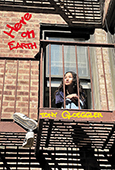
It's not easy getting a book or pamphlet accepted for review these days. So in addition to the regular review section, the One Poem Review feature will allow more poets' to reach a wider audience - one poem featured from a new book/pamphlet along with a cover JPG and a link to the publisher's website. Contact the editor if you have released a book/pamphlet in the last twelve months or expect to have one published. Details here
Reviewed in this issue

 Share
Share Print
Print