
2026
MARCH
Naned Bajevic, Daniel Cartwright-Chaoui, Holly Day, David Anson Lee, Beth Mcdonough, Gordon Scapens, Hannah Stone, J. S. Watts, Jan Wiezorek, Kate Young.
NENAD BAJEVIC
Wallpaper I’ve Seen Once
with no real tale to tell
this wallpaper is a conditioning
with no end in sight
on it a squared
ragged coastline
stamped mercilessly all around
at the very top
scattered clouds the rest clear sky
in the middle shore and palms
more like a sore thumb
than a common coastal flora
a small-scale drama
near the bottom
where every wave whitens
with matching intensity
and solitary boat that rocks
free of symmetry constraints
maybe this beloved kitsch
with some labour
could even be endured
if it had stopped in time
if it weren’t repeated
at such regular intervals
as if this world were lacking
and had nothing else
to show
Nenad Bajevic lives in Perth, Australia.
Back to POETRY ARCHIVE
DANIEL CARTWRIGHT-CHAOUI
The Bristol Road
straight down
the middle
where the tram
tracks
used to lie
and now
just
hundreds
of lime trees
pressed against
an orange sky
and whilst
we’re stopped
at all the red
lights
briefly
all we can see
is the outline
of all of
this
The oblivion of the hour
estranged new
born sounds
and the call of an owl
Bare feet padding
on a cold kitchen floor
Somewhere,
the night closes the door
unfurls the dawn
and a man
wakes
to pray for
a grandson
he doesn’t know he has
Daniel Cartwright-Chaouki is a writer and gardener from Birmingham, England. His work has previously been published in Brand Magazine, Pulp Poets Press, Bodies on Bodies Magazine and The Cannon’s Mouth.
Back to POETRY ARCHIVE
HOLLY DAY
Swiss Army Knife
The soldier stumbles in place
takes two tottering steps forward
before falling. He pushes himself back up a moment later,
but his legs are behaving like they did when he was a child
taking those first, wobbly steps from one parent to another.
It’s just easier to stay down.
Bullets fly over his head, he imagines he can see them sparkling
in the brief, bright rays of sunshine that pierce the heavy clouds of smoke
like stars peeking out through a dark fog
like fireflies winking through the leaves of a willow
overhanging the pond by his childhood home.
When you slow this last breath down
it’s like falling asleep
everything turns into something else.
The Depth of it All
Hobbled by the vastness of space
and the repeated questions of what could be
if only the stars weren’t so far away.
They say we know less about our own oceans
than we do about the stars and planets and our moon
but I’ve been in the ocean, if only a little bit of it
and I’ve never been to space.
Hobbled by the futility of time, we can only
write down what we know about these things
hope future generations can read our cribbed handwriting,
the scribbles in the margins, the last-minute notes
there’s never enough room for it all.
Holly Day's writing has recently appeared in Analog SF, Talking River, and New Plains Review, and her published books include Music Theory for Dummies and Music Composition for Dummies. She currently teaches classes at The Loft Literary Center in Minnesota, Hugo House in Washington, and the Indiana Writers’ Center.
Back to POETRY ARCHIVE
DAVID ANSON LEE
Shift Change
At dawn the ward hums: unfinished thought,
Fluorescent light on frailer, frailer skin.
The night’s last chart revised, the battles fought
On bleached white sheets where mercy might slip in.
A nurse bends close to hear a careful breath,
A cough that pushes back the dark unknown.
She maps the pain, resists its pull toward death,
Writes hope where fear has steadily grown.
Outside, slow bureaucracies still grind,
Thin compassion to approved degrees.
Inside, each pulse asserts its own demand.
A rhythm no ledger ever sees.
Still she remains, a light against delay,
Guiding the fragile body toward day.
The Bells Continue
Call it routine: the hollow, hallowed sound,
The beeps that stitch the pulse to waking hours.
They rise like tide, yet still the bells resound.
A doctor reads hope where fatigue is found,
Coffee gone cold in windowless towers.
Call it routine: the hollow, hallowed sound.
A secretary’s calm voice circles round,
Untangling codes where funding cowers.
They rise like tide, yet still the bells resound.
A nurse folds breath, one offering unbound,
In rooms where mercy weakens power.
Call it routine: the hollow, hallowed sound.
Charts stack like walls that hem the living down,
Consent reduced to lines that over-scour.
They rise like tide, yet still the bells resound.
Yet in their hands, the pulse breaks ground.
A fragile wing that lifts the hours.
Call it routine: the hollow, hallowed sound.
They rise like tide, yet still the bells resound.
David Anson Lee is a physician, philosopher, and poet whose work explores medicine, ethics, and the human cost of systems of care. His poems have appeared in numerous literary journals. He lives in Texas and continues to write at the intersection of clinical practice and lyric witness.
Back to POETRY ARCHIVE
BETH MCDONOUGH
How to disarm your Baptist in Siena
Possess his right arm, complete with hand –
scarcely-fleshed, take a mostly skeletal version.
Research suggests that could exist in Chinsurah
or Montenegro perhaps, whilst for many
his severed index finger still rests
somewhere palatial in Istanbul.
But, for your purposes, we'll consider it here,
in this liquoriced Duomo, silver-cased.
Commission some sculptor, advanced in his prime,
scrooge the odd ducat, pull a fast one on funds.
When Donatello's bronze work arrives,
find the great saint lacks a left arm.
Later arrangements, and presumably payment,
fix a prosthetic to gesture at all.
Though no-one's quite certain who actually cast it,
your Holy Man's fully-limbed now.
Give the gaunt prophet his niche. Let him call
across hordes who follow rolled-up stabby umbrellas.
Trap his ravaged patina inside walled stories,
floor them in marble, snaked over by more
of those seeking two most inadequate toilets.
In the loud search for that Guide near the door, now
you've disarmed him. Prayers escape into crowds.
John the Baptist still cries out for a wilderness.
Sounding out the Firth
Firth – that word, understood ahead
of any estuary suggested. Firths to fret
land, firths on maps, violet-inked firths
once rolled out in jotters, pencil-identified,
Now, this Firth of Tay; forward floods
with fff, to douse sung shingle's upturned boats.
A fff which fizzes small waves, rushes up
percussioning pebbles. Fff, storms in forte.
Fff shifts into its low-lying vowel,
grinds r to find an ebbing th's answered end
of each oscillation. Th, in the shape of this
great place, is never quite river or ocean.
Sifting the push and pull of long river news
stirs with the North Sea's mass, Fir
asks something of Fife, laps sand
at Kinshaldy, and offers up something
to the last of Tentsmuir's upstanding pines.
This Firth, no longer imprisoned by bridges.
Firth, where all waters bow out for Norway.
Firth, now sounding its dancing anatomy,
is that haul, wild between tides,
rocking between fff and th, which growls
deep in its girth, its dancing anatomy and it won't be defined by
estuary.
Beth McDonough is a Dundee-based poet and artist. Her pamphlet Lamping for Pickled Fish is published by 4Word. Her shared poetry collection with Nikki Robson, and a hybrid project on outdoor swimming will be published in 2026. She co-hosts Platform Sessions in Fife.
Back to POETRY ARCHIVE
GORDON SCAPENS
Counting Nightmares
He sends men off to war
where he would not go,
marching towards horizons
they cannot see,
and they have no songs,
words dying like flowers,
buried behind the face
of an unknown clock.
There is no time to waste
only time to lose,
and man-made trouble
stares in all our faces,
writing the small print
at the bottom of plans
for forceful policies
perpetrated as peace missions.
This is an uneasy world.
Living is watching peace
walking off the page
and being unable to follow.
War is never over,
man has its measure.
They count soldiers going out,
count nightmares coming back.
This war slays little dragons
while the big one waits.
Gordon Scapens. Widely published in various countries over many years in numerous magazines, journals, anthologies, newspapers and competitions, most recently first prize in the Brian Nisbet poetry award. His latest book is History Doesn’t Die.
Back to POETRY ARCHIVE
HANNAH STONE
Orchard work party
Sam is six. His overalls are rooted beneath his wellies
with elastic straps. Sam arrived on the tag-along, pedalled
by his dad, uphill from the station on the bendy lane.
On Sam’s hat, red squirrels chase through oak trees;
it keeps him warm while he learns how
to plant willow twigs (find the nub of bud on the stick,
make sure it’s angled upwards).
Sam’s gloved hands pile woodchip
round newly rooted saplings,
to keep them cosy till the spring time comes.
Sam likes honey on his porridge, from the bees snoozing
in hives behind the shed.
Sam’s life is sweet as the honeycake he chews.
Between bites he chats to no-one and everyone
about the embers dropping with the rustflakes
from the potbellied stove, round which we sit, cradling
hot mugs of soup in muddied hands.
Fire is ‘his fave’, we learn.
Sam is bud and leaf, ember and flame,
feather and flint. Wick to the core.
Hannah Stone is the author of Lodestone (Stairwell Books, 2016), Missing Miles (Indigo Dreams Publishing, 2017), Swn y Morloi (Maytree Press, 2019) and several collaborations, including Fit to Bust with Pamela Scobie (Runcible Spoon, 2020). She convenes the poets/composers forum for Leeds Leider, curates Nowt but Verse for Leeds Library, is poet theologian in Virtual Residence for Leeds Church Institute and editor of the literary journal Dream Catcher. Contact her on hannahstone14@hotmail.com for readings, workshops or book purchases.
Back to POETRY ARCHIVE
J. S. WATTS
The Spirit of The Bed
The deep polished beauty of mahogany, iron and brass
stands proudly in my bedroom.
A present of the past, gifted to the future
as they parted company.
Memories of grandmother and grandfather;
the love with which he carved this colossus,
the love for which it was built.
Love is the integral part,
permeating each measured inch of rosy grain,
flowing through the dark wood he adored
like the sap which gave it life.
It caresses each sanded curve, each mitred corner
as he once did.
as she once did.
The craftsman remaking himself within his work.
With each chiselled effort less was left to give:
just enough for wife and daughter,
but what for a late arrival?
Had you stayed, granddad,
would you have crafted for me?
The spirit of the bed said, "But I did.”
Roaming Backwards Round the Circulade of Nezignan L’Eveque
Come stroll with me around the village. It is late afternoon,
the sun soaking the stones yellow with heat. In my memories
it is always afternoon, the bones of our feet flexing as
we step on, worn sandals slapping slowly across the cobbles.
Stories walk with us, echoing our footsteps now and sixteen
centuries past. Roman feet marching up the slope of the hill
to build the first fortress. Feudal workers, bishops, acolytes
naming this place their own, up, down, around concentric circles
through pestilence, persecution and health, healing, blood and war,
shadows and sunlight, the village stones soaking up light and time.
Cats flow down alleys and along time itself. Fountains spout years,
the church bells sound centuries: the twenty-first cohabiting
with the nineteenth, eighteenth, seventeenth. Passages cross and cut.
More years than bones in tired feet walk these streets. We stroll down days,
learn the bones of the village through our own, become its echoes.
J.S. Watts is a UK poet and novelist. She has had nine books published: five of poetry, Cats and Other Myths, Songs of Steelyard Sue, Years Ago You Coloured Me, The Submerged Sea, and Underword and four novels, A Darker Moon, Witchlight, Old Light, and Elderlight. See www.jswatts.co.uk and http://www.facebook.com/J.S.Watts.page
Back to POETRY ARCHIVE
JAN WIEZOREK
Kennel Cough
The paws of a St. Bernard, as large
as the paperweight on my desk.
Red-faced, she walks for grief
over Thanksgiving Street, rambling
like her big Bernard, saying it like
burning, all lost, all hair and friendly eyes,
icy brown, to kennel cough. I took her to the vet,
and it was only a cough, but can you believe it,
her entire lungs filled with cancer. I don’t see
her anywhere on the street now. We’ve always
had a love for dogs, but I’m afraid of the mess,
the routine, and the constancy of owning a pet.
So, now you know how cruel I can be—and that
was the only sign, kennel cough. She turned
the corner somewhere around here and walked
home—that was going around last fall;
so many dogs had it. All the branches empty.
The hawk weathering from oak to hardest oak
to tallest pine searching for what is not there.
Jan Wiezorek (he/him) writes from the Harbor Country of rural Michigan and is author of the poetry chapbooks Prayer's Prairie (Michigan Writers Cooperative Press, 2025) and Forests of Woundedness (Seven Kitchens Press, 2026). Visit him at janwiezorek.substack.com.
Back to POETRY ARCHIVE
KATE YOUNG
Retinoscope
Are you not curious about my purpose?
In layman’s terms I measure the refractive
error of the eye; I also look into the soul.
Don’t be afraid, I’m a tool to aid vision.
Go on – hold me, feel the cool curve
of metal lick at your skin. I bring clarity.
Take this Arts & Crafts pewter vase –
shine my light into the vessel’s vein
run your fingers over hammered Tudric,
each dink and dent planished with intent
as if its maker could breathe life
into the inanimate. Inhale, catch the scent
of roses, freesias or bluebells in spring.
Can you see the wake spilling the room
with platitudes and sympathetic smiles
or hear the weep of water nurture a flower?
Look around. They all mean something,
these objects invisibly fingerprinted,
layered in wood, stone, rayon or glass.
In your hand you hold a vase.
It is more than a vase.
Upstairs, a Jazz club in Montreal
Downstairs
the club has a New Orleans vibe,
soft lighting
tables touching cheek to cheek
and musicians sound-checking
tap-tap-tapping the microphone head.
A firefly waitress
flits between spaces igniting candles with smiles,
the taste of jazz absorbed in walls.
A laminated menu
floats down to red gingham
sticky with last night’s oil and salt.
The buzz is tangible
like the thrill of stumbling across nectar
in an unexpected place
an augmented 6th with illusive wings
brushing my skin,
a momentary passing.
The evening begins,
an opening riff defying convention
nimble fingers stretched over strings
drum and bass in answer and question,
chords I do not understand
but can appreciate their radiance.
Beside us, father and son sit silent,
stare at solidifying chips
and glasses of chilled water.
The boy fidgets, knees jiggle
waiting for the open mic to unfurl,
the father’s camera sweating his palm.
Only fifteen, he takes the stage,
piano fingers spidering keys
lost in a world of improvisation.
Traces of Ellington shadow-shift,
the applause deafening, drifting
upstairs.
Kate Young’s poetry has appeared in journals and online. It was also included in Places of Poetry and Write Out Loud. Her pamphlets A Spark in the Darkness and Beyond the SchoolGate have been published with Hedgehog Press. Find her on X @Kateyoung12poet or her website kateyoungpoet.co.uk
Back to POETRY ARCHIVE / POETRY
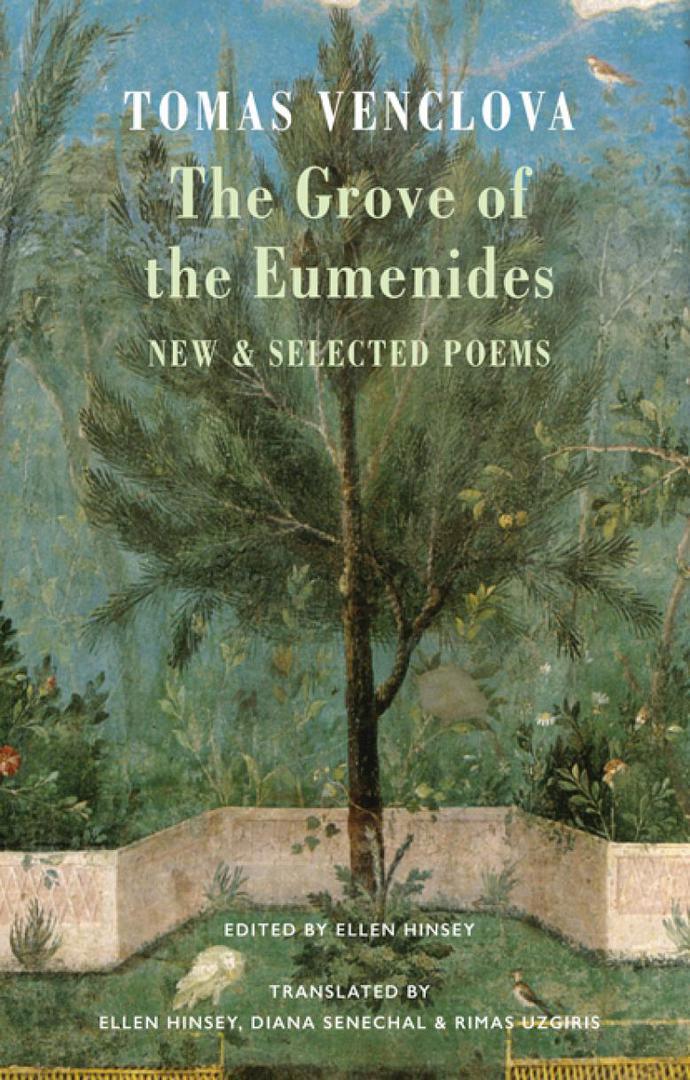
It's not easy getting a book or pamphlet accepted for review these days. So in addition to the regular review section, the One Poem Review feature will allow more poets' to reach a wider audience - one poem featured from a new book/pamphlet along with a cover JPG and a link to the publisher's website. Contact the editor if you have released a book/pamphlet in the last twelve months or expect to have one published. Details here
Reviewed in this issue
 Share
Share Print
Print