
2015
MAY CONTRIBUTORS
Denise Clemons, Mona Dash, Maureen Curran, Catherine Edmunds, Lisa M. Feinstein, Alison Hill, Jessica Wiseman Lawrence, Lee Nash, Meggie Royer, Sarah Salway,
Levi Wagenmaker, Rodney Wood.
DENISE CLEMONS
September
Swallowing a spoonful
of vanilla yogurt
I watch a red fox
slink across the grass
shadowed by stacked stones.
Slight shiver, then shake
of his head as if
walking on a grave,
nail taps on marble.
He eyes an empty
birdhouse in the elm.
I sip my coffee
as he vanishes
into the marshland
I can almost taste
the silt in his mouth.
Pin Oak
I want to tell you
about that oak tree.
She forgot to drop
her leaves in the fall.
Coppery husks, curled
into threads laced through
her branches, confused.
She must not have learned
the rules of the sun:
let go of the dead
in order to live.
Denise Clemons lives in Lewes, Delaware. She spent the first twenty years of her career as an executive in the technology industry before changing her focus to the non-profit arena. Denise has published fiction, non-fiction and poetry in journals, chapbooks and anthologies.
Back to POETRY ARCHIVE
MAUREEN CULLEN
She thinks about things before the birth of her daughter
I tracked pebble trails left for me in good faith.
Followed my mother’s recipes up to a point,
I wore hand-me-down wisdom
until I grew into it and out of it again.
I’ve been becoming this child’s mother all my days.
I keep stones about me for ballast.
Bright stones of education,
polished stones worried like rosaries
handled from mother to daughter to me.
I have chased her shadow, the dream of her.
I will make prayer new in the cry of my child,
in her laughter; find all I have lost in her trust.
Gravel lanes I have fallen on ring these truths,
dockens that soothed nettle-stung hands, bend to them.
All my Aprils have brought me to this one.
Maureen Curran is from Donegal, Ireland. Her poems have appeared in Boyne Berries, Crannóg, Envoi, Poetry Bus, Revival, the Stony Thursday Book, Skylight 47, Southword and Word Bohemia. Her flash fiction has been published online by wordlegs.com She blogs with her group at http://gardenroomwritersdonegal.blogspot.ie/
Back to POETRY ARCHIVE
MONA DASH
Jealousy
She of the tiara, of stars in her hair,
of moonlight, silken gowns
of the sun transforming her house into shining heavens
she of the beauty, which lustrously invaded her husband’s mind
and other parts restlessly every night ; she the owner of
artefacts, jewellery, from shops, online, brought in by ships and trains from
exotic countries with unpronounceable names.
She of the beauty and riches,
looked around and saw others with dimples laughing in their cheeks
brighter stars than hers in their eyes, slimmer waists, softer breasts,
songs in their steps, taller houses and wider gardens
and she made sure they were not around her anymore.
She saw her child laugh louder in the company of others, even more than in hers,
so she snatched the smile away to hide in a little red box studded with shiny mirrors.
She prodded and carved out the eyes of one, the heart of another
the friendship of the generous ; she marvelled at her claws which
were growing faster and sharper by the day
to gouge out what should have been hers.
She hid them in coloured boxes and kept them in drawers
safely, to look upon as hers, some day, every day.
Much later, she saw her skin had turned salak* like,
snakes mated in in her hair; when she laughed, blood dribbled from the sides.
The boxes when opened were empty; dried kernels of nothingness –
and she wondered why.
*Salak: A fruit found in Indonesia, Malaysia and neighbouring countries; also called snake fruit due to the scaly, reddish brown a appearance of the skin.
Mona Dash was born and educated in India and lives in London. With a background in engineering and management, she is currently a manager in a telecoms company. She writes poetry and fiction, her work has been published in various magazines internationally and anthologised widely. She recently gained a Masters in Creative Writing, with distinction, from the London Metropolitan University. Dawn-drops is her first collection of poetry published by Writer’s Workshop, India. Her first book of fiction is represented by Red Ink Literary agency. www.monadash.net
Back to POETRY ARCHIVE
CATHERINE EDMUNDS
Twenty-eight Meditations On Finding A Street Piano
Our young lives are changed by music and our small fingers struggle.
A piano turns up on a building site in Paris. Broken strings crash, the piano falls down drunk, it chuckles and hammers its strings
When I am weary, I play Haydn.
Do not ask how to play – go and find a proper teacher. Do violence, rip out the keys if you can’t get it right. Fold your anger between the pages of Beethoven’s Pathétique sonata.
Two dark tractors pass in a field, one is driven by a man called Chopin, the other by Rachmaninov. The chances of this happening are ridiculous.
A pale light reflects off brass pedals, burnished by years of use.
There is sawdust beneath the piano. If you listen closely, you can hear the woodworm boring away, finding their resonant frequency.
On top of the piano, a lovely piece of slate fashioned into an ashtray, but nobody’s allowed to smoke any more. It rattles when Topper plays the Maple Leaf Rag. He calls it the Maple Teeth. We don’t correct him, he has a temper.
There’s a young girl standing twenty yards from the piano on Paddington station, yearning. She’ll never move any closer.
The Prophet Bird sings out, late into the soft October night.
We leave the performance early, we don’t want to hear the Scriabin. We are not strong enough.
There’s a distant tapping on the road, the men are working, they have their sign up. We remember how we used to joke about umbrellas. The old piano had brackets for candles.
Middle C is opposite the keyhole, but I have mislaid the key
An avenue, dark and nameless, curtains drawn. Someone’s playing scales, C sharp minor, badly. Their playing is uneven, the hands do not match, they should stop and do something else – climb a mountain, and pray to the gods of high places that they don’t pick one where someone has left a piano.
We dare not go near the piano floor in Harrods. That place means death. It is peopled by ghosts. It no longer exists. The entrance is blocked by brambles.
Late in the summer the strange horses came, black-plumed, but instead of a coffin, Mozart’s piano, dressed in black crepe.
I told my son about my father, how he played me to sleep with Schubert and Brahms, and now this is something my son does for me.
When the water runs into the bath, if you listen carefully, you can hear pianos running through the pipes.
You could build bridges or be a brain surgeon or play Beethoven. All are skilled jobs. There’s only one you can still do when you’re ninety-four
Reading music by candlelight makes it sound sweeter.
And if a man should build a piano out of a quarter ton of Lego, and if the strings should be wound of fishing line, ay, what then?
The sound of cars passing in the wet, the swish-swish of their tyres, the soaking wet street piano, the boys laughing, trying to play Metallica.
Why doesn’t he phone? Or am I playing too loudly. Has he phoned, and I didn’t hear?
In the not too distant future, I will play in seven flats and the sonorities will be glorious, and you will fall in love with me.
This is a stupid way to die, crushed by a piano falling out of a Glasgow tenement window in a comedy
short.
The piano is under an awning now, the people are talking about rain, the piano is sulking.
Someone puts a vase of peonies on the piano in memory of a suicide.
I sit down to play Chopin, the opus 25 Etudes. By the time I finish we are married and have ten children.
Catherine Edmunds reinvented herself as a writer and portrait artist after twenty years as a musician. Her published works include poetry, stories and novels. 2015 will see publication of a wartime biography and a collaborative novel set in 1920s Ireland.
Back to POETRY ARCHIVE
LISA M. FEINSTEIN
Mrs. Van Winkle
The skins of autumn’s failures,
brown apples on the ground,
are pruned and wrinkled,
tanned hides that house a pulpy liqueur
and the decay
of winter’s onset.
I awake beneath a branchy oak,
the grass gone brown and silent
I arch my spine and stretch my arms.
My hand snares a pockmarked leaf,
my hair all gnarled and matted,
dreaded to my skull,
but because I have no beard,
I cannot measure how long
I have slept beneath this tree.
This is exposure.
This is where the milkman
never visits, this tree
is somewhere beyond the boundary
where the mail carrier ends his daily route,
sitting on a stump,
sifting through the lingerie section
of Mrs. Quinnel’s undelivered Sears catalog,
a satin camisole clinging slightly
to mama’s curves.
The mailman licks his finger, turns another page,
and because I have no beard,
I cannot fathom
how long I have slept beneath this tree,
or when these branches held me
through how many ever seasons,
and I have forgotten the sequence
of things, the order of the strings
on my mother’s violin, the fingers
that correspond to certain letters
on a Royal typewriter,
and the etiquette of please and thank-you,
as in which one might come first.
I have no rings on my hands,
nor thimbles on my thumbs,
my skin is taut across my belly,
and because I have no beard,
I cannot fathom how many years
I have slept beneath this tree,
without you, without me,
eyes stitched closed
by whatever means nature has seen fit to keep me here,
and it is rude evening, not even dawn, as I wake,
and the apples are sinking
into mulchy ground, and I can only close my eyes again,
listening for
the turn of bicycle wheels,
the brambling of blackbirds,
the scurry of rats’ feet,
the quiet curdling of milk,
the offbeat sound of a jump rope
slapping the asphalt street,
and the shifting skins
of badgers and bears
preparing their hides
for a final season of sleep.
And I close my eyes.
Again.
And because I have no beard,
I will not know
how long I sleep.
Lisa M. Feinstein is a poet and writer who shares her western New York home with several cats and a good man who was hard to find. Lisa’s writing has appeared in the online journals such as Poetry Midwest, Heavy Bear, Flutter Poetry Journal, Up the Staircase, The Houston Literary Review and has been printed in Jigsaw, Hazmat Review, Vincent Brothers Review, GUD Magazine, and Stone Canoe.
Back to POETRY ARCHIVE
ALISON HILL
Three poems from Sisters in Spitfires
A Touch of Glamour
I packed my parachute
I packed my evening gown –
What more did I need?
My Gone with the Wind dress
I called it, essential for a girl
Dashing about in a plane.
We never knew when glamour
Might beckon – a dinner, a dance,
So I packed it just in case –
Patted down the soft red velvet
Cushioned against the tough
Parachute straps – silk and security.
Dorothy Furey always packed her gown
with her overnight essentials.
Moving up the Blackboard
The call came; the one we all dreaded,
When her voice would change, her eyes
Take on that strained, faraway look.
She’d slowly cover the mouthpiece,
Nod over at me and I’d lower my eyes
Harden my heart a little if I could.
Another one down, details yet unknown;
One less in our ranks, one more sadness.
Other lives and histories would be forever
Changed by their loss; that we knew.
But for now, we had to log the details,
Find a way to move on through the war,
To keep doing our bit up in the skies.
Even before she’d replaced the receiver,
I’d wiped the blackboard, filled in the gaps.
It was good for morale; it had to be done.
3pm Appointment at Austin Reed
It’s the detail that matters, every little detail.
I scanned myself in the mirror, head to toe,
Automatically straightened my jacket,
Smoothed my already smooth hair,
Checked my wings were firmly in place.
I sensed so many people watching me
Behind the polished mirror, watching
And waiting for me to fall, to crash land
Or just give up and go home, raise a family.
I drew myself up, a full 5ft 2” – not a chance!
We were made to measure at Austin Reed,
Tailored to aviation perfection. It was truly
Our made-it moment; we’d proved ourselves
In flying hours and cross-country circuits.
We were ready to conquer the skies!
Alison Hill has published two collections, Peppercorn Rent (Flarestack, 2008) and Slate Rising (Indigo Dreams 2013). Her forthcoming Sisters in Spitfires is supported by the National Lottery through Arts Council England and will be out later this year with Indigo Dreams. She is researching the lives of the 164 women who flew everything from Tiger Moths to four-engined Lancaster bombers with the ATA (Air Transport Auxiliary) during WW2, focusing on their love of the Spitfire in particular and highlighting their valuable role in the war. More details at www.alisonhillpoetry.com
Back to POETRY ARCHIVE
JESSICA WISEMAN LAWRENCE
Spent
I spent a lot of time looking at the bright
plastic promises, each on a shelf of
rows of hope and stacks of beginnings.
I've spent a lot of time watching
other people's stories and reading
other people's books.
I’ve withered from twenty to thirty-five
to forty-five and fifty, sixty and older.
My three-year-old daughter stepped into the house,
and didn't look back and smile as I rushed to catch up.
Moments later, she was twenty, and she stepped
into a new city without me.
The window by my chair is measuring out the seasons, frosting over,
then thawing, wet with rain then dry.
I read by that window.
The poets were here, too, and saw me.
They saw my life slipping away like a first warm spring breeze.
When my life slipped away like a cold winter,
Memories stacked up like firewood, and burned.
There were milestones captured in frames or in phones.
They collected in rows, on shelves, like promises.
Every day of it was a new stack of plastic promises.
There was work and then home, work and then home,
(work and then home).
Jessica Wiseman Lawrence lives in rural central Virginia, USA. She recently published work in the Where I Live series for Silver Birch Press and has been featured in With Painted Words and Lipstick Magazine. She also has poems currently upcoming in Third Wednesday, Hermeneutic Chaos Literary Journal, Gloom Cupboard Magazine, Zoomoozophone, The Indiana Voice, With Painted Words, UNTOUCHED, and The Activity Report. Her work focuses on love and sexuality, current events, motherhood, poverty, and nature. She also has an interest in earth science and biology.
Back to POETRY ARCHIVE
LEE NASH
Kitchen haiku
tender meat ruined,
steamed instead of fried –
cook’s profuse apologies
my egg peeled of dignity
piece by shattered piece,
hardboiled, life scooped out
leftovers of hearts
nourish the god of rupture
in a sunset shrine
on a window ledge,
celery and carrot tops
send out their new roots
the stale bread hardens,
we cannot even cut it –
it must be thrown out
empty pores of skin –
the years have sucked out their hope,
leaving dry decay
to make your fortune in fish,
rise when dawn is cast
and sharpen your knife
Lee Nash lives in France and freelances as an editorial designer for a UK publishing house; she is also a flutist. She is previously published by Biscuit Publishing, Subprimal Poetry Art Ezine, Bluethumbnail, and more of her poems are soon to appear in inksweatandtears and The Dawntreader.”
Back to POETRY ARCHIVE
MEGGIE ROYER
Mobius
1. Great-grandmama sailed in on a ship from Ireland,
planted orchids and daylilies by hand, eventually moved on
to bringing in onions from the garden, slid their pearled bodies
beneath great-grandpapa’s pillow, strung them
from the ceiling like tender chandeliers
until there was nothing left
in that house but tears.
Survived the famine only to watch her brother die
by tumor, cell after cell gone to memory.
2. Grandmama sewed mile upon mile of quilts,
their patches ghazal and hurricane all in one
to keep the down beds warm whenever her sons stayed overnight.
When Grandpapa had his aneurysm she tucked one
round his feet, that great ruby stain pulsing
again and again inside his stomach
like a compass needle turned the wrong way.
3. Inside the womb, when we
were just tiny origami limbs made of skin
folding ourselves into something only a mother could love,
we learned more than we wanted to about loss.
The fourth child died.
Grief pulled out Mama’s spine and left her bedridden.
4. When I was a kid, I swore I saw ghosts. The
rippling of bathtub water
without anyone in it, footprints climbing the stairs like piano octaves.
I found the fourth child’s hair in my bed, her breath
evaporating from my mirrors,
Uncle poised in the doorway, a pause,
back half of his brain still missing
Grandpapa reading in the armchair with a lit cigarette.
5. Just before Grandmama passed
I leaned down to her ear so she could whisper
how glad she was that I was adjusting so well
to the afterlife.
Persephone to Her Body
ET phones home and forgets to say I love you
before hanging up.
The daughter across the street who came from Yemen
is learning English, naming the robins after her favorite warriors
& leaving trails of handprints on the wall labeled forgiveness.
Most everyone is afraid of walking in on their parents in bed together,
of returning to the moment where they came from,
to find out their birth is true, like wind chimes or sand dollars,
a light passing through the pane.
It was you I left behind, you who took me to the river
but wouldn’t let me drown,
who carried my sheaves and bore me through the arms of Hades
and back to the autumn sowing, to mother
with her hands full of pomegranates.
You who were my greatest love, a moon, a vessel into the underworld.
It was you I never hung up on, you who taught me
every language of war & rhythm,
you whom I walked in on and fell for again
you who survived.
Meggie Royer is a writer and photographer from the Midwest who is currently majoring in Psychology at Macalester College. Her poems have previously appeared in Words Dance Magazine, Winter Tangerine Review, Electric Cereal, and more. In March 2013 she won a National Gold Medal for her poetry collection and a National Silver Medal for her writing portfolio in the 2013 National Scholastic Art & Writing Awards. Her work can be found at writingsforwinter.tumblr.com.
Back to POETRY ARCHIVE
SARAH SALWAY
My Father is James Bond
Years later and he’s still talking about it,
the cinema car park, and us just released
from the cinema, loud and gung-ho,
walking a bit faster, our voices carrying
across the night city streets, Mum fussing,
we’ll be home so late, school tomorrow,
until safe on the back seat, we watched our father
cross to where strangers had locked their keys
inside their car; they were half-laughing
as he, with a pull to his shirt cuffs,
tried our key in the door, and for some reason,
soon to be put right by manufacturers,
it turned. The whole car park applauded
as he walked back to us, half blinded by lights,
and it was only as we left the city, nearly safe
in suburbia, we heard my mother whisper
hot stuff at him, just as the beauty in the film
had teased James. My sister nudged me,
but I pretended to sleep on so he’d have to carry
me in, my mother still worrying about homework.
The Adventurer
Even now there are places I imagine
him exploring; a winding river, red
lines on a map, names he'd spell out
before raising those eyebrows to ask
whether you were game for it, or not.
At his funeral, listening to how life
can be reduced in other's memories
- a good worker, known for his standards -
I closed my eyes to imagine the perfect
mourning hat, frippery made him laugh,
only to wake to a real voice speaking.
We loved him, it said. We would follow
him everywhere. Our only sadness
that he didn't lead us up the Amazon,
down the Nile. A plain holidaymaker,
easily overlooked, but still we needed her
to rediscover our adventurer one last time.
We would have gone with him, she said.
Cleaning His Hotel Room
You and I could be lovers this morning
as I lie down on your bed, curving
my body round the dent you’ve left,
placing my shoes next to your slippers.
I wear your soft blue jumper to dust
postcards you’ve written to friends
I’ll never meet, pick up clothes
and towels, when will you learn
to hang them to dry, who do you think I am,
your mother? until, naked, drinking
a minibar juice, I pull out the scribbled
business plan from your bin, the one
I’ve just read in your diary,
is a sham, nothing left, not even hope.
Finally, I fold your pyjamas, freshen
soaps, make your bed tight
with corners to keep us safe.
Dressed again in my uniform, on each
of your postcards, with your pen, I add
one line: ‘Tomorrow will be better.’
Sarah Salway is a poet and novelist from Kent, England. She is a former Canterbury Laureate and teaches creative writing to a wide variety of groups in the community and online. Her website is www.sarahsalway.net.
Back to POETRY ARCHIVE
LEVI WAGENMAKER
not so
a winning lob or volley
may momentarily vanquish
the smoothing-out influence
of the sporting bra as worn
by Grand Slam female tennis
players irrespective of grass
or gravel courtships wooing
more or less shapely legs
the shape of hardening nipples
a pointer to things other than
shapeliness alone (the biochemistry
of pleasure for instance)
once - led into a large office space
for reasons irrelevant to these lines
I could not (would not) help but
notice a buxom dark-skinned girl
whose stiffened nipples stood out from
the bland office atmosphere and
I heard her warn off admiration
in the eyes of a male employee
named André 'André don't stare'
she turned away from admirers of female
tennis attributes and André and I
were almost ready to avert our eyes
this warm and sunny day in the
far future of that recalled occasion
has cooler shadow under trees up in
the meadow on the slope of the
valley where grass underfoot is
more likely than gravel and where
nothing should be farther from my mind
than tennis players' sports brassieres
but somehow for a while that was
not so
whatever
we're in it for more
than up to our necks
no
what I mean is
space
space has thirteen
(or eleven or nine)
(but certainly more than four)
dimensions
space is nothingness rather
intricately mirrored
(endlessly perhaps)
nothing though came first
(if nothing can be said to come)
(come from nowhere obviously)
(which is what nothingness IS)
(among other things)
space on the other hand
is everywhere
and all the time as well
(whatever THAT is)
Levi Wagenmaker
(1944 - ) is a (re)tired journalist, living with
three
bitches, one of whom a woman, and a younger male, something of a dog
also. His poems have been published on the internet more than in print,
and Google (Yahoo, Bing, whatever) will reveal what, where, and when.
Back to POETRY ARCHIVE
RODNEY WOOD
Praise Poem for the Hundred Watt Burlesque Club
I want to praise the regenerated Dr Who
who sits next to me and tells people off
for standing on his scarf, who conducts events
with his sonic screwdriver and who keeps
turning to me and saying Have a jelly baby.
I want to praise Suzy who brings along
tutus, gloves, hats with extravagant feathers,
corsets and boas to sell to the women
and who's judge of the best dressed person,
which is Paul who wins a pair of nipple tassels.
I want to praise Dolly who plays the accordion
with ze terroble Fronch ock-cent wheezing out
her song, Pauvre Petite Angeline, which is about
an innocent country girl who goes to Paris
with a wheelbarrow full of erotic vegetables.
I want to praise Anna, Dina and Meredith
who smile, wink and flirt on stage as we whoop,
clap and gasp as capes are thrown aside, bras
unclasped, stockings peeled and they act out
nude poses with their smooth perfect shapes.
I want to praise the MC for the night - Lena
because she makes it look that being like Venus
is all fire and fun. Afterwards I see her at the bar
buying Suzy, Dolly, Anna, Dina and Meredith a whisky
because water was never going to be enough.
Rodney Wood lives in Farnborough, Hampshire. He has been published in many magazines and in 2013 was shortlisted in the Poetry School pamphlet competition.
Back to POETRY ARCHIVE
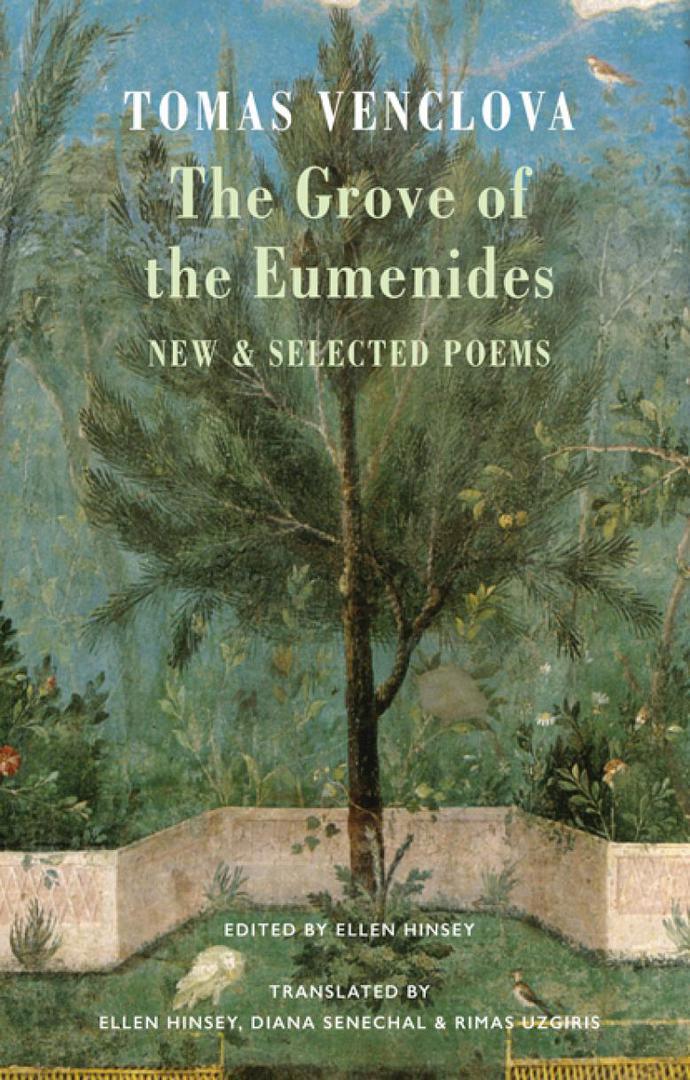
It's not easy getting a book or pamphlet accepted for review these days. So in addition to the regular review section, the One Poem Review feature will allow more poets' to reach a wider audience - one poem featured from a new book/pamphlet along with a cover JPG and a link to the publisher's website. Contact the editor if you have released a book/pamphlet in the last twelve months or expect to have one published. Details here
Reviewed in this issue
 Share
Share Print
Print