
2016
SEPTEMBER CONTRIBUTORS
RK Biswas, David Callin, Colin Crewdson, Seth Crook, Jane Frank, Bill Griffin,
Seth Jani, Joan Johnston, Jonaki Ray, Paul Smith, J. R. Solonche, Tim Suermondt,
Julia Webb, Sarah White.
RK BISWAS
Failed Poet Curating Poems, And Lackey
She’s been doing this for years now. Has
quite a following. All hopefuls. Young. Old. All
queuing up with gifts within innocuous looking
paper, printed on one side, at her door.
It is not supposed to be a clumsy activity. It ought
to have the grace of ballerinas, and normally does. But
she does it with arthritic limbs. The stuff she picks
are the easiest to hold. Her criterion rests on sleight
of hand. She shuffles and reshuffles the culled
poems like a compulsive gambler or a Solitaire addict.
The lines of a poem fan out; a nice phrase pops
its head up to be admired. A fat simile squeezes
in. Metaphors split apart. In no time the poem looks
like a plate of upturned caterpillars and centipedes,
wafer dry creepy-crawlies. Thin hairy legs
wildly gesticulating to be set right again.
Then she has tea.
Sitting cross legged. Her pen fluttering
like an ostrich plume. The pinkie of her cup
wielding hand fanned out. She could be
a Buddha or a gypsy queen depending
on the occasion. She gestures and I am beside
her, ready to do my job. Pick a piece. Obedient
parrot me, I offer up my choice. She sucks
in her breath and starts to unravel it. She believes
it is important to expose the exact point where the soul
of the poem sleeps its beauty sleep. She must
discover the location of her reasons for a yay
or nay. She waves a finger like a wand
with the confidence of one whose choice alone can
bring back a finished poem from the dead.
RK Biswas lives and writes on Earth. Her poetry and fiction have been widely published. Her two published books are Culling Mynahs and Crows (Lifi Publications, India) and Breasts and Other Afflictions of Women (Authorspress, India). Her third book Immoderate Men is forthcoming from Speaking Tiger Books. She blogs at http://biswasrk.wordpress.com . More about her at https://about.me/RKBiswas.
Back to POETRY ARCHIVE
DAVID CALLIN
Ì
Iona's famous light
is failing me. I miss
the propositions of holiness,
the insinuations
of the peace that was never on land or sea
that I had been expecting.
The sky, aglow with a soft
post-diluvian blue,
harbours no lightning.
There are nuns on the jetty.
We look up and study them
with the same mild keen interest
with which, a little earlier,
we had watched the gannets rising
effortfully, on straining wings,
to fall into the sea
with a bright inaudible splash,
sometimes emerging with a fish.
The available maps are sketchy.
We try and fail to retrace
Columba's steps across the machair.
What we thought were paths, made
by the patient feet of pilgrims,
are just sheep tracks. Perhaps
the road that goes to the golf course was right,
but bog cotton and orchids
and visions of Jura console us.
There are corncrakes in the meadow,
quoting Aristophanes.
Krek krek.
My friends can hear them. We stop
and listen until I think
that I can hear them too.
Why Aristophanes?
Why not something more uplifting?
Krek krek.
Even on the road
of the illustrious dead,
where Macbeth exerts his tragic charm
quite unknowingly,
the world intrudes too much,
but in Michael Chapel
serious thought is possible,
whether or not you think
that prayer is valid.
My lost girl, mouldering
in an English graveyard
or, in another version,
working her way strenuously
through the timeless duration
of Purgatory, joins us there,
as large as life and fresh,
but this is a few days later,
in a dream.
On the morning we leave - amber alert,
SSW, 40 knots,
the ferry lurching in the Sound -
a convocation of clouds
has stepped out of their cells,
robed in grey, and politely
invites us to consider
that sunlight
is purely incidental.
David Callin lives, if not quite at the back of the beyond, certainly within hailing distance of it, on the Isle of Man, in what he likes to call the Deep South of the Kingdom of the Isles. He is married with a wife and two children, all of whom would rather you didn't mention the poetry. He doesn't mind. He has had poems published in quite a large number of magazines, most recently in Prole.
Back to POETRY ARCHIVE
COLIN CREWDSON
Meeting a hermit in Palestine
The reality of God behind this reality
of form, that is what I seek.
We’ve always tried: that’s why seekers
become hermits. I find the Truth here, but
only in whispers, hints from the trees,
in the aroma of herbs in the heat, in the solidity
of rock and in the ripples of water.
Praying, he kneels in the cave,
his home in the cliff by the pool.
He meets Ari.
Ari struts, clattering
down to the pool with his group of tourists,
along the slippery path
by the stream, clutching his Uzi,
confidence denying
any search for doubt.
He greets him, one with his weapon,
the other his washing,
the formal words of Biblical Hebrew,
squeezed from study,
or, Mao-like, discharged
from a gun barrel.
The air is still, cool,
holding trickles and clinks of water,
and thoughts stilled by prayer.
Colin Crewdson is an osteopath working in Devon, UK, having spent a varied career in other European and Middle-eastern countries. He has had poems accepted in Ink Sweat & Tears, The High Window, Amaryllis, The Open Mouse and The Journal
Back to POETRY ARCHIVE
SETH CROOK
Dryad
This forest is the
only church I have.
Nothing numinous is elsewhere.
Beyond these branches
I feel no shudder to the tap root.
Only simple fear.
Not here.
Look around, it is
the twist of trees,
roots exposed,
everything slow dancing with the shadows.
Most of all it is the smell,
of death and life in one;
as though fall and rise are just two directions,
rot only a paradise for mushrooms.
There is nothing above the world, or below,
I know. But something huddled holy by the side.
Doc Watson
(1923-2012)
Perhaps when we cry for
those we don’t know,
we are crying for someone
we did. Or it may just be
crying for us all. Or perhaps
it is like tossing a coin -
we must cry for someone
and the Doc won. I don’t know.
Perhaps I should.
I don’t want to know.
The obituary picture shows
his hands gripped on the guitar,
eyes merely there,
the never changing hairstyle,
the image so many saw,
except him. I shouldn’t mention
his blindness at all.
Why does it matter?
He was a great musician, not
a great blind musician -
so patronising. But the tears
must have something
to do with that. My reasons for
crying at the sight of his face
are as unknown to me as
the sight of his own face was
to him. Only felt, close.
Seth Crook rarely leaves The Isle of Mull. His poems travel for him and have appeared this year in such places Northwords Now, Causeway, The Journal, Poetry Scotland, The Lighthouse, Antiphon and Raum. He is currently editor of the photography+photo section of the e-zine Fat Damsel. “Dryad” first published in Three Drops from a Cauldron, June 2015.
Back to POETRY ARCHIVE
JANE FRANK
The Planes
Driving to the coffee shop
for another flat white
I decide one morning
the sadness should stop.
Applying eyeliner has become
increasingly difficult.
Yes, bits of my heart
are scattered through airports
and on Scottish beaches
and winding Spanish streets
but today a flat white
and a chat with school mothers
about dog breeds,
the new deputy head
and whether it’s preferable to buy
pizza dough or make your own
must be enough to bring joy.
That and the jokes of getting home
to a messy house, to an unswept
courtyard dappled with sun
and the garden I’ve neglected.
There’s a warmer sky today
I can open up to
and I drive quickly past the laneways
where the sadness lurks.
There will always be diary dates
and shoes that match lipstick shades
and chicken to simmer in a new kind of sauce and
the planes that fly overhead.
Lacuna
Wanting and wishing spin in gold
until clouds come
but I try not to ask days to speed up
or slow down.
There must be an art to finding kindness
in the depth of a winter sky –
that’s where the beautiful words fall from –
so I’ll keep practising.
Like your face,
I can’t see the birds in the trees
but I know they’re there
like the ants swirling at my feet
in patterns beyond understanding.
Jane Frank is a poet and academic from Brisbane, Australia. She is the author of Milky Way of Words published by Ginninderra Press in 2016. Her poems have recently appeared in Sonic Boom, Northwords Now, Poet’s Republic, Gold Dust Magazine and Bluepepper, and are forthcoming in Cordite Review and Takahe.
Back to POETRY ARCHIVE
BILL GRIFFIN
Planck and Avogadro Meet for Tea at Blenheim Palace
Amedeo Avogadro takes the bus
from Oxford, disembarks
one stop early as he always does and walks
the weedy verge, remarks blue tits
flitting in the lime trees, thirty-seven
grams in their particolored
plumage;at Blenheim East Gate
he admires the Duke’s coat of arms,
its gold leaf unblemished, he imagines,
since Marlborough first entered here
and in his head he calculates
its surface area, dragons, eagles,
lions rampant, three atoms thick,
atomic weight 197: he knows
how many atoms but also
to the hundredth shilling
how much the Duke was charged.
Max Planck has taken two hours finishing
his strong coffee at The King’s Head
scribbling equations on the coaster
unaware of Americans remarking at the fineness
of the scones and now he strides
across the great arch bridge
with Blenheim pediment beckoning
beyond the greensward; some
would say he's looking only at his feet
but the whirling cosmos knows to jump
out of his way if it doesn't care
to be delineated, quanta, quasar
counted and connected
as he crosses up the promenade.
Avogadro from the West Terrace
spots him and waves, another sip
of Lapsang Souchong with milk,
the plate of crust-trimmed
sandwiches, egg mayonaisse with cress,
untouched and waiting for his friend;
Planck skips the Visitors' Cafe
and grabs a Coke from the machine
while we stroll through the parterre
and up the water terraces, already having shared
a long meander with the River Glyme
where I kissed you underneath
that gnarled black oak, and now
we sit beside great men
within the grasping shadow of Baroque,
its fundament that mutters immortality – do Planck
and Avogadro even listen?
While their arguments inflame
not a little heartburn in the Creator
we nibble at our scones and watch
a rose bloom, new Graham Thomas,
bud to butter cream to ash-limned
withering, budding moments
of experience between us
born, then perishing, then newborn again.
The Girl in the Velour Jumpsuit
I don’t know why my Freshman roommate invited me
to come with him to her dorm room, even more a mystery
how he invited himself, she a Sophomore dating
a quarterback or was it the president of Sigma Alpha
Epsilon, maybe both, he a seventeen-year old
five foot four Lebanese-American genius; just maybe
she was a philosophy major as well, maybe they both
had the hots for Spinoza, no telling for by now the inanities
of our converstation have compounded the entropy of the
cosmos. But this I do remember: the shimmer of lavender
velour, the sine and cosine of her body, the sudden lurch
into adulthood at the realization that in this wide open world
of opportunities and wonders there are some things
that will never be mine to touch, not unlike my friend Sandy
when he visited the Acropolis and kneeled
to dislodge a piece of gravel wedged in his sole – the guard
rushed at him shouting in his menacing Greek accent
“Forbidden! Forbidden!” until Sandy dropped
the valuable relic of antiquity. All of this to explain
how I have arrived without a lurch (well, maybe
just the occasional), arrived into happiness at this latest stage
of our life together, its conversations, its shared relics
and treasure, our negotiated philosophy invoking that old Greek
Plato, and why I’m able to smile as we arrive at the restaurant,
my hand lightly at your waist, that antique velour sweater,
and lavender, my dear, lavender most definitely your color.
Bill Griffin is a family physician in rural North Carolina. His poems have appeared in many regional and national journals including Tar River Poetry, Pembroke, NC Literary Review, and Southern Poetry Review. Sample his blog and chapbook set in GSMNP, Snake Den Ridge, A Bestiary (March Street Press 2008), illustrations by Linda French Griffin, at https://GriffinPoetry.com
Back to POETRY ARCHIVE
SETH JANI
For My Grandmother, Age 13
I see her now in old
photographs
Slender as the picnicking light
Over Western Pennsylvania.
She is standing next to her own mother.
The future still distant,
Its glimmering mirage undeciphered.
In her arms the family dog
Stares and idles.
She holds him closely against her body,
Like a son.
Engine Trouble
Over the grass
The glissando of bees
Is bright like mercury,
Like the first sign of snow
Breaking through the leaves.
Where the car rests
In its mackerel-colored sleep
Is the precise place
for honey.
They fill its notches
With patient drones,
With thick
pollen
And glue.
The engine, dead as
A rock or mirror,
Buzzes into flame.
Seth Jani currently resides in Seattle, WA and is the founder of Seven CirclePress (www.sevencirclepress.com). His own work has been published widely in such places as The Coe Review, The Hamilton Stone Review, Hawai`i Pacific Review, VAYAVYA, Gingerbread House, Gravel and Zetetic: A Record of Unusual Inquiry. More about him and his work can be found at www.sethjani.com.
Back to POETRY ARCHIVE
JOAN JOHNSTON
I Borrowed One Day in the Life of a Boy from Tibet
and when the due date came round
I took him back and renewed him.
I renewed him every Saturday
for weeks, carried him home
the same short way I’d come
—Benton Road, Thropton Terrace, The Spinney—
until one Saturday the librarian said
he’d been reserved and I had to return him.
Someone else, a child I didn’t know,
was waiting to find out all about
a boy my age who herded yaks,
ate tsampa and lived on the Roof of the World.
My nomadic friend in a colourful hat
belonged, I learned, to everyone.
Writer on a Rock
to my granddaughter
And this is one of me, alone on a rock.
I couldn’t get off for six whole hours! Imagine
me then, old enough to know better, old enough
to know in my bones that turning my back on a
Let’s-Just-Do-It-And-See-What-Happens
was even by that age a non-starter. (Oh yes, that hat
was very fashionable in those days. Really.)
It wasn’t my idea. I just volunteered. My life
was never in danger, no, and before you ask
—I certainly didn’t do it for the money,
yes, my bladder was a problem
and yes, of course it rained.
The attraction was the unknowable. The fact
I couldn’t predict what I’d write, or not
—that, for me, was the whole point.
I simply wanted to find out.
It was a sort of mini-adventure. With a pen.
Here’s the notebook. I’d like you to have it.
(Be careful—that’s the original guano).
You’ll notice there are some empty pages
—I ran out of time, couldn’t believe it!—
so it’s open-ended and you can continue
if you want to. And if you ever decide
to read what’s in it you’ll find
...who knows? me as I was, one day in June
—your first summer—years ago. I may be gone
but the rock’s still there, and whatever I wrote
is for you to discover, maybe add to. My old words
are yours now. Here, please take them.
You never know, they might make a poem.
Back to POETRY ARCHIVE
JONAKI RAY
Home
Bengali বাড়ি, Greek σπίτι, German Zuhause, Hindi घर, Swahili nyumbani, Telugu హోమ్, Zulu ekhaya
Astringent smelling
Eucalyptus leaves line the custardy
patch that refuses to permute
into a lawn. Neem¹, Mango (two of them), Guava
trees and stones from the neighborhood kids’ attempts
to pluck these fruits ripen
the borders of childhood.
For here or to go—a new phrase in Mid-western
twang—every sentence ending in a query that
expands the jaw. Wading through deceptive
piles of slush that crinkle,
leaving the cheap boots: $9.99
(on sale for Thanksgiving) clammy and toes lubricated.
Why didja do this to us—a woman with “nappy” hair and Jamun² skin
thrusts her face near mine. In vain, the defence:
India. Mid-East. Oil crisis. The other wars…
Go home, you Arab! Y’all don’t belong here!
Pigeons nest in match-box buildings
Roads cram with fruit and veggie vendors
gleaming cars block the road potholing
the status of suburbia. The Bougainvillea purples
the haze and the 50C fever in the air. The Madhobilota³
shields from the neighbor’s eye that judges.
Loneliness mantles the shelves of mind until
its practice eases into homecoming.
1 Neem:Tree in the mahogany family
2 Jamun: Tropical tree that has fruits that are purplish-black
3 Madhobilota: Flowering creeper
Barcino
for Antonio Gaudi
The scales of the dragon gleam bronze
against the four arms of the cross. The ivory
Mary and Joseph gaze down at the lines snaking
into the doorway designed using sacks of sand and geometry.
Peacock colors ray on to the forest of columns inside the nave
silencing the clamor of thoughts and jangle of worries.
The beetle knocker, the sinuous benches, the skull windows look out
to the walls of Plaça de Sant Felip Neri pockmarked
with cannonballs bits that echo the cries
of children running out from the school.
In a narrow alley cobblestones slip
with the memory of the forced deportation
of the last remaining Jews.
Minutes away, a duplicate path
commemorates the thirteen-year-old co-patron saint, Eulalia
tortured in ways numbering her age.
The crescent near the mulberry trees at the Fossar de les Moreres
reflects the umber-red of the bricks covering the buried
while tourists pose next to Picasso mannequins.
Pagans. Romans. Goths. Vikings. Muslims.
Jews. Christians. Catalans. Castilians.
Life ends like a cryptogram with everything summing to the same end.
Perhaps that is why when you died, all they found in your pockets
was a handful of currants and peanuts, and a crumpled book.
Jonaki Ray studied Computer Science at the University of Illinois at Urbana-Champaign, and then returned to India and her first love, writing. Her work has been published in Silver Birch Press, Coldnoon: Travel Poetics, Pyrta Journal, The Four Quarters Magazine, and Kitaab, among others.
Back to POETRY ARCHIVE
PAUL SMITH
Clasp and Loop
She has a gold necklace
With a clasp and a loop
The clasp goes around the loop
And embraces it
I must help her
Put it on
From behind
My fingers are clumsy
They struggle with
Its delicacy
Its imbalance
Whatever it is
That makes her think
I can do it better
But I get it wrong
Her fingers appraise
Its correctness
Its fluidity around her neck
The gold chain is twisted
She says
It is wrong
I do it over
It is still wrong
From behind her
I know she smiles
She places the loop where
The clasp was
And has me do it over
I repeat the procedure
Not knowing how this will make
Any difference
Her fingers run up and down the chain
To ascertain the necklace’s uniformity
She spins around
With that smile
My fingers
Thickset and fumbling
Reach down and grasp her hand
Tight as a clevis
Paul Smith writes fiction and poetry. He lives near Chicago with his wife Flavia. He likes taking the bus, walking by the canal, Milwaukee Avenue, Newcastle Brown Ale. If you see him, buy him one.
Back to POETRY ARCHIVE
J. R. SOLONCHE
Crossing
Stopped at the railway
crossing, I cut the motor.
It's the morning freight,
and I know I will be here
awhile, although I've never
counted the cars and do not
do so now as they file past me
behind that twinkling star-like
light. They duplicate themselves
as a worm does, adding segment
to segment, each one identically
sized, identically colored, identically
shaped, clones with different
numbers only. I watch them
appear from the bend of trees,
I watch them pass the gates,
I watch them disappear into
the bend of trees, I close
my eyes, I listen to them roll
over my thoughts, I listen to them
roll over my life, I listen to them
roll over my soul, until the man
behind me taps his horn.
"Give me a chance, friend," I say
into the mirror, "Give me a moment
to collect myself, for this train
has rolled over me and my ego.
And then shall I start up my engine.
And then shall I cross over and go
on. I didn't see it was the end.
Mister, give me a moment to be born."
J.R. Solonche has been publishing in magazines, journals, and anthologies since the early 70s. He is author of Beautiful Day (Deerbrook Editions), the chapbook Hearts Content (Five Oaks Press) and co-author of Peach Girl: Poems for a Chinese Daughter (Grayson Books). He lives in New York's Hudson Valley with his wife, the poet Joan I. Siegel, and nine cats, at least three of whom are poets.
Back to POETRY ARCHIVE
TIM SUERMONDT
A Cautious Optimism
A fearless optimism would be better,
but we do have to take what we can.
The fault lines between the large H
and the small h of history are eroding
every minute, falling chips often
feeling like a spray of shrapnel.
Yet today the sky was clear, the night
placid with a few stars, the air smelling
a little aromatic and couples on benches
silhouetted in the branches and leaves of trees,
gratitude humming Beethoven who insisted
“if you know my music, you know happiness.”
I Like Sparrows But I’m Putting My Foot Down
A one-year prohibition on sparrows in poems
makes sense and says justice,
especially those who always flyover
endless fields of yellow brilliance
and pick out the rooftops of charming cities
to nest and ride out the winter.
They do smack a bit of paradise, a perfect
excuse to bow our heads in awe,
but lately a bow is not on my agenda
and the dying are making too much noise
for wonder to carry the cloudy days.
I wish the dodoes were still with us, I wish
poets would put them in their poems,
I wish for so many things that will never be.
A cadre of sparrows just flew by—the bastards!
A Last Act Of Wisdom
My father packed a small suitcase,
said “I’m going” and vanished in the air,
leaving behind his coat—its pockets
filled with candies—on the bed.
He always knew how to be
quietly spectacular. He always knew
how to do what he thought was right.
Tim Suermondt is the author of three full-length collections of poems: Trying To Help The Elephant Man Dance (The Backwaters Press, 2007), Just Beautiful (New York Quarterly Books, 2010) and Election Night And The Five Satins (Glass Lyre Press, 20i6)—along with three chapbooks. He has poems published in Poetry, The Georgia Review, Ploughshares, Prairie Schooner, Blackbird, Bellevue Literary Review, North Dakota Quarterly, december Magazine, Plume Poetry Journal, The Southeast Review, Poetry East, and Stand Magazine, among others. He is a book reviewer for Cervena Barva Press and a poetry reviewer for Bellevue Literary Review. He lives in Cambridge (MA) with his wife, the poet Pui Ying Wong.
Back to POETRY ARCHIVE
JULIA WEBB
Sisters (part i)
i.
This sister is the bones of the outfit,
she is the stuff that keeps the body up,
she is dem bones, dem bones,
she is calcified connective tissue,
she is femur, tibia, ulna, ribs.
ii.
This sister is the perfect scrunch
of English Rose,
all delicate petal curl, subtle pinks,
she opens her smile up to the sun.
This sister is a fuzzy stamen
with a dust of pollen,
she is the heady waft of perfume
begging you to bring your face down to her,
to bring your face right down.
iii.
She is the one with the hair just-so,
the handkerchief skirt hems, the well-cut clothes,
and on birthdays she gets the family all together –
we line up for photos that never looked posed,
and how she laughs at being vegetarian
but each Christmas allowing herself a little meat.
She is the one with the dainty features, the cutesy nose
the one they look for when you enter the room,
and the way they hang on her words makes you nauseous
but you can’t say it, because she was the one
who watched out for you behind the shops and in the playground.
She is the one with the amicable divorce
and the books on cake decorating –
all those fiddly womanly things you have no patience for,
and she is the one who sat up all night in the crematorium
plaiting flowers into your mother’s hair.
iv.
This sister reads Nietzsche,
her hair is twisted into bunches like tiny horns,
she makes abstract art with fur and feathers,
she likes to collect things from gutters and pavements,
and her eyes have that sparkle you were scared of as a kid.
v.
This sister is the bee
and we are the nectar,
she is drawing us in
with her persistent buzzing,
her talk of the hive mind,
her tremble dance.
The Piano Lesson
When I asked Daddy if I could learn the piano, he said
NO because MUSIC IS THE DEVIL’S WORK. When
Daddy was away doing GOD’S WORK Mama took us
to visit the end-of-the-row neighbours. They are secret
friends because they are BAPTISTS. They have our house
back-to-front and a real live piano which sometimes I
am allowed to play. Steve taught me COCKLES AND
MUSSELS ALIVE ALIVE-O and in bed that night I sang
the song to Alice. I was just getting to the good bit about
the GHOST when Daddy banged in shouting STOP THAT
NOISE, DON’T YOU KNOW THAT DUBLIN IS FULL OF
HEATHENS AND PAPISTS? I didn’t know what a papist
was, but I asked Daddy is Molly Malone a Papist? which
made Alice snort with laughter. Daddy didn’t answer; he
just slammed out again muttering about Papists and the
devil. I hummed Cockles and Mussels under my breath
until I fell asleep, and that night I dreamt that I was Molly
Malone and my barrow looked a lot like a piano but with
limpets stuck all over it like the rocks on the beach at the
Sunday School outing.
Night Sickness
Her mother darns the window,
the moon leaks in
with its blue thumbprint.
The girl’s legs splay on the bed.
She sleeps with a head full of horses:
sees her father at full gallop,
his massive hooves stomping over the countryside,
sees the sun toss its golden mane.
Her mother has nodded off in her chair –
she drops her silver needle with a clatter
but neither of them wakes.
The window unravels itself,
the night leaks slowly away.
Back to POETRY ARCHIVE
SARAH WHITE
Ideas of Honor
1. I’ll never understand
how Madame Butterfly
can say to her little boy—
Play. Go and play.
in the garden,
then step behind a screen
with her father’s dagger and die.
Why? I ask.
To save her Honor
explains my mother
who knows the customs
of countries where an indiscreet note
or a stray handkerchief
is enough to ruin
an innocent man or woman.
After the strident horns
and the final curtain,
the boy, still in the garden,
meets his father and mother,
the Pinkertons. They bring him
home, name him Ken
or Stan, teach him
American letters and manners.
As Butterfly’s charm
grows dim in his mind,
he remembers: One day,
she lost something serious,
and for that reason
she had to send him
away to be an American..
2. We who believe
in the Rule of Law,
the Pursuit of Happiness,
don’t see why Eddie Carbone,
once Sicilian, now of Brooklyn,
must murder the guest
who spits and calls him “Rat”
in front of the neighbors.
We don’t know why,
at the end of A View
From the Bridge, Eddie himself,
having given a “brother”
the kiss of dishonor,
must be stabbed to death
as the womenfolk watch
in wonder and horror.
I had a Sicilian lover
who said,
when our affair was over;
It was sweet, Carina, but if you
were my wife I’d hang you
from the tallest tree in Taormina.
My American husband, angry
as he was, would never
have bothered to kill me.
Yet for years I dreamed of my body
dangling from a twisted tree
high above the deep Ionian Sea.
The Birth of Gray
You may paint
“A Starless Night”
but that’s not gray,
which, like much of life,
lies between the poles
of dark and light.
And, by the way, why
do so many names
for white—bialy, bianco,
blanc—sound like black?
The answer sleeps in the heart
of a Middle English maid.
Don’t wake her.
Rather, make another gray
without a trace
of either black or white!
Spin the color wheel.
Stop it, say, on blue.
Spin again and stop
at the opposite hue.
By miracle of spectrum,
conundrum of prism,
by luck or lust or both,
orange and blue,
or green and red create
a fine chromatic gray
when they mate..
Sarah White's most recent published collections are The Unknowing Muse (Dos Madres, 2014) and Wars Don't Happen Anymore (Deerbrook Editions, 2015). She lives, writes, and paints in New York City.
Back to POETRY ARCHIVE
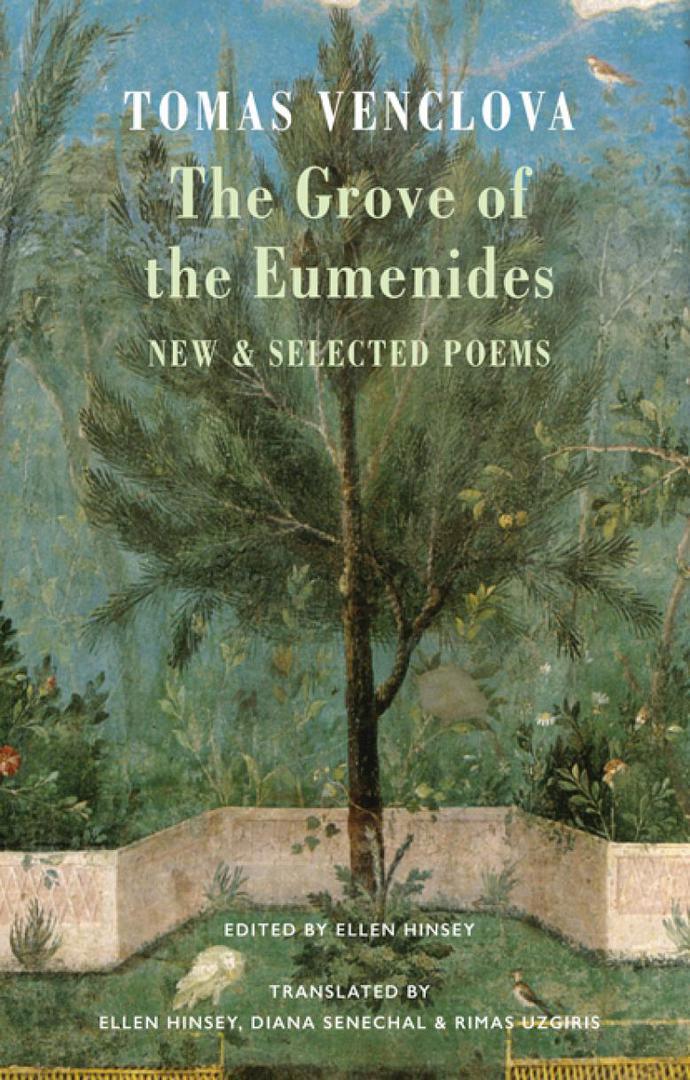
It's not easy getting a book or pamphlet accepted for review these days. So in addition to the regular review section, the One Poem Review feature will allow more poets' to reach a wider audience - one poem featured from a new book/pamphlet along with a cover JPG and a link to the publisher's website. Contact the editor if you have released a book/pamphlet in the last twelve months or expect to have one published. Details here
Reviewed in this issue
 Share
Share Print
Print