
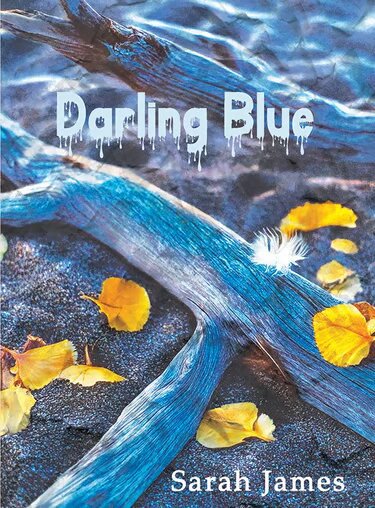
Sarah James, Darling Blue,
Indigo Dreams Publishing, 2025,
ISBN: 978-1-912876-97-6, 57pp, £9.50.
Darling Blue is distinguished not only by its form, a combination of ekphrastic poems and fictional narrative, but by the fact that it was the joint winner of last year’s Geoff Stevens Memorial Prize. It is not always the case that the recipients of literary prizes are free from controversy in terms of whether or not they are worthy of it but in my view Darling Blue is well deserving of this accolade. That the book is a hybrid is potentially risky. The combining of two genres raises expectations relating to both that might not be fulfilled but this risk is far outweighed by the accessibility of Darling Blue and the manner of its execution. The fictional narrative is compelling while the ekphrastic poems dazzle with as much verve as the paintings which inspired them, all of which are examples of Pre-Raphaelite artworks.
The fact that Darling Blue is fiction invites a sequential reading as opposed to a conventional collection of poems. The first poem, however, is clearly retrospective and this negates to an extent the imperative to find out what happens in the end. Spoiler alert: reader, she did not marry him. It is also a ghazal, a significant choice with its repetitious form as it mimics the enmeshed circularity inherent in the lovers’ relationship. It acts as a sort of a prologue but one informed by hindsight. Her perspective is one of defiance: “no one will ever tame / or break this Neptune Horse confounding the miles.” The ghazal, ‘One of Neptune’s Horses Drinks from the Sea of Dreams’ (a title to relish) is a response to Walter Crane’s ‘Neptune’s Horses’. Two other poems, occurring later in the book, reference the same painting. One is also a ghazal while the other is in free verse. The sentiment expressed, however, is the same: “no one/will tame or break my spirit.”
The narrative is elliptical rather than fully developed as you would expect from ‘chapters’ that are essentially verse, though there are occasional passages that are rendered in prose. As already noted the ekphrastic poems are vivid, in contrast to the narrative episodes which are more muted. This mixing of registers is like watching a movie where scenes alternate between technicolour and monochrome. The ekphrastic poems are not merely interludes to the narrative, however. As James makes clear in the short preface “there is an intentional crossover content between the ekphrastic and narrative pieces”.
Unlike a novella, Darling Blue requires to be read at the speed of poetry, that is slowly, carefully and with an awareness of how language is being used, primed as much for its rhetorical effects as the unfolding of a story. Artifice is sometimes to the fore, both in the relationship delineated and the emphasis on the artistic process, which is itself occasionally foregrounded. A transgressive example of this is ‘Me, c.2020, Anon’. What we are presented with here is a black border that frames nothing but white space. The link to the famous blank page in Tristram Shandy is of course obvious. Underneath the empty frame a four line poem functions like an explanatory note:
Leave enough blank space, life will rush
to fill it. No need to frame and hang this.
Years pass. Light and laughter
brushstroke over.
James does not sugar coat what is an illicit love affair. The continual and requisite duplicity, for instance, are explicitly presented: “exciting enough to light sparks, yet contained enough to return home to his wife.” A further focus concerns the nature of power, reflected in relationships between artists and their models, where the power is weighted towards the artist and sometimes can be exploitative. “Most artists slept with their models…I try not to imagine how this would have been, glad he isn’t an artist and that I’m not a model.” In this power imbalance, the narrator enjoys an occasional cynical triumph: “This drink’s £20 a time, but that’s alright: he’s buying.”
These transactional aspects point to a certain coldness at the heart of this affair. ‘Your Fingers’ for instance describes a hotel assignation. While some details of the scene are romanticised: “pressing your key card/to the door, pushing open my heart” they are wrenchingly offset by the mundane: “Then your fingers wake once more,/to tap dance on your phone.” The narrator also observes that her lover has “an empty drawer in the garage/a hidden compartment in your car,/where you stash/the mobile you only use for one purpose.” That such ruses are bluntly stated ensures they are impactful, James resisting the impulse to poeticise them.
The unifying image of the whole work is a zoetrope: static paintings are endowed with kinesis as the compromised lovers go round in circles until the machine stops turning. Furthermore, blue infuses the structure throughout. In shallow terms, blue is merely a part of the subterfuge inherent in the relationship, namely the male lover’s “secret name”. But it is also the joy to be gained from the natural world: “Blue now is the summer sky…the still lake we walk around,/the sea which breaks from crashing waves/into surf-angels on sunlit shores.” It is also a chimera, “distance’s illusion”, unobtainable, in terms of human and artistic endeavour. However, the last two lines of the book point to another aspect of blue, that the perpetual yearning and searching for blue is in itself the reward of our most fulfilling pursuits and one that is so easily overlooked in the drive for mere outcomes:
in the search for blue so intense
it can only ever grow deeper
It is this insight that informs and elevates Darling Blue to more than an account of a failed love affair.
Indigo Dreams and the judges of the competition are to be commended for championing such a book and in so doing expanding the prevailing expectations of poetry.
David Mark Williams
To order this book click here
David Mark Williams writes poetry and short fiction. He has been shortlisted for the Montreal Poetry Prize and won Second Prize in the New Zealand Poetry Society International Competition. Two collections of his poetry have been published: The Odd Sock Exchange, Cinnamon, 2015 and Papaya Fantasia, Hedgehog, 2018.
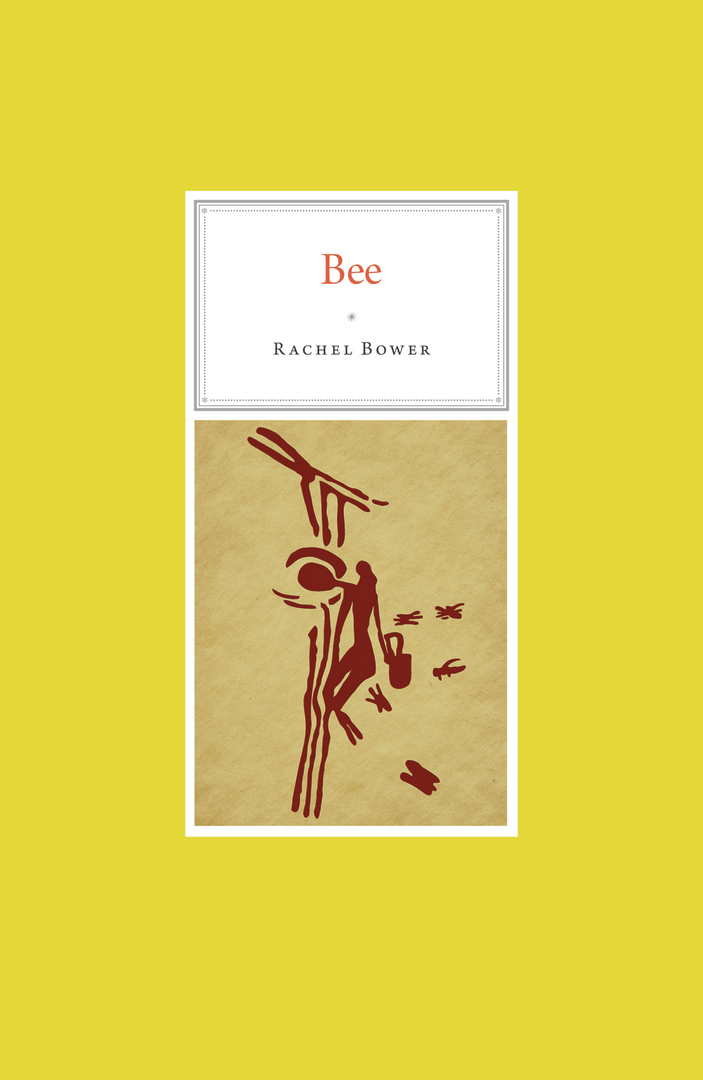
Rachel Bower, Bee, Hazel Press,
ISBN 978-1-7394218-7-8, 30pp, £12.
Rachel Bower meshes academic roles with her creative work; her website lists a number of universities which have benefited from her teaching, and also her substantial community involvement, something which seems very much to fit with the focus of her chapbook on the community of the bee, where a sense of the individual is always subsumed into a wider whole. Her talents have been recognized in prestigious competitions, such as second place in the Michael Marks Environmental Poet of the Year, and she has also recently published a novel, It Comes from the River, focusing on concerns we often see in her work – fork lore and myth (especially that of the north of England), female resilience and co-operation and the natural world. She has previous collections with Valley Press and Fly on the Wall.
In Bee we are immediately struck by these interests, cleverly told through close observation of how colonies of bees work, and the significance of those who attend them. ‘Drone’ and ‘Advice for a new bee-keeper’ are perfect miniatures which bring our attention to the queen bee. Equally engaging are the records of the women participating in the North American Beekeepers Association Annual Meeting, 1871, when thirty suffragettes joined the association in support of Ellen Tupper’s becoming the first ever female member of the association. Tupper’s correspondence with a mansplainer illustrates a perennial problem.
Other poems ‘tell it slant’ on particular aspects of bees and their cultivation by humans; the opening poem ‘Honey Hunters’ invites speculation about whether prehistoric cave paintings of people collecting honey from trees were depicting men or women. The impact on bees of climate change, disease and pollution leads us to
[pray]
for a spiracle
an opening
for space
to breathe
Bower’s objective research (which underpins her creative expression) is satisfactorily honoured by footnotes where required. The provision of such contextual information is a matter of editorial/authorial policy; personally I welcome it when it is done in such an elegant and unobtrusive manner.
In the flesh, Bower is a very persuasive and engaging presenter of her work, conveying her passion for its subjects without ever being hectoring or sentimental. These qualities are also evident in her poems, each of which is carefully wrought; detailed but refreshingly uncluttered by the often intrusive first person perspective found in so much contemporary poetry. Individual lines hook you –the ‘roaring cloud of wings’ of a swarm is such an effective phrase. The brief inventory of ‘tongue out, clawed legs, furry back’ of a dead bee placed poignantly and reverently on the hand of her child says more about the horrors of ‘Neonicotinoid’ than any amount of fury would do. ‘tell the bees/fifteen million’ shows the craft with which Bower deploys line breaks, especially in the final section (number VII of this poem).
This is a bright gem of a book, to keep in your pocket to enlighten further visits to the apiary.
Hannah Stone
To order this book click here
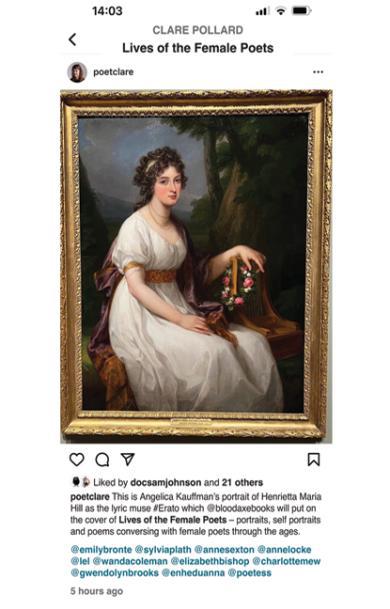
Clare Pollard, Lives of the Female Poets, Bloodaxe Books, ISBN 978-1-78037-747-6, 71pp, £12.00.
Sassy, clever, sharp – this collection is a delight to read, and to read aloud. Pollard’s an old hand at crafting forms, which adds satisfaction to the reading experience. In this slim but sumptuous collection, a strong, idiosyncratic voice manages to yoke the personal and the universal in a manner many less experienced poets struggle to achieve. In her hands, the head-louse is explored with all the gravitas/bathos and off-beat humour of Donne’s famous flea – and I make no apology about bringing him to the party, since there are definite metaphysical elements in Pollard’s writing. In fact, he gets his own look-in, when she reminds us how he badgered God
as though his art
might phoenix him.
This is in her elegant pair of sonnets to Anne Locke – the first author of a sonnet sequence – who would, I think, have been thrilled to find herself not just memorialised but resurrected here.
Indeed, whether it is the generic ‘poetess’ who
sweetens the tea
with sugar’s tender hiss
or the named-checked such as Elizabeth Bishop, the women poets given voice here owe a debt to their contemporary sister. The sestina to Bishop is a mistress-class (if I may) in the form, enlivened with her meticulous choice of refrain words, culminating in a poignant final line:
How many years must I wait for a word?
There is wit here, in the chasing of ideas through the poem, just as Bishop herself reputedly hunted/waited a decade or more for a particular word.
Pollard’s knowledge of the canon of female poets is disclosed but not stridently declared; we feel it is rooted in her long co-habitation with them rather than as a researched exercise, although the title poem acknowledges the Wikipedia pages of its subjects, each carefully disguised through the random allocation of letters of the alphabet. This device seems to mirror the hidden lives of her subjects, whether through the adoption of pseudonyms or assumption of male gender, or the need to lie low for political reasons. These poets may have been ‘unacknowledged legislators of the world’ (to quote another dead white male) but they took risks. Pollard’s risks include speculating about the sex life of Emily Brontë, and mixing cocktails. The book’s cover is its own poem – bringing the subjects right up to date by posting a luscious portrait of Henrietta Maria Hill ‘as the lyric muse’ in the form of a social media post. Brava, Pollard, for your excellent performance!
Hannah Stone
To order this book click here
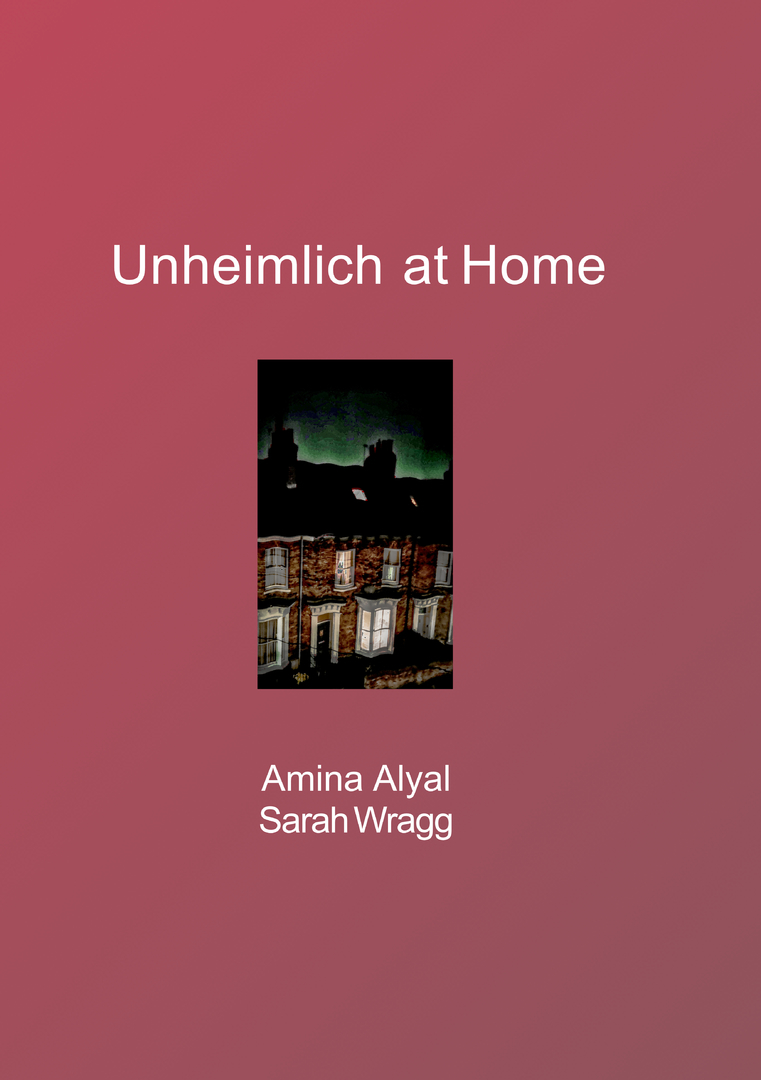
Amina Alyal and Sarah Wragg,
Unheimlich at Home,
Beautiful Dragons Squared,
ISBN 978-1-068292606, 56pp, £9.99.
The Beautiful Dragons imprint is the brain child of Rebecca Bilkau, and in its earliest manifestations comprised anthologies of poems each by a different poet but on a specific common theme, such as elements on the periodical table, oceans, constellations. In time it has become a protean endeavour, with established ‘dragons’ being invited to bring junior dragonlets on board, and most recently the brief has been collaborations or poetic conversations between two poets.
Alyal and Wragg have long worked together, building on their friendship to create poetry together; and an earlier version of some of these poems (if my memory serves me right) was rendered via Zoom during the dreaded lockdown, when they used torches under their chins to uplight their faces as they read and told ghostly stories to their audience, all safely confined in our own homes. In this book, the very concept of ‘home’ is challenged, as (if we believe what we’re told), it is just the place for creepy and disturbing encounters to take place.
A helpful introduction gives the context and explains their method, referencing scholars such as Ackroyd and Wolfreys, and of course the father of the term ‘unheimlich’, Freud himself. Notes to explain some details of poems are also included. The poems flow in a sequence without distinguishing between Alyal’s and Wragg’s contributions although as their styles are very different it does not take long to identify them, and the contents pages detail authorship. Alyal contributed line drawings, tiny vignettes as it were, of the written text, and also many of the haiku which punctuate the collection, showing her tight command of language and its layers. Her poems make consistently good use of imagery, and are attentive to the possibilities of meter and other poetic devices in shaping the form. Another distinctive feature of her writing is her use of intertextual allusions, elegantly accomplished in her recent solo chapbook An Anxiety of Poets in their Natural Habitat (Stairwell Books, 2025).
Wragg is no stranger to writing ghost poems. She won a Hedgehog Poetry Press competition, for Ghost Walk, 2023, and has another collection of ghost poems, Gottle of Geer forthcoming as a result of another Hedgehog. Wragg’s poems are playfully informal, revealing a ghoulish curiosity and a twinkle in the eye. Her reader feels compelled to follow her, from room to room, peering between their fingers at the surprising scariness of everyday things. It is her artwork we see on the cover of the book, an un-nervingly wobbling terrace of houses, against an eerie night sky – and that a figure in an upstairs window (or is it a ghost?).
Rich with allusions to legends, myths and the treacherous apparent homeliness of the domestic scene, this collaboration is an engaging and unusual venture.
Hannah Stone
To order this book click here
Hannah Stone is the author of Lodestone (Stairwell Books, 2016), Missing Miles (Indigo Dreams Publishing, 2017), Swn y Morloi (Maytree Press, 2019) and several collaborations, including Fit to Bust with Pamela Scobie (Runcible Spoon, 2020). She convenes the poets/composers forum for Leeds Leider, curates Nowt but Verse for Leeds Library, is poet theologian in Virtual Residence for Leeds Church Institute and editor of the literary journal Dream Catcher. Contact her on hannahstone14@hotmail.com for readings, workshops or book purchases.
It's not easy getting a book or pamphlet accepted for review these days. So in addition to the regular review section, the One Poem Review feature will allow more poets' to reach a wider audience - one poem featured from a new book/pamphlet along with a cover JPG and a link to the publisher's website. Contact the editor if you have released a book/pamphlet in the last twelve months or expect to have one published. Details here
Reviewed in this issue
 Share
Share Print
Print